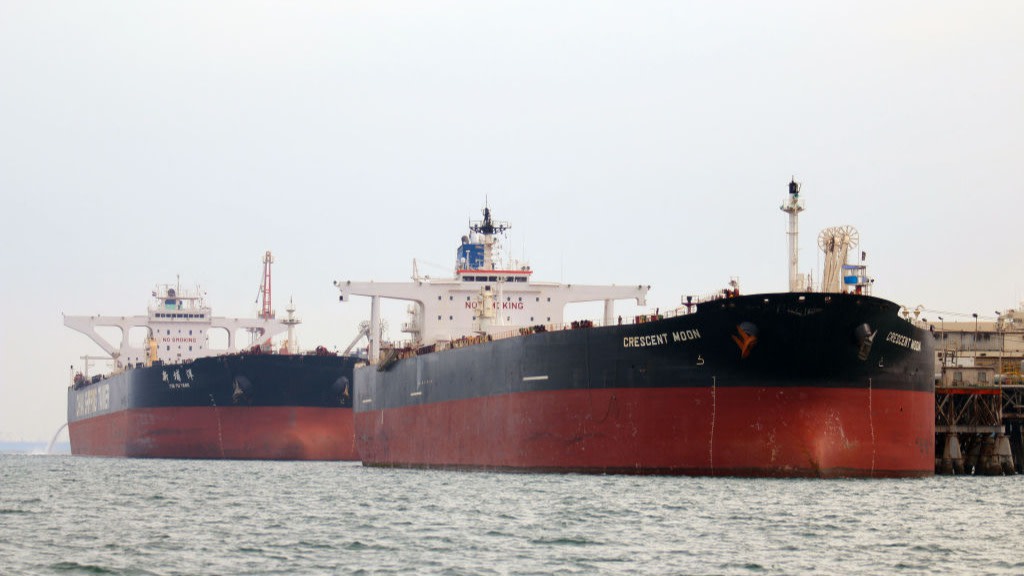
A Dallas oil trader says he is buying $2bn worth of supertankers to get oil out of Iraq to refineries in India and China, as the Trump administration struggles to alleviate the global diesel shortage.
Ben Morrow, chief executive of Dallas-based PIF Energy, said he was assembling a fleet of older ships, carrying up to 2mn barrels of oil apiece, to load cargoes in Iraq’s southern port of Basra and transit the Strait of Hormuz to the Arabian Sea and beyond.
The rush to secure ships comes as the war with Iran has created a growing shortage of tankers willing to transit the strait, choking the flow of crude from the world’s most important oil-producing region. Traders historically chartered vessels from shipowners rather than own them outright, making Morrow’s $2bn bet an extraordinary step underscoring the level of desperation to secure scarce shipping capacity and keep oil moving.
“Everything is capitalistically driven, you have to make money to run,” Morrow said, adding the venture was about something more: “truly helping this world, let’s get this oil flowing”.
Morrow said the tanker fleet of up to 15 ships would help get oil from Iraq’s state-owned oil agency and Saudi Aramco to refiners in “India, China, Indonesia and Europe”. The Texan is yet to secure all the ships.
The US oil industry has urged the administration to put pressure on China — which is not running its refineries at full tilt — to expand production of diesel and ship more fuel overseas to help ease the global shortage.
“The Chinese have a role to play in ramping up some of their diesel exports to bring more supply on the market,” said one industry source familiar with the discussions. US President Donald Trump raised the matter with Xi Jinping during his visit to Washington last month, according to a White House statement.
The plan capitalises on Washington’s efforts to provide security for tankers attempting to transit the strait as Trump is desperate to douse diesel prices and tame inflation ahead of midterm elections, as he grasps to maintain Republican control of Congress.
Shipping companies have been refusing to load in the Gulf because of the security risk. The resulting shortage has aggravated a global fuel supply crunch, with the wars in Iran and Ukraine disrupting supplies of diesel that power the world’s industry and agriculture sectors.
Tanker values have soared in the past month, particularly for vessels that can be readily deployed to the Gulf, and captains are being paid as much as $100,000 per month to navigate the region. Most shipowners are holding on to their assets given record-high freight rates for Middle East cargoes, which hit $1.3mn per day for a supertanker.
Because of the need for ships that can be used immediately, prices of second-hand vessels have unusually surpassed new builds. The average price of a 15-year-old Very Large Crude Carrier — one of the largest tanker classes — was about $160mn, up 44 per cent over the past three months, compared to $131mn for a new build, according to shipbroker Clarksons.
Many of the buyers in the market are Middle Eastern oil companies wanting to build up their own fleets rather than rely on other shipowners who might be less comfortable sailing through the strait. However, the record prices have also enticed deep-pocketed newcomers into the market such as PIF.
Before the war, PIF Energy conducted the majority of its business trading oil sold by Iraq’s State Oil Marketing Organization. Morrow said PIF Energy (it stands for “Pay It Forward”) would trade approximately 25mn barrels of Iraqi oil in October, making it a significant trader in the country.
“You have to have the perfect scenario, and by the grace of God, we do — the perfect insurance set-up, the perfect banking set-up, security,” said Morrow, who started the family-run trading company after going bankrupt six years ago. “This is not a normal business opportunity or operation.”

PIF Energy’s ships will be given guidance by a “tier-one security team” cleared by the US government to provide security through the strait, according to a person familiar with the situation.
The US Navy has been enforcing a blockade of Iranian ports and helping commercial tankers through the strait, with Middle East oil exports rising to their highest level since the Iran war began, averaging nearly 11.9mn barrels a day in the first days of October, according to Kpler.
A spokesperson for US Central Command, which oversees American military operations in the Middle East, said it was providing “no specific support” for PIF Energy’s fleet. “We’re simply providing co-ordinated protection to transiting commercial ships as previously stated.”
Iraq’s energy ministry and oil marketing unit did not respond to requests for comment.
Morrow said he believed China would start increasing exports of refined products, describing Beijing as the “linchpin” in the global refining shortage.
“What I’m hearing is that they are doing things to get things ramped up,” he said.
Trump met Iraqi Prime Minister Ali al-Zaidi at the White House in July, where he praised the leader for being “amazing” and said the country had “tremendous potential because of their oil”.
Since the war in Iran, US companies have stepped up their involvement in Iraq, with Chevron in advanced discussions to build a pipeline running into Syria, and HKN Energy, a Dallas-based privately run energy company, striking an agreement to develop the Hamrin oilfield.
The US withdrew its last troops from Iraq this month, 23 years after President George W Bush launched his campaign of “shock and awe” against Saddam Hussein in an invasion that led to the rise of civil war and Isis.
The country has struggled to sell its oil, as it does not have a tanker fleet of its own. Baghdad has offered steep discounts on its crude to buyers in order to keep its oil flowing.