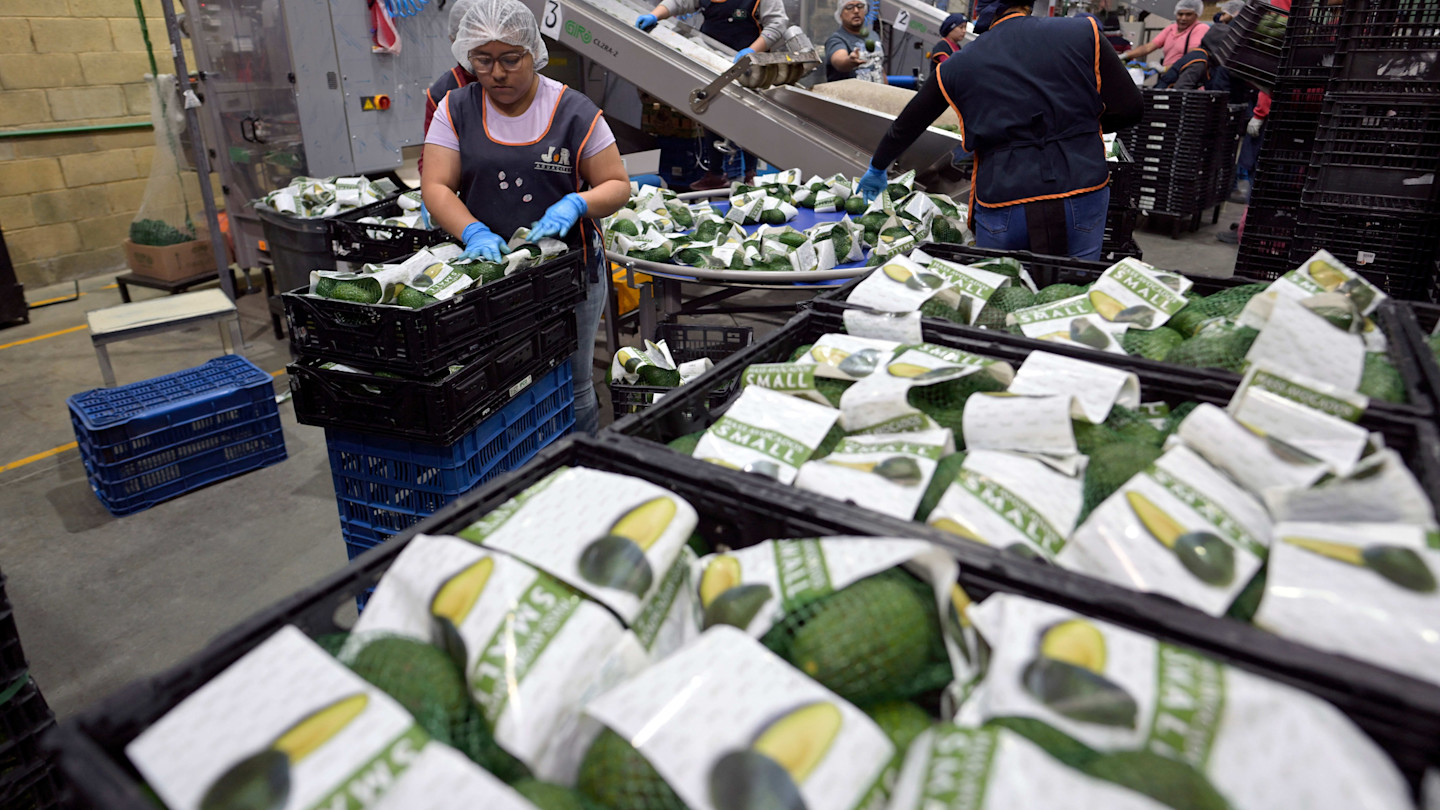
The largest US avocado company is banking on an acquisition and orchards beyond troubled growing regions in Mexico to meet unstoppable demand for guacamole, toast, sushi and a proliferation of other dishes made with the tropical fruit.
Mission Produce sells about a third of the roughly 3bn pounds of avocados consumed each year in the US, chief executive John Pawlowski said in an interview.
His ambition is to double revenue in a market he believes is on track to reach as much as 6bn lbs within the next decade and a half, with much of the growth coming from the popularity of avocados in Hispanic cuisines and younger consumers’ desire to eat more fresh, nutritious foods.
Midwinter sales spikes driven by guacamole dip served with tortilla chips at Super Bowl American football parties are flattening out as avocado consumption increases throughout the rest of the year, Pawlowski told the FT.
“That Super Bowl bump is getting smaller and smaller. It doesn’t mean it’s actually getting smaller. But everything else is rising,” he said.
Avocados are a rare variety of fresh produce whose sales volumes are rising. Pounds sold at US retailers climbed 12 per cent over the past year even as total produce volumes by weight were slightly down, according to Circana. The market research firm said 56 per cent of US households buy avocados.
“Something that high-selling, growing in pounds at 12 per cent, is unheard of,” said Jonna Parker, vice-president of fresh foods at Circana.
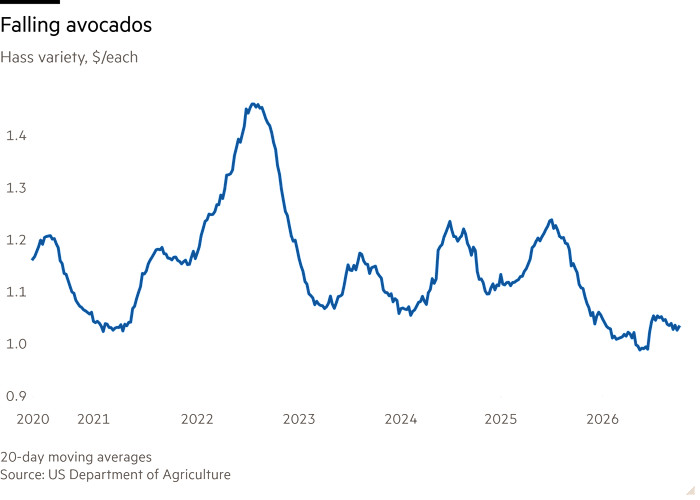
At a time of widespread consumer concerns about food inflation, avocados’ US retail price has also declined 18 per cent in the past year, according to Circana, as bumper crops overwhelm demand growth.
Mission Produce was co-founded in 1983 by Steve Barnard, who stepped down as its chief executive in early 2026, and headquartered in Oxnard, a southern California city known for its avocado groves. This year Mission acquired number two rival Calavo Growers for $466mn, leaving it the only avocado distributor listed on the US stock market. Its shares have risen 7.5 per cent this year.
“When you go to the grocery store, there’s a good chance that this avocado is going to be coming from Mission,” said Pooran Sharma, an analyst at investment bank Stephens.
Farms in Mexico grow more than three-quarters of the avocados that Mission sells in the US each year, Pawlowski said, while the US continues to supply about 16 per cent. Mission also operates a 10,000-acre plantation in Peru and a 1,600-acre spread in Guatemala, helping to enable year-round avocado production.
They also provide diversification away from Mexico, where criminal gangs in the avocado heartland of Michoacán extort cash from growers and packers. In August the government sent in more than 1,500 soldiers into the state because of security problems. US government fruit inspections have been suspended three times in the region since 2022 over concerns about violence.
Pawlowski said: “When there are flare-ups, there seems to be a larger interest from the Mexican government to provide support and provide resources necessary to ensure that policies are adhered to and laws are followed. It’d be great if those resources were available more often throughout the year.”
In Mexico, avocados are still grown by family farmers. Pawlowski said he could not comment on whether any were forced to pay extortion money to local criminals.
Like other US importers, Mission was also affected by President Donald Trump’s tariffs, including a temporary 25 per cent duty on products from Mexico and 10 per cent from Peru. Mission has submitted claims for $12.5mn in refunds after Trump’s emergency tariffs were struck down, according to a quarterly filing.
Agriculture along the Pacific coast of the Americas is threatened by the severe El Niño weather pattern expected to crest later this year. “If that results in a drier, hotter environment, it usually results in smaller yields and smaller-sized fruit,” Sharma said.
Pawlowski said Mission had learnt lessons from past El Niño cycles to manage trees better able to withstand high temperatures and heavy rainfall that can accompany the event.
Mission Produce’s sales, a small portion of which also include blueberries and mangoes, would have been $2bn last year including revenues from Calavo. Acknowledging that annual sales will fluctuate based on the volatile prices of perishable commodities, he said he wants to double Mission’s sales within 10 years. “We want to be a $4bn company,” he said.