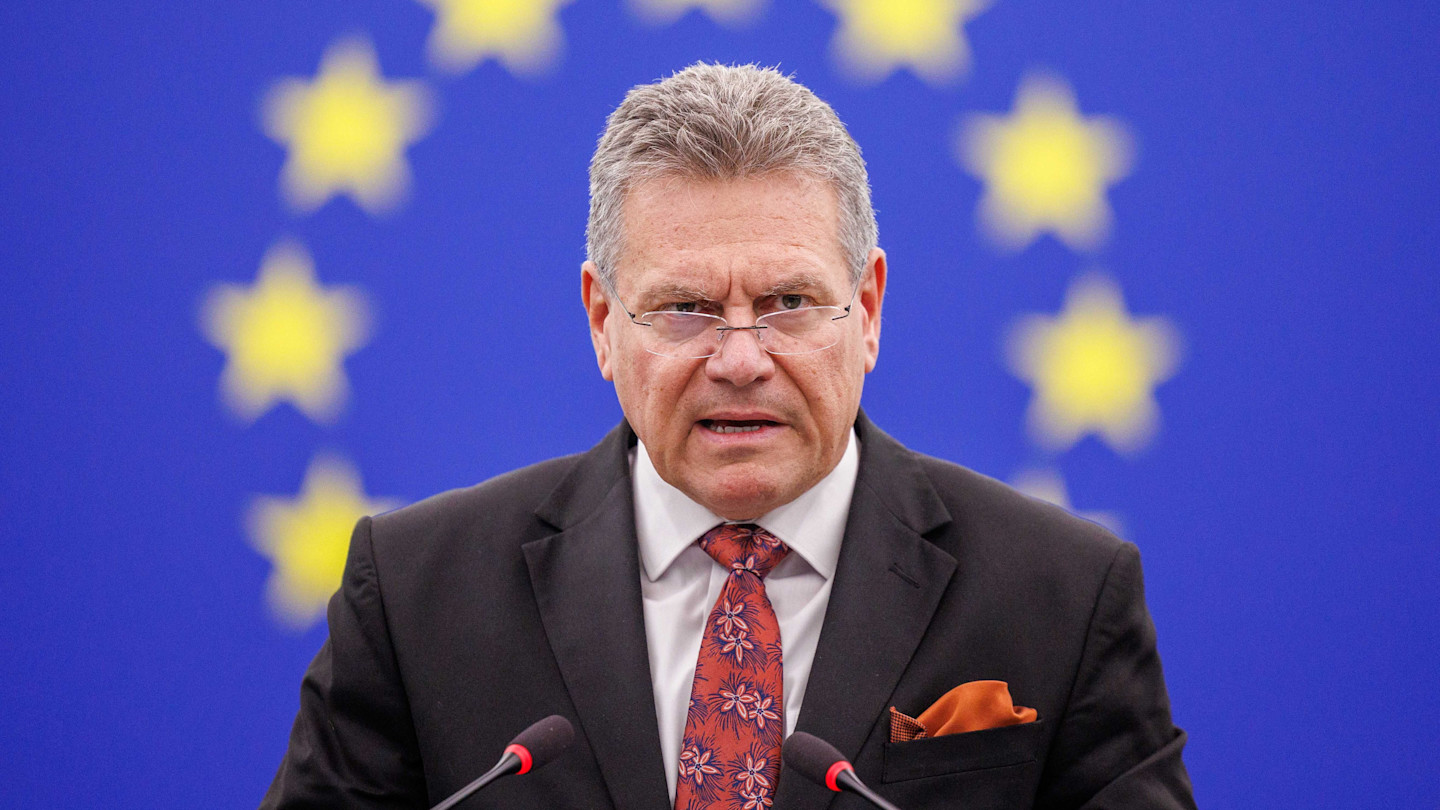
The EU’s top trade envoy is in Beijing for high-level talks with China as the bloc urges the world’s manufacturing powerhouse to take concrete steps to reduce its ballooning surplus.
EU commissioner Maroš Šefčovič will be in the Chinese capital for two days that will include meetings with China’s commerce minister Wang Wentao as the sides try to avert a spiralling trade conflict.
The talks come against a backdrop of rising anger in many European capitals that Beijing has not done enough to address a trade surplus that has swelled to €1bn a day.
European officials blame the flood of low-cost Chinese exports for the loss of tens of thousands of manufacturing jobs in the bloc. Šefčovič has said previously China is threatening Europe’s social model as well as its industry.
On the eve of the talks, the FT reported that China had rejected an EU request to limit exports of plug-in hybrid electric vehicles, shipments of which have surged in the wake of tariffs on Chinese battery-only EVs.
European officials have warned that the Beijing talks will fail if there is no solution to the issue of hybrid cars, setting the scene for a potential rapid deterioration in trade relations between the two major economies.
While Beijing has refused to reduce its exports, it appeared to offer expanded direct investment in Europe while allowing increased imports from the bloc.
China has also kept the door open to negotiations over minimum prices for its EV exports, in return for the lifting of anti-subsidy tariffs of up to 35 per cent.
But such offers are viewed as insufficient to satisfy European officials, who are pressing Beijing to drop some of its tariffs to make it easier for EU exports to compete with domestic Chinese producers.
China, for its part, wants the EU to step in to lift restrictions on technology exports, including chipmaking equipment from ASML of the Netherlands.
Chinese officials have also repeatedly warned of the possibility of a strong response to any further restrictions on the country’s companies or products. Beijing’s playbook of retaliation includes possible restrictions on exports of critical minerals or tariffs of its own.
“China will respond resolutely to safeguard the legitimate rights and interests of Chinese industries,” the commerce ministry said last week.
Germany and France this week sent a letter to European Commission president Ursula von der Leyen proposing a last-resort trade instrument with the power to cut off China’s access to the EU’s single market if needed.
The sharper measures were a response to increased “weaponisation of trade, systemic market distorting-practices and global macroeconomic imbalances”, the two countries wrote.
Chinese state media has argued that the EU’s use of “unilateral tools aimed at China” while the two sides are engaged in talks has “eroded the EU’s sincerity in dialogue”.
Šefčovič is on Friday scheduled to meet He Lifeng, the Chinese vice-premier, who held negotiations with US Treasury secretary Scott Bessent ahead of talks between Chinese leader Xi Jinping and US President Donald Trump in Washington last month.