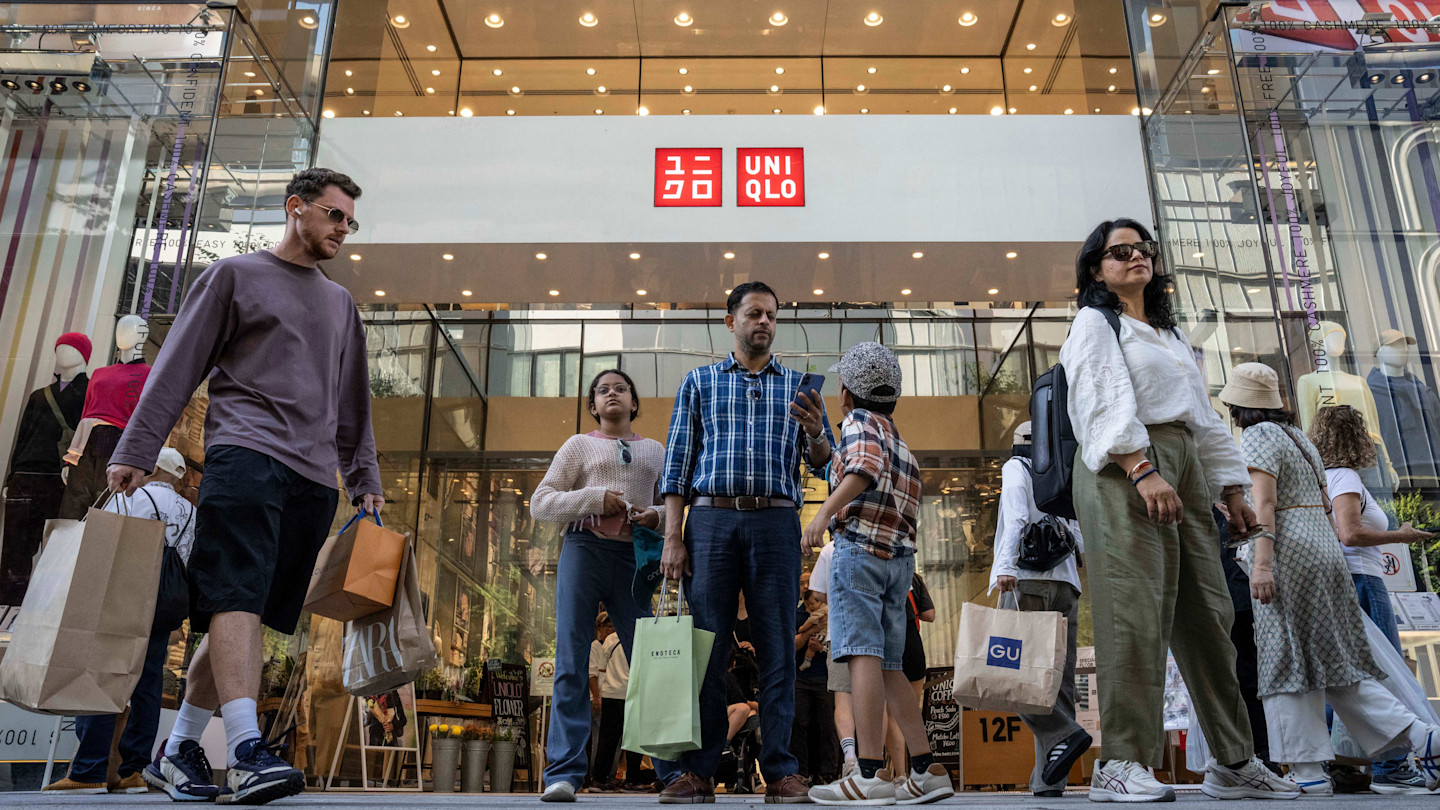
Annual sales at Uniqlo owner Fast Retailing are set to eclipse Sweden’s H&M for the first time following a worldwide sales boom.
The Japanese retailer of fleeces, socks and Heattech thermals said on Thursday that annual revenue rose 16.6 per cent to ¥3.96tn ($25bn) in the year to August 31 as it unveiled a big increase to the dividend.
That compares with analysts’ estimates of Skr222bn ($22.2bn) in revenue for H&M’s full year, which ends in November.
Fast Retailing has ambitions to overtake Zara owner Inditex to become the world’s top mass-market casual fashion retailer.
“Our pursuit of becoming number one enters a new stage,” founder Tadashi Yanai said on Thursday.
Surpassing H&M would be a landmark moment for Uniqlo, whose focus on well-designed essentials has helped it outperform other fast-fashion brands as consumers gravitate towards minimalist styles.
Daisuke Tsukagoshi, president of Uniqlo, said one “key” to growing sales would be strengthening its offerings of “seasonless” clothing as climate change drives more extreme and unpredictable weather.
“We used to structure our product range around the four seasons,” he said. “But now the boundaries between seasons are changing.”
Founded in 1984, Uniqlo is a rare example of a Japanese brand that underwent rapid growth and took its business model global after the country’s asset bubble burst.
The chain manufactures a narrow range of simple and affordable T-shirts and underwear using advanced fabrics at huge scale, mainly sold at bricks-and-mortar stores.
Fast Retailing benchmarks itself against other mainstream casual fashion retailers that control everything from design to sales.
Under that ranking — which excludes ecommerce platform Shein, discounter TJ Maxx, sports brands and luxury houses — Uniqlo is poised to leap over H&M into second place.
“Overtaking H&M in revenues has long been an ambition of Fast Retailing’s leadership,” said Achim Berg, founder of retail sector think-tank FashionSights. “This milestone demonstrates both the strength of Uniqlo’s business model and the current weakness of H&M’s.”
However, Fast Retailing still had “some way to go to fulfil Yanai’s ambition of becoming the world’s largest fashion retailer”, Berg cautioned.
H&M is not the only fast-fashion retailer to struggle. Shein, which sells cheap China-made clothes directly to consumers in the west, said fallout from the Iran war and new import duties had hit its second-quarter profits.
Fast Retailing’s annual sales have grown by double digits on average over the past 15 years. This year, it posted the biggest rise since 2023 as new store openings and a pipeline of hit products propelled sales.
That helped to underpin a fifth year of record net profit, at ¥542bn ($3.4bn), beating its estimate of ¥500bn and up a quarter over the previous year.
The company increased its dividend estimate for the 2026 financial year by a third to ¥850 a share.
It expects the strong performance to continue, with revenue growing 12 per cent to ¥4.45tn and forecast net profit of ¥560bn for the next financial year.
Revenue outside Japan has risen more than a quarter this year, as Uniqlo starts to enter smaller cities such as Leeds and Utrecht in Europe and shopping malls in the US.
For the first time, combined sales in North America and Europe overtook those for Greater China in a sign of Uniqlo’s transformation from a primarily Asian base.
Its home market of Japan has come under increasing threat from the yen’s persistent weakness. Management signalled prices would need to rise to cover more expensive imports of merchandise.