
London’s primary market for junior companies has struggled in recent years, but the cause of Aim’s troubles lies more in external factors than the quality of the businesses themselves.
Investor appetite for UK stocks in general has declined due to the greater appeal of strong US markets and the growth of passive investing, which channels money mainly to mega companies around the globe. Higher interest rates, viewed as unfavourable to small-cap companies because they often rely on borrowing for development capital, have also reduced interest, as has the lack of liquidity. And as share prices have dropped, it has made it difficult for companies to raise equity.
A further hammer blow was Labour’s decision to withdraw full inheritance tax relief for unquoted shares, which removed a key reason for buying those traded on Aim.
While a recent overhaul of the rules governing Aim is designed to encourage new listings, reduce costs and ease regulatory burdens, investing in the junior market is ultimately about company fundamentals and finding good-quality, long-term growth opportunities. The market has produced many success stories, including Fevertree Drinks, Jet2, Unite, Judges Scientific and Cohort. It’s where main market companies easyJet, NCC and Asos started their listed life.
Many of the companies are highly exposed to the domestic economy, but that’s not always the case. Well over half of revenues generated by engineering conglomerate Avingtrans come from outside the UK.
With this firm, investors get exposure to the nuclear and aerospace booms, as well as to medical devices through the company’s imaging arm.
Meanwhile, its strategy of buying, turning around and, when appropriate, selling specialist engineering companies in highly regulated sectors has both expanded and refined the portfolio, pushing the company into similar territory to much bigger rivals.
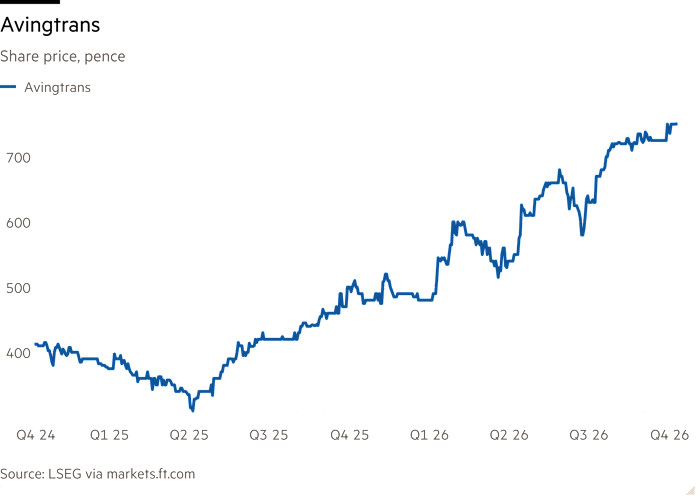
BUY: Avingtrans (AVG) 728p
The recent strong run in Avingtrans’ shares is easy to understand, writes Michael Fahy.
A record of revenue and profit growth, an ability to exploit niches in complex areas of engineering and a strong presence in high-demand sectors such as nuclear and defence have contributed to a 50 per cent year-to-date share price rise, even after a £21mn equity raise.
The company has started to put this cash to work, acquiring the intellectual property, trading history and brand of nuclear engineer Joseph Oat Corporation for $2.5mn (£1.9mn).
Avingtrans is also continuing its hunt for premises to house a bigger US factory and a training school.
Adjusted cash profit from the advanced engineering division rose by 12 per cent to £24mn.
Broker Cavendish forecasts a 23 per cent increase in adjusted pre-tax profit this year, though the broader base after the equity raise means earnings per share growth forecasts are more muted, at 12 per cent. A price/earnings ratio of 21 is below its five-year average and doesn’t look prohibitive given the group’s prospects.
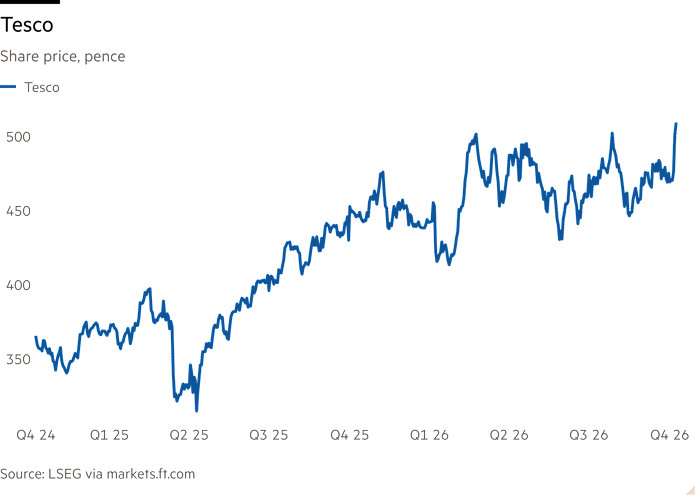
BUY: Tesco (TSCO) 495p
Tesco’s interim results revealed a resilient performance that enabled the grocer to lift the bottom end of its 2026 profit guidance, implying cautious optimism for the second half, writes Erin Withey.
Sales rose by 4 per cent to £37.4bn for the six months to August 29, of which 79.5 per cent came from the group’s core grocery business in the UK and the Republic of Ireland.
Although free cash flow of £1.57bn was partly offset by outflows of £558mn and £613mn relating to share buybacks and the previous year’s final dividend, management announced an uplift to its current share repurchasing programme from £750mn to £950mn.
The board said it now expects adjusted operating profit for the 2026 financial year of between £3.15bn and £3.3bn, up from the more cautious £3bn to £3.3bn range it had indicated in April.
As an asset-rich, defensive stock, we continue to see Tesco’s forward price/earnings ratio of 16.9 as justified. The company is cash-generative and operationally efficient relative to peers and therefore remains our pick in the sector.
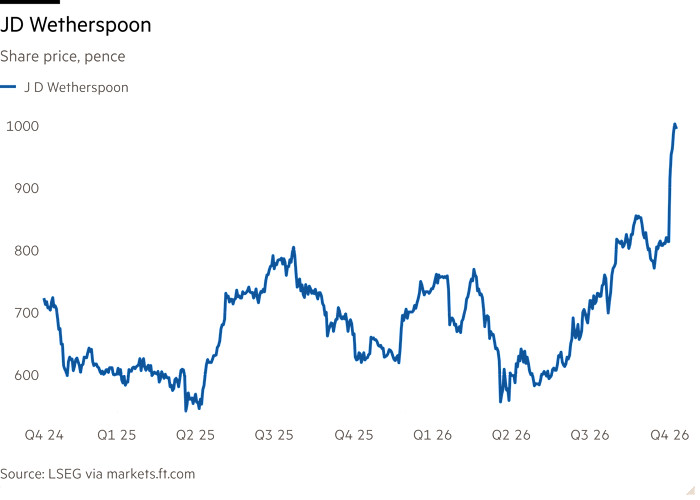
HOLD: JD Wetherspoon (JDW) 871p
JD Wetherspoon shares topped a 12-month high on final results day after the pub operator revealed that a hot summer had helped lift sales, writes Erin Withey.
The FTSE 250 company said that like-for-like sales came in 4.2 per cent higher over the 12 months to July 26. But revenue of £2.24bn was not enough to offset cost pressures that saw operating profit fall to £120mn.
The drop in profits came as little surprise, given that JD Wetherspoon had warned in July that its full-year figures were likely to be “below market expectations”. This was the group’s fourth profit warning since January.
One bright spot was a quiet shift towards “an increasingly capital-light franchised strategy”, according to Ben Needham, a portfolio manager at asset management firm Ninety One.
The group’s valuation has increased significantly since its interim results in March, and JD Wetherspoon shares now trade on a relatively full 17.4 times forward earnings. For a company at the value end of the price spectrum, we think this multiple looks rich given its margin pressures.