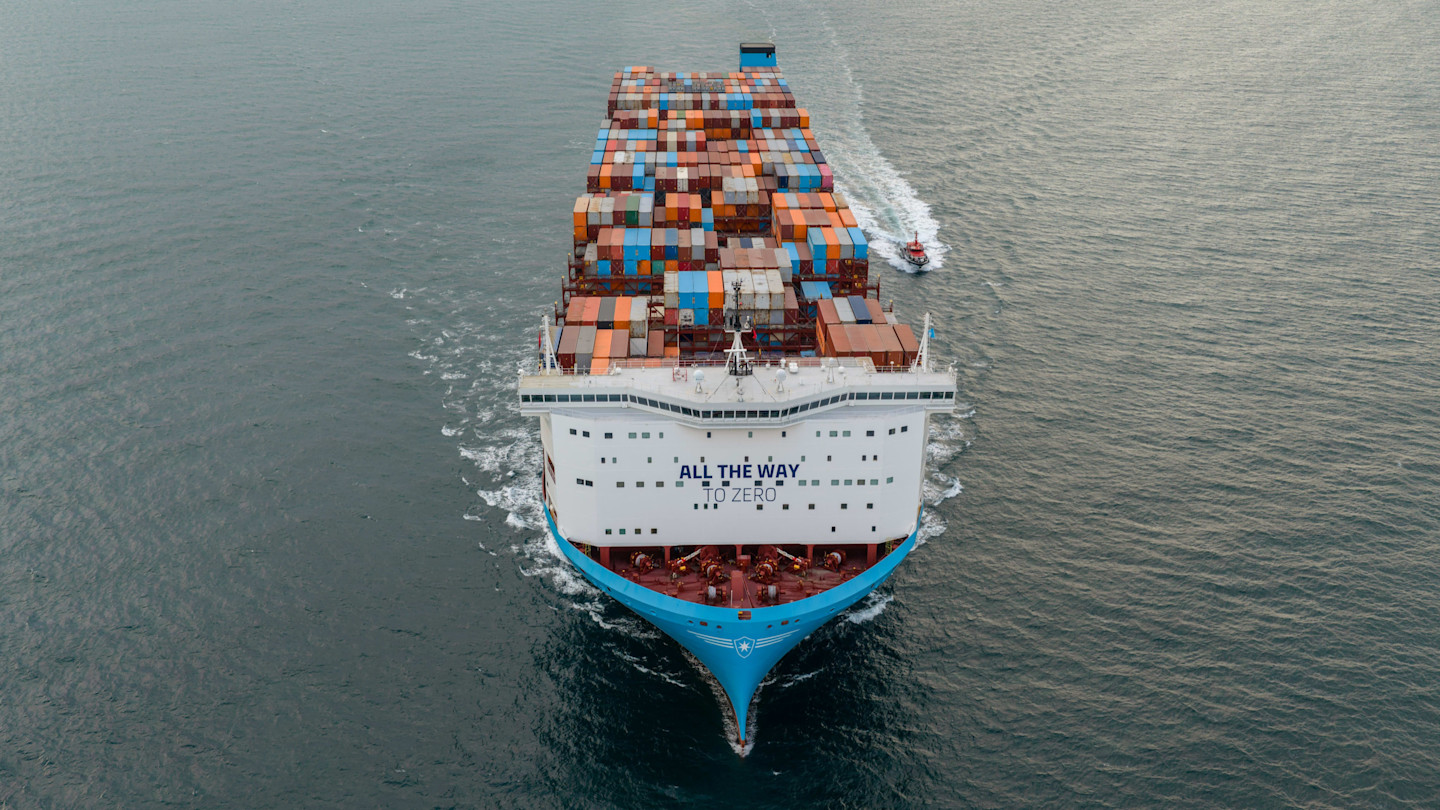
Maersk has made a strategic volte-face by pursuing an aggressive ship-buying programme as it attempts to prevent CMA CGM from taking its spot as the world’s second-largest container line.
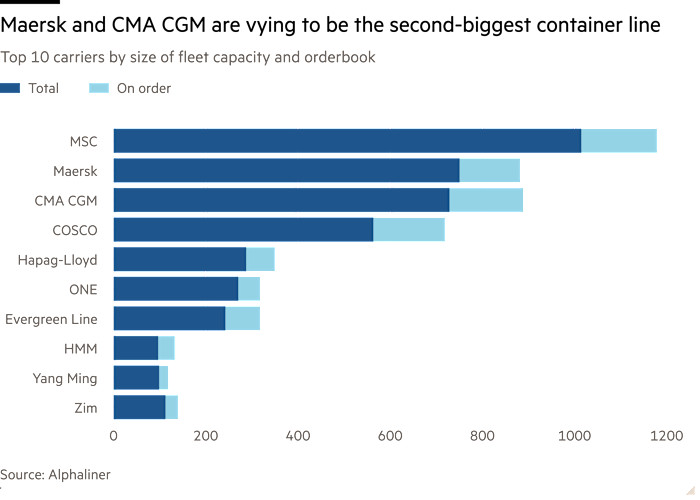
The Danish company in September ordered 26 ships, each capable of carrying the equivalent of 18,600 twenty-foot containers, taking its total number of vessels on order to 131, according to shipping data platform Alphaliner.
The decision is a major pivot for Maersk, which has spent much of the past decade expanding its ship-to-doorstep logistics operation and is now under pressure to match rivals using windfalls from higher freight rates to grow their fleets.
Chief executive Vincent Clerc said in September that the Danish blue-chip was “going to need more ships” in order to deal with ongoing trade disruption, and that Maersk would now “play more assertively” in the market.
“If you compare the order books and size today [of the fleets], the competition is really around number two and number three,” said Christian Rychly, chief operating officer of Norwegian shipowner MPC Container Ships.
Maersk’s new vessels — which will be delivered between 2029 and 2030 — will expand its total fleet to 882, an increase of 16 per cent on its existing tonnage. However, the new orders will do little to narrow the gap with larger rival MSC, which overtook it in 2022 as the world’s biggest shipping line and now boasts a fleet of 1,015, according to Alphaliner.
CMA CGM is also nipping at its heels. The family-owned French company — which came close to bankruptcy after the 2008 financial crisis — has expanded aggressively in recent years and has 160 ships on order. It now surpasses Maersk in size when its current fleet and new orders are combined.
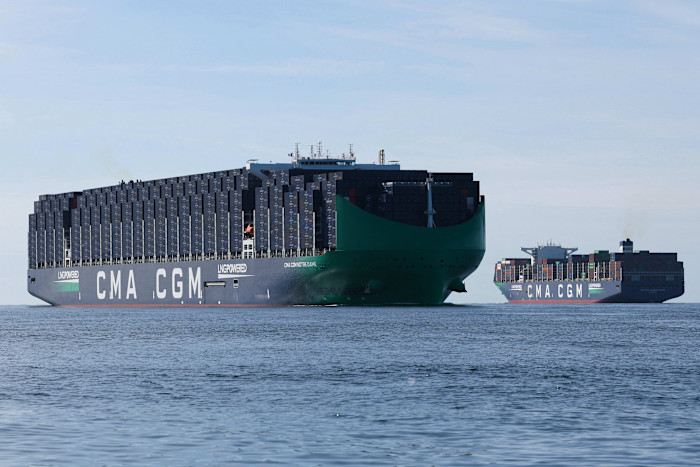
Speaking at the first UK port visit of its newest 400-metre-long container ship last month, Nicole Chamard, CMA CGM’s vice-president for its Asian and North Europe lines, said it was now “a fact” that the company would become the second-largest container line next year.
“CMA have always been the ones chasing the top dogs,” said Peter Sand, chief analyst at maritime research company Xeneta.
Container shipping groups have used profits generated during a period of unprecedented trade disruption stretching from the Covid-19 pandemic to the closure of the Strait of Hormuz to buy more vessels.
Disruption has driven up the rates shipping groups can charge, and the distances they must travel, and lines have now amassed record order books on bets that geopolitical turmoil, tariffs and extreme weather will underpin a continued shipping boom.
Maersk has already upgraded its profit forecast twice this year, having originally braced for a loss.
The shipping group has grown its fleet by about a fifth since the pandemic, but in the past 10 years has taken a different route to rivals by building up its factory-to-consumer logistics operation. That strategy was an attempt to help it weather volatility in the container shipping sector, but the company has changed tack on a bet that freight prices will stay higher for longer.
Clerc said that between 2000 and 2020, it was “pretty symmetrical . . . how much you would make and how much you would lose” due to the boom-and-bust nature of the shipping industry.
However, he said disruption and congestion in ports, among other factors, meant there was “now a natural floor” to prices and “you can make a lot more than before”, adding that average earnings were expected to remain high.
Shipping groups such as CMA GCM have also been adding to fleets in preparation for the end of their vessel-sharing alliances. Lines — including Maersk — have historically relied on such deals to offer more routes and port calls than they could provide using their own vessels alone.
CMA CGM has been growing its fleet ahead of the end of an alliance with state-backed Chinese carrier Cosco, Taiwan’s Evergreen and Hong Kong-based OOCL in 2032. Cosco also has 155 ships on order, equating to a 52 per cent increase in its current fleet.
“CMA CGM and Cosco have ordered a lot more than [Maersk] but they have communicated now that they need more vessels,” said Rychly.
Meanwhile Hapag-Lloyd, which is in an alliance with Maersk, has agreed a $4.2bn takeover of Israeli rival Zim that would increase its fleet to more than 400 vessels.
MSC’s own shopping spree for new and second-hand vessels during a post-pandemic shipping boom helped make it the world’s biggest shipping line and paved the way for it to break a 2015 alliance with the Danish group.
“The pressure is on all the other carriers to position themselves for the 2030s,” said Lars Jensen, chief executive of consultancy Vespucci Maritime. “Do you start a growth spurt to go it alone?” However, he added that shipping groups were “playing a zero-sum game. They cannot all grow to that size.”
Maersk’s new ships will be among the largest vessels in its fleet, as the company follows its rivals in trying to drive down costs with economies of scale. The bigger and more efficient vessels a container company can run, the lower the rates it can offer, as fuel expenses make up as much as two-thirds of the cost, executives said.
“If you double the size of the ship, you bring down the cost by about 25 per cent. That is the basis of what everyone is doing,” Rychly said.
However, Maersk has deliberately stopped short of buying the largest ships on the market. Ten of CMA CGM’s new ships are far larger — capable of carrying the equivalent of 24,212 twenty-foot containers — including the Notre Dame, a liquefied natural gas-powered vessel that is the largest containership currently operating under the French flag.
Announcing an order of eight 366-metre-long ships in February, Maersk said those vessels offered it “greater flexibility than the largest ships currently being built”, providing it with “multiple deployment options across both our current and future network”. The largest container ships are about 400 metres long, making them so big they cannot dock at all ports.
Some executives are concerned that growing fleets will lead to overcapacity. Too many ships would push down freight prices and leave container shipping companies potentially facing significant losses, although many container executives argue that they can counter this by slowing or idling their ships.
“Vincent [Clerc] is pretty bullish that we are not going to get overcapacity, that there will be a shortage of capacity and the carriers can manage the extremely large order book, but I am not convinced,” Jensen said.