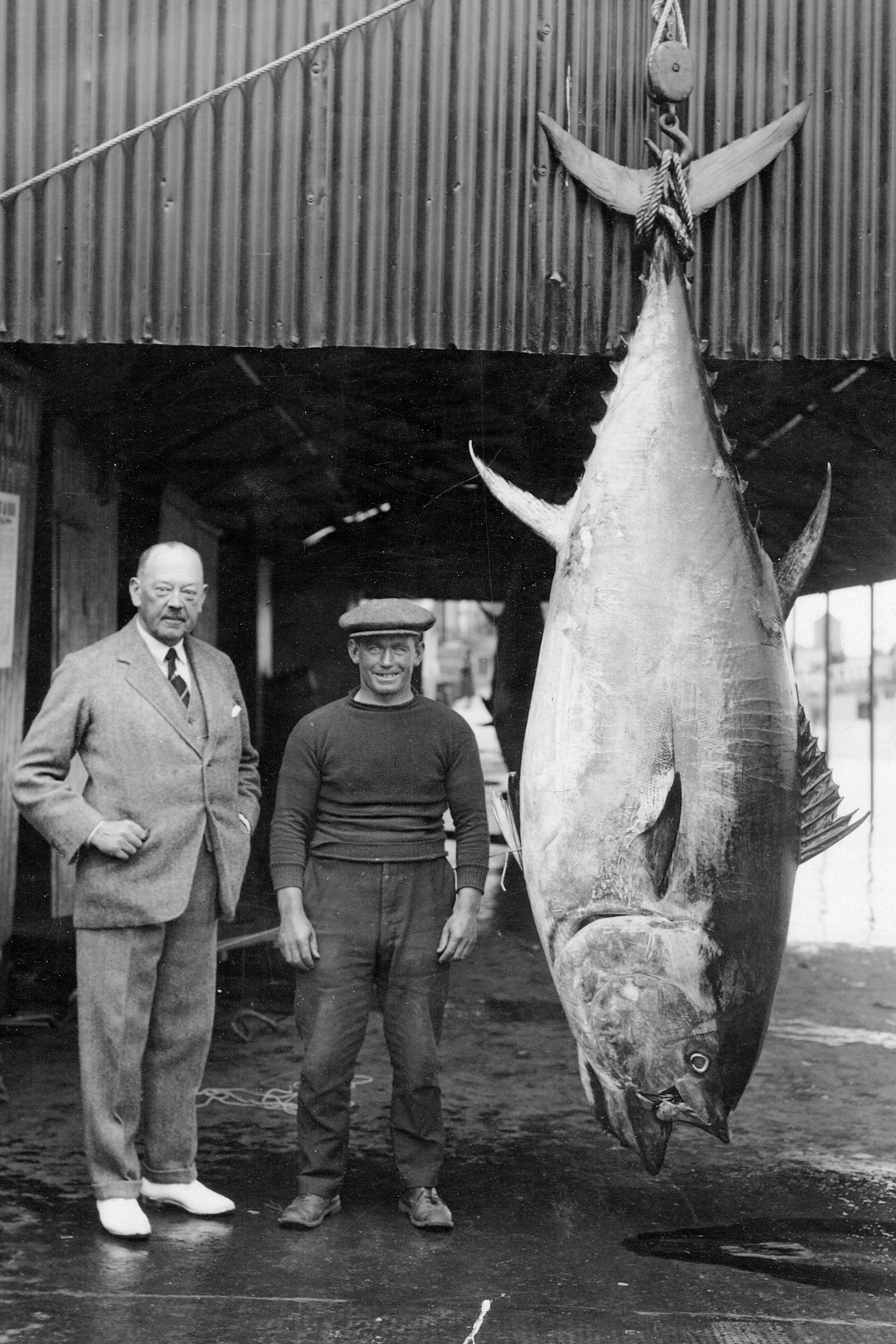
In 1933, 50 miles off the coast of Yorkshire, Lorenzo Mitchell-Henry, a stout man with a shoebrush moustache, reeled in a fish four times his size: 851lb, according to the scales. Whitby was an international destination for big-game tuna fishing, and his Atlantic bluefin was the largest caught by rod and line anywhere in the world.
For hundreds of years, if not millennia, bluefin roamed the UK waters. But despite the superlatives applied to these so-called “tigers of the sea”, for most of their history there was little interest in these ocean giants. A hunt through historical British cookbooks turns up no traditional bluefin recipes, no Yorkshireman’s version of otoro sashimi, no seared tuna steak à la mode Plymouth.
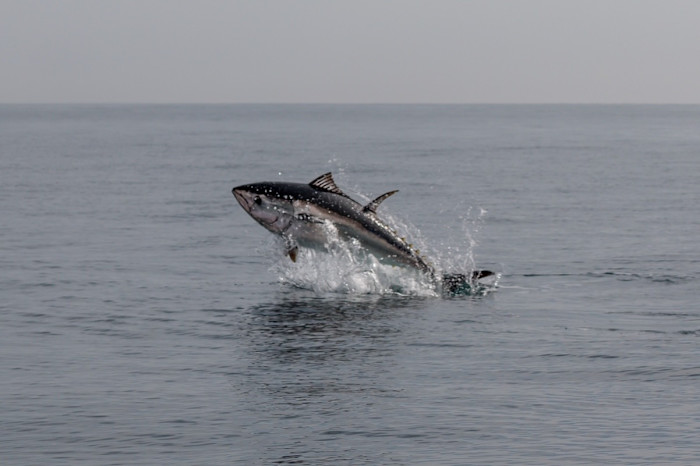
Whitby’s moment in the sun was fleeting. Barely two decades after
Mitchell-Henry’s record, bluefin had all but disappeared from British waters. By 1963, the largely Nordic commercial bluefin fishery in the North Sea had collapsed; the bluefin had fallen victim to overfishing, declining stocks of herring and a shift in long-term weather patterns that cooled the waters of the north-east Atlantic and the North Sea, making them less hospitable. The pressure on the fish only increased and by the early 2000s the tuna were, as one researcher put it, “staring down the barrel of regional extinction” with the Atlantic bluefin confirmed as globally endangered in 2011.
And yet, by 2015, bluefin were spotted in the waters off Penzance in Cornwall. Five years ago they were delisted. Three years ago a tentative fishery was introduced. This August, a pair of 300kg giant bluefin were the first tuna landed in Yorkshire for more than 70 years. And a just-released WWF Living Planet Report 2026 states: “Today both [the Atlantic and Pacific bluefin] have recovered to the point where neither is considered overfished or a species of concern.” It’s an astonishing second chance for the fish.
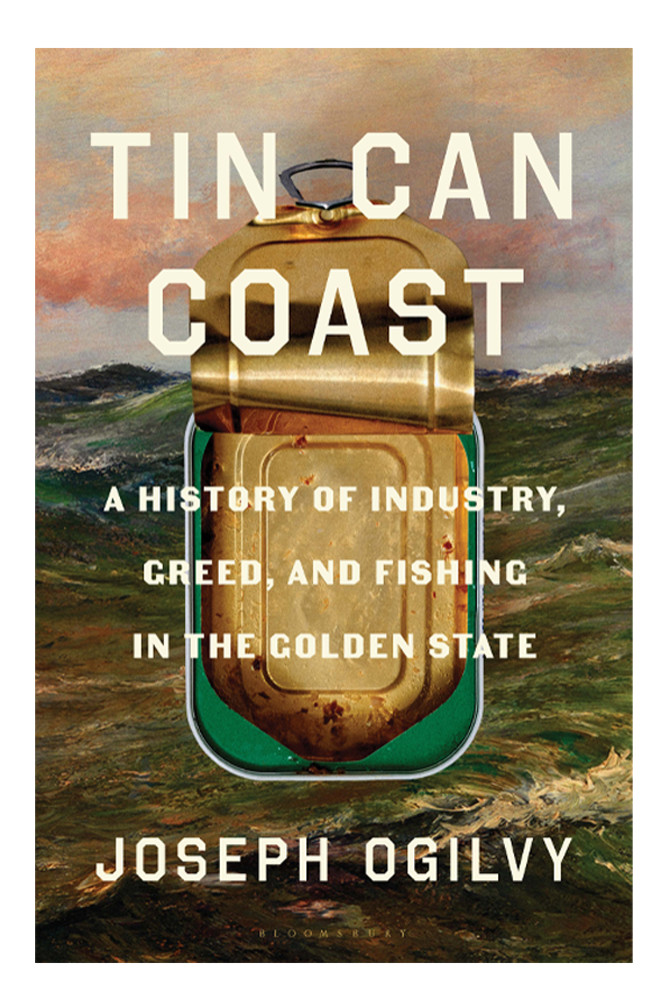
A year or so after the reopening of that fishery, I returned to London after a period away. I was working as a chef at Bocca di Lupo, the Soho restaurant where I first learnt to cook. One morning I found the head chef covering the walls of one part of the kitchen in clingfilm. A whole bluefin was coming in to be butchered. I was amazed. I’d spent the past few years in the US cooking and working on a book, Tin Can Coast, about the history of fishing in California. The idea of bluefin off Penzance meant reconfiguring my picture of the British fishing industry.
Respite for the bluefin tuna had come at the very last moment. In the late 2000s, the ICCAT (the International Commission for the Conservation of Atlantic Tunas, long maligned by critics as the International Conspiracy to Catch All Tuna) was spurred into action. They imposed a tight quota and strict regulations to stop illegal fishing. Landings dropped by as much as 75 per cent. Without this intervention the story would be over: the English Channel-bound tuna would have been hooked, frozen and freighted to fish markets in Japan, or netted and fattened up in tuna farms in the Mediterranean, one of their primary spawning grounds.
But cutting overfishing wasn’t everything. Genetic good fortune and favourable ocean conditions have played a part as well. Dr Tom Horton, a marine ecologist monitoring the bluefin’s recovery, says the fish has “huge bounce-back potential”. With millions of eggs, even small improvements in hatching rates can lead to a lot more adult fish. With no fishery in the British Isles (until 2024), the bluefin had wandered into a de facto protected zone. Likewise, the bluefin’s food – sprats, sardines and so on – were also independently returning. Dr Horton tells me the groups of feeding bluefin off Britain are the biggest he’s seen anywhere in the Atlantic.
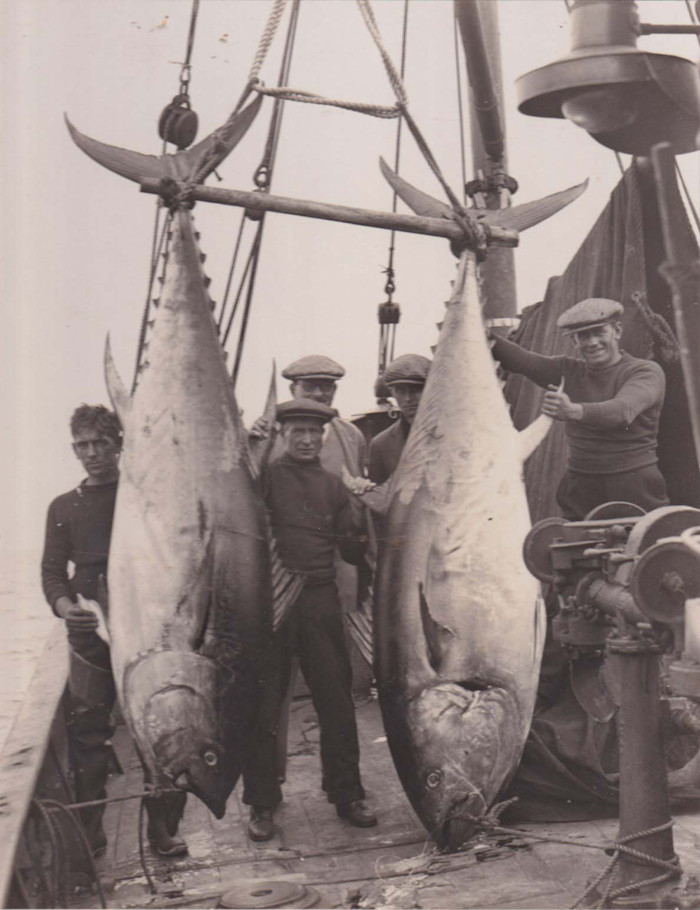
Britain’s bluefin fisheries are unusually sustainable. This year only 30 boats received a licence, each restricted to four tonnes for the season. They catch the tuna much as Mitchell-Henry did, with rod-and-reel. Everyone is invested in maintaining a high-calibre product – from the government to the fishermen to the chefs – who are paying around £2,000 for a whole 100kg fish.
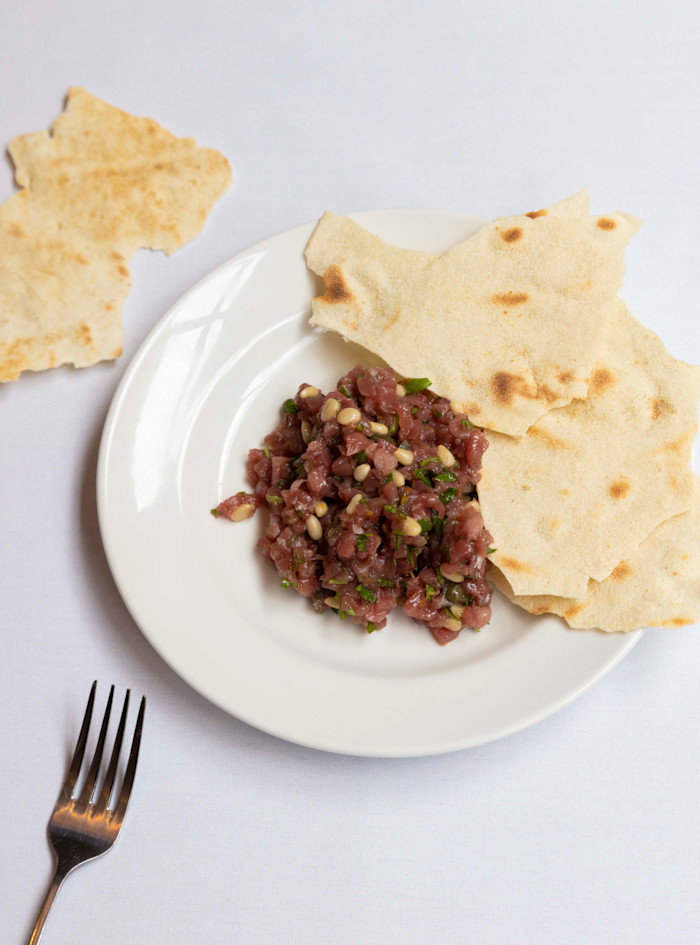
For chefs, the expense is an outlay they are happy to consider. When Nye Smith, head chef at the Three Horseshoes in Somerset, first brought a whole fish in, residents of the local village came down just to see it. When David Carter was setting up Oma in Borough and found that British bluefin were available, he tossed out plans for a raw fish bar serving sea bream and mullet and decided to serve only “the wagyu of the sea” instead.
Served raw, it has a pure, clean flavour with gentle mineral and briny notes, while otoro from the belly has a rich, fat-marbled tenderness. Grilled or seared, it has an umami savour and a firm texture that can stand up to sharp-tasting sauces.
At Bocca di Lupo the challenge of preparing a whole bluefin starts at the front door. It takes three chefs and a lot of swearing to get one down a flight of kitchen stairs; it’s like carrying a cold, wet, streamlined chest of drawers. Filleting one is a full-body process. The act of breaking down a whole fish is a mark of respect and of care.
A few retail shops sell British bluefin, mostly online, and the Cornish Canning Co hand packs tins of gourmet bluefin, but for the most part it’s restricted to restaurants. A truly British cuisine of tuna is still to come. As Nye Smith points out, “there’s nothing in the bank of British and northern European recipes” for chefs to draw from, but that will surely change as time goes by. The beginning of a story of tuna as a sustainable, British ingredient.