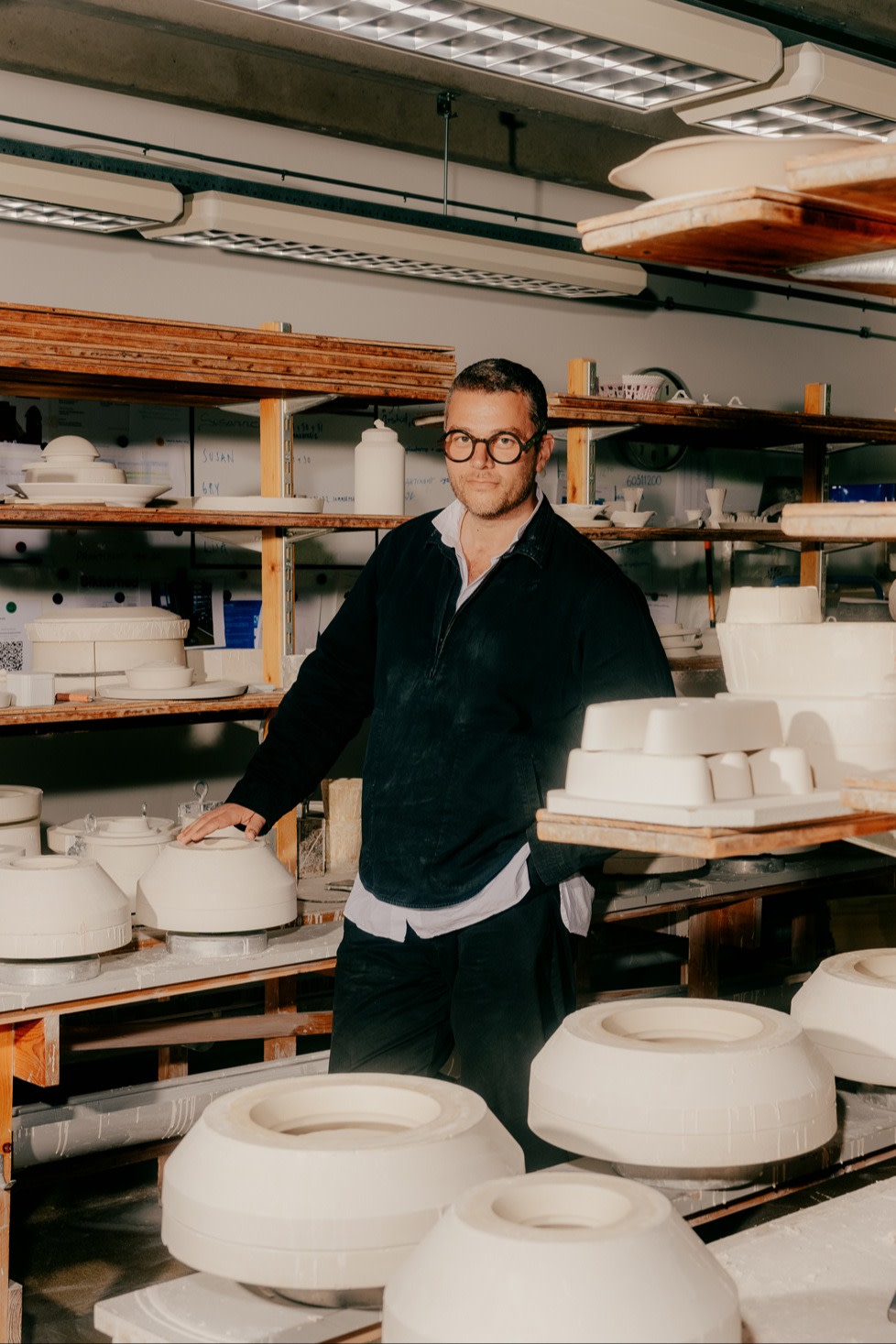
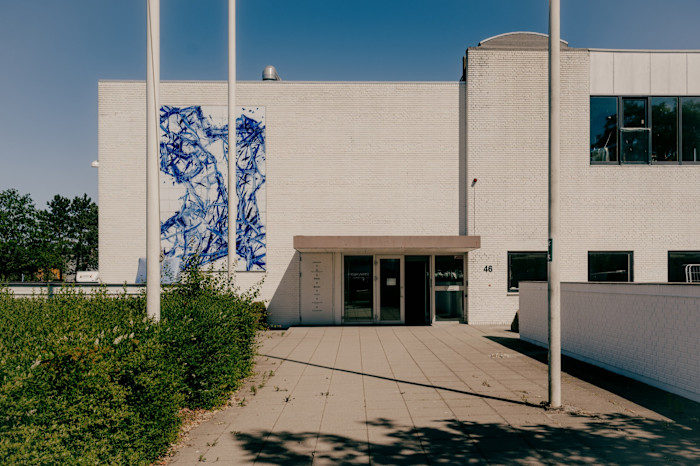
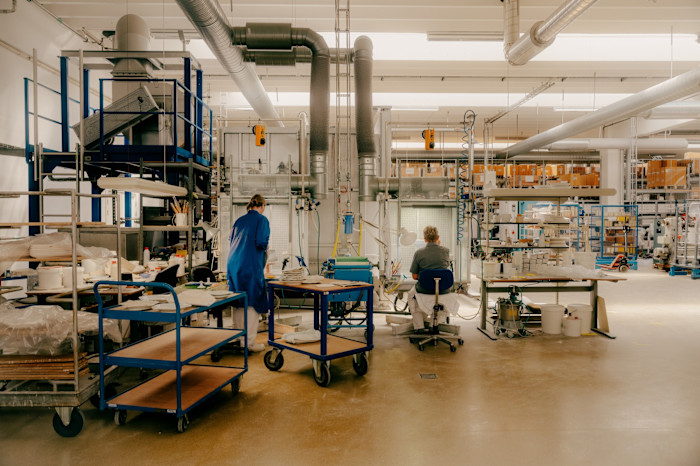
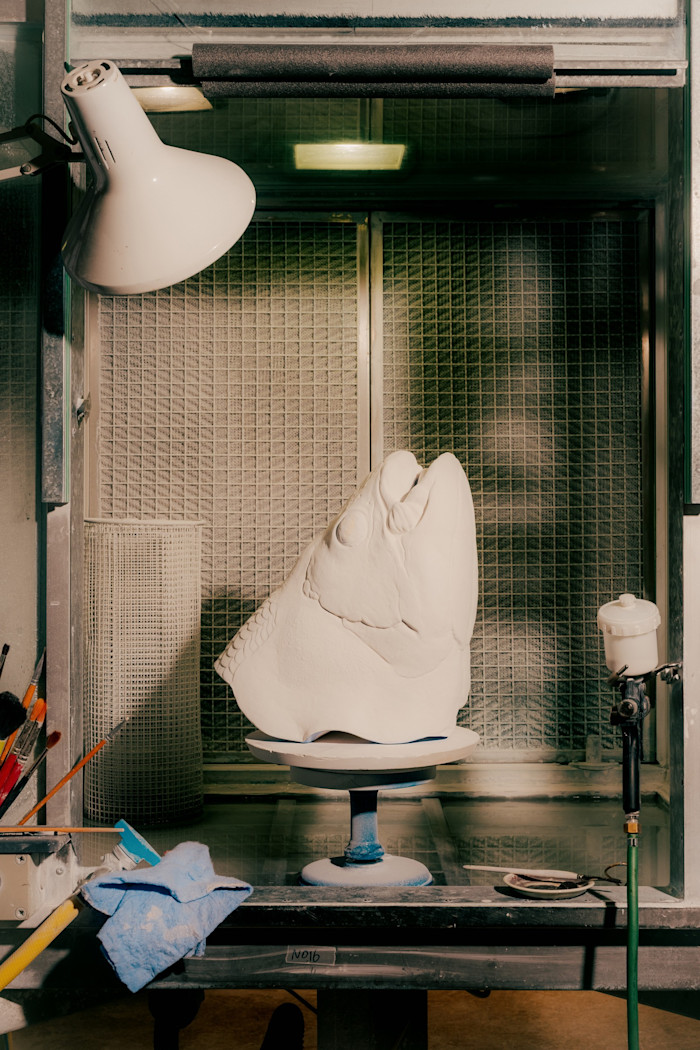
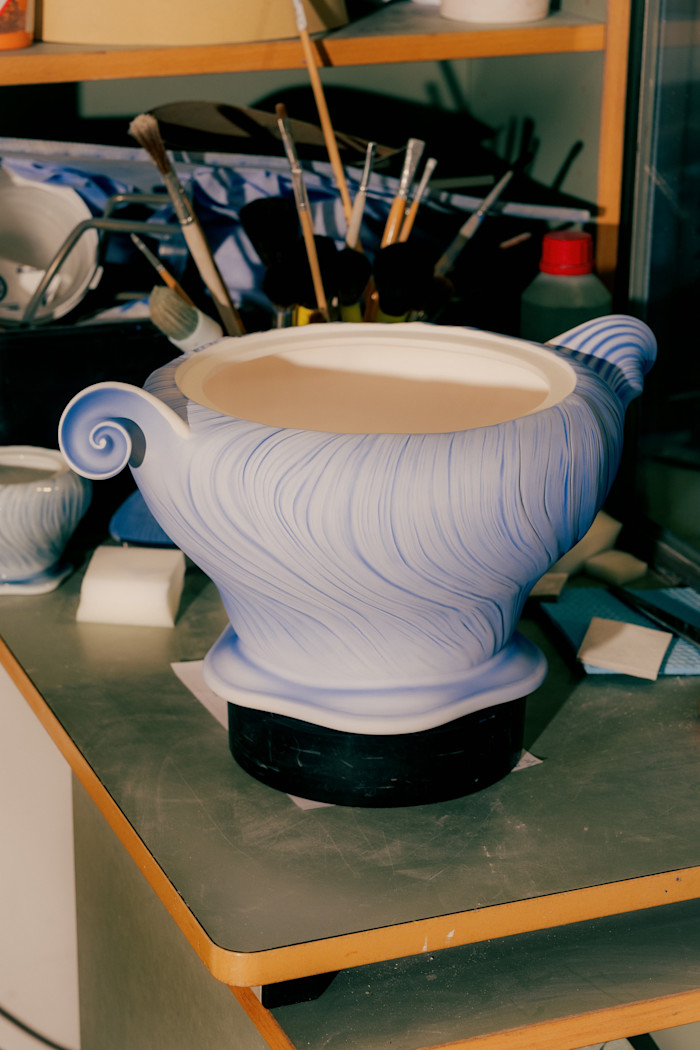
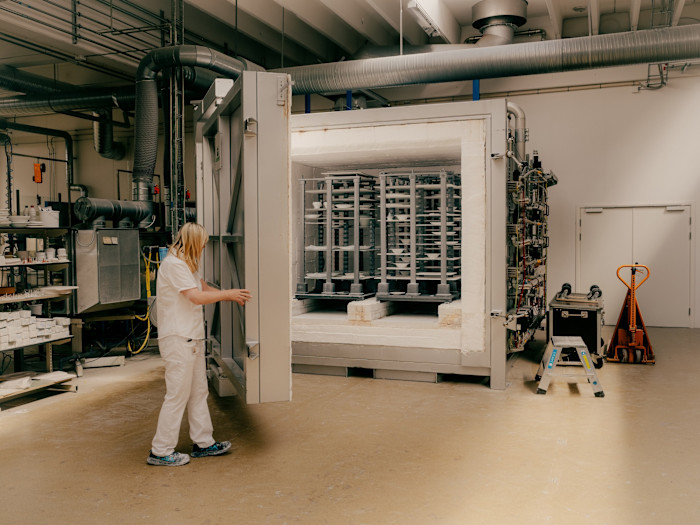
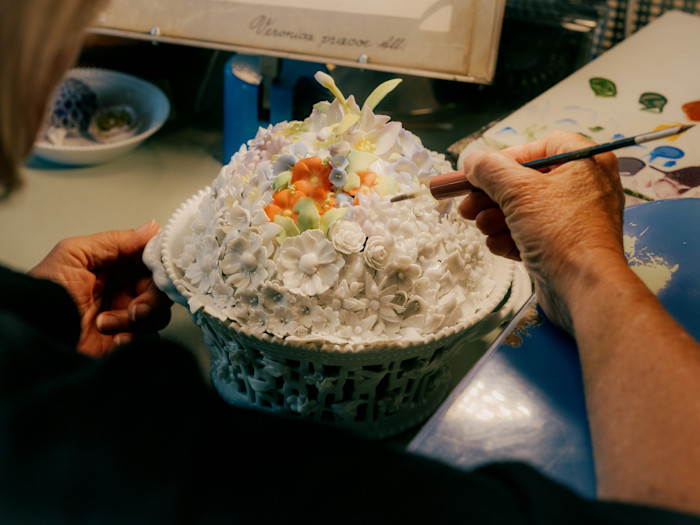
On the outskirts of Copenhagen, a typically industrial landscape of artery roads, big-box warehouses and sprawling car parks is an unlikely home for a porcelain company steeped in 250 years of history. Yet inside a white and unassuming factory building, behind a glass door marked “staff and craftsmen”, I find just that. On an overcast morning, it is a flurry of activity. Limited-edition plates are being modelled, intricate vases are being handpainted, sculptural bowls are stacked ready for the kiln, and two and a half centuries of archival teapots and tchotchkes are stashed in hay-filled wooden crates.
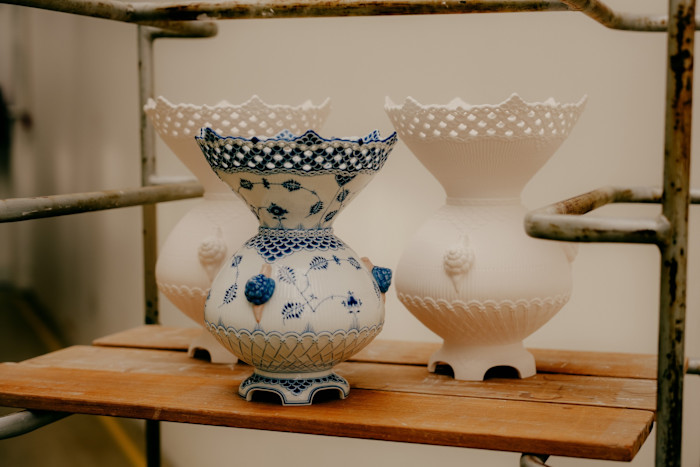
Royal Copenhagen has based its manufacturing here since 2012. When the brand was established in 1775 under the patronage of Denmark’s Queen Juliane Marie, its surroundings were somewhat more romantic: a grand former post office on central Copenhagen’s Købmagergade. There, its foundational blue-and-white dinnerware – a combination of fluted surfaces and delicate floral motifs known as Pattern No 1 – was born. The original plates and teacups, jugs and vases remain in production and are collected the world over: they are the bedrock of one of design-centric Denmark’s most enduring luxury brands, which today produces approximately 3mn pieces per year and has roughly 1,000 stockists globally.
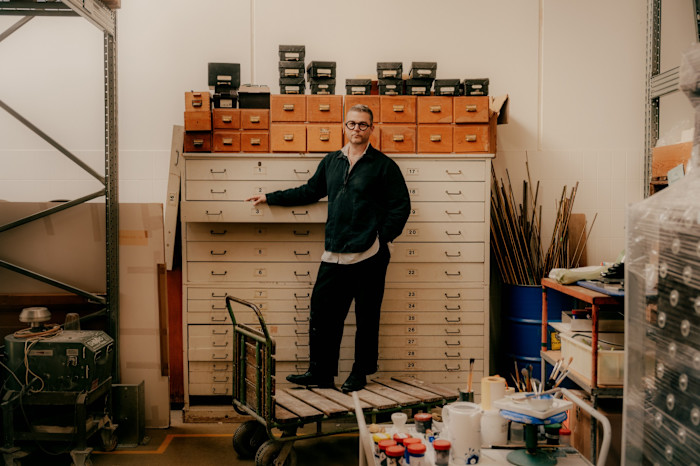
“Royal Copenhagen is part of the fabric of Denmark,” says the brand’s Danish creative director Jasper Toron Nielsen. “People are emotionally invested in it. And that feels very different to the world of design I’ve been part of before.” The former design director of menswear at Burberry, whose CV also includes roles at Tom Ford, Brioni and Givenchy, joined Royal Copenhagen in 2023. He brought with him a keen sensibility, but porcelain was an entirely new endeavour. “I didn’t have any knowledge of the material,” he confesses. His induction included hands-on lessons. He was taught how to make a mould, and generally familiarised with the different stages of the production process. “I’m still learning,” he smiles.
Since moving from royal to private ownership in 1868, the company has had multiple owners – from earthenware company Aluminia in 1882 (an era made memorable by lauded artistic director Arnold Krog) to the Fiskars Group, which bought Royal Copenhagen in 2012. The Finnish conglomerate that began life in 1649 as an ironworks has forged an impressive portfolio of “design-driven brands”, including Wedgwood, Iittala and Georg Jensen (during my visit, renovations were underway to move some of the latter’s silversmiths into the space). Yet, says Nielsen, “no one has come in and done something that made Royal Copenhagen lose its place in the world. It is a brand that has never lost its level of quality, craftsmanship or beauty.”
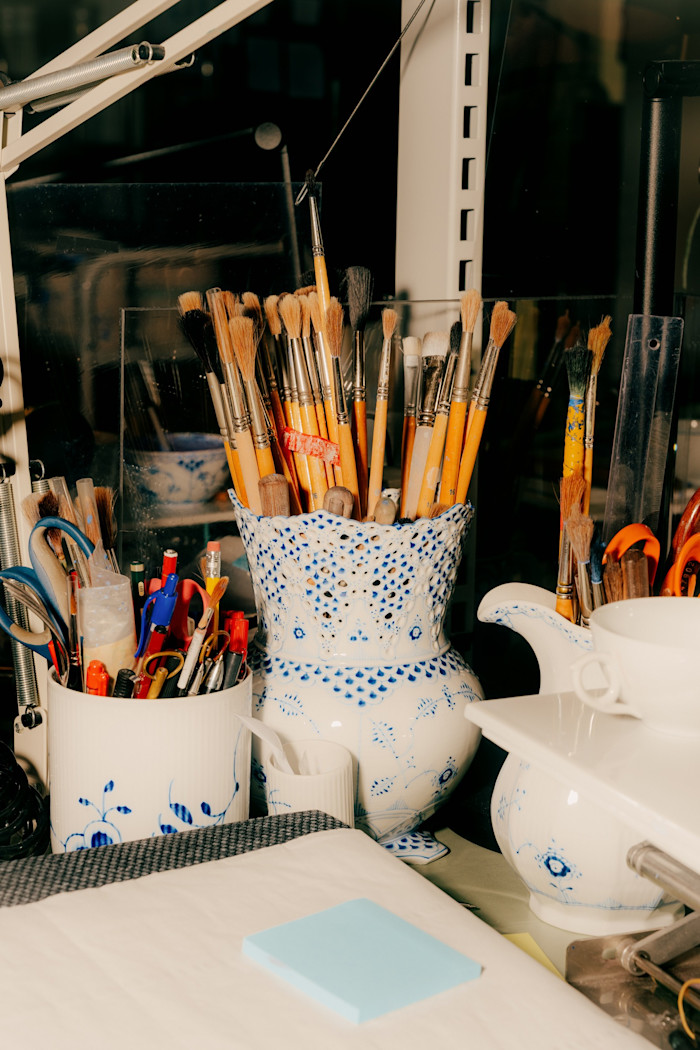
Several recent appointments in the Fiskars stable have come from the world of fashion, including Georg Jensen creative director Paula Gerbase, who ran her own clothing label, and Wedgwood’s Emma Glynn, whose CV features design roles at Yoox Net-a-Porter, Sunspel and MaxMara. Similarly, Nielsen’s appointment is part of a strategy to reinvigorate the porcelain house. “It was important to find a creative leader who could help strengthen the brand’s relevance beyond our home market while remaining deeply respectful of our heritage,” says Jacob Siboni, senior vice president of Royal Copenhagen. He saw Nielsen’s background as a positive. “Fashion is constantly balancing craftsmanship with contemporary culture. Jasper understands how to build desire around a brand, how to translate a rich history into something that feels meaningful today.”
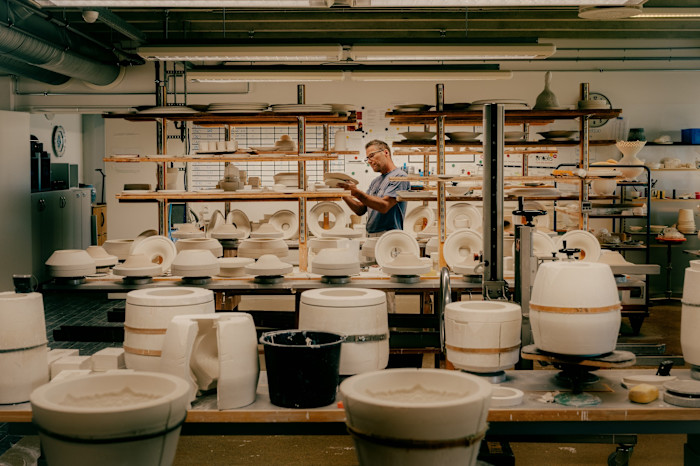
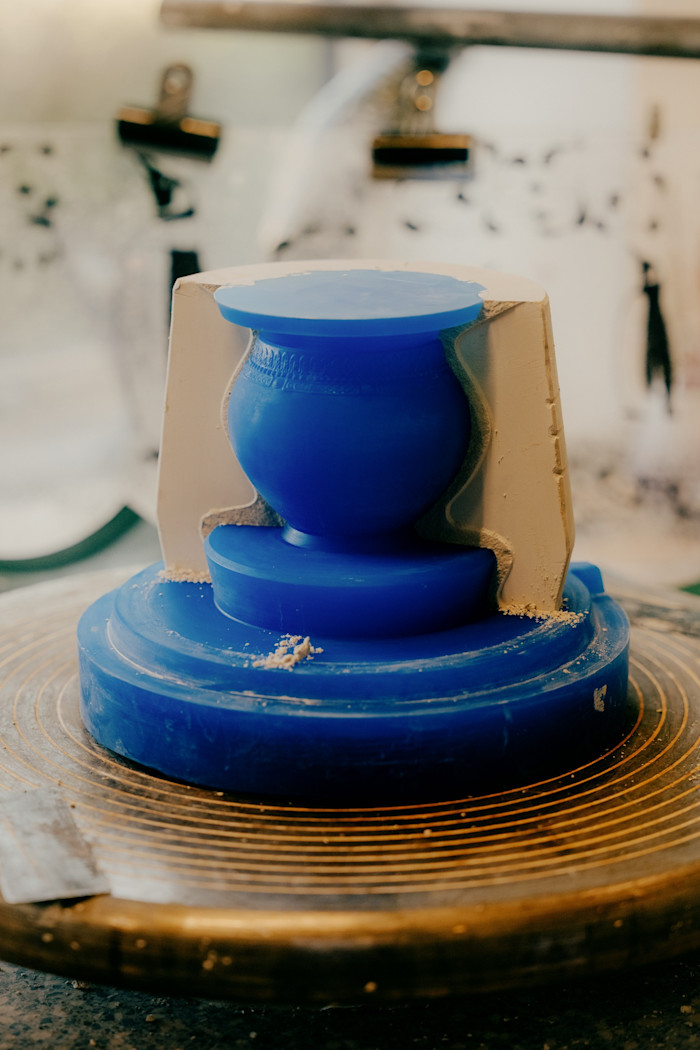
Today, 81 per cent of Royal Copenhagen’s production has been moved to Thailand; the Danish hub is dedicated to product development, model making, artist collaborations, limited editions and bespoke commissions. In the model shop, where prototypes and plaster moulds are made, Ragna Mouritzen carefully carves out the design of a limited-edition Christmas plate. “Many people could probably learn the craft, but not a lot of people have the temperament for it,” she says. “You have to be really into it.”
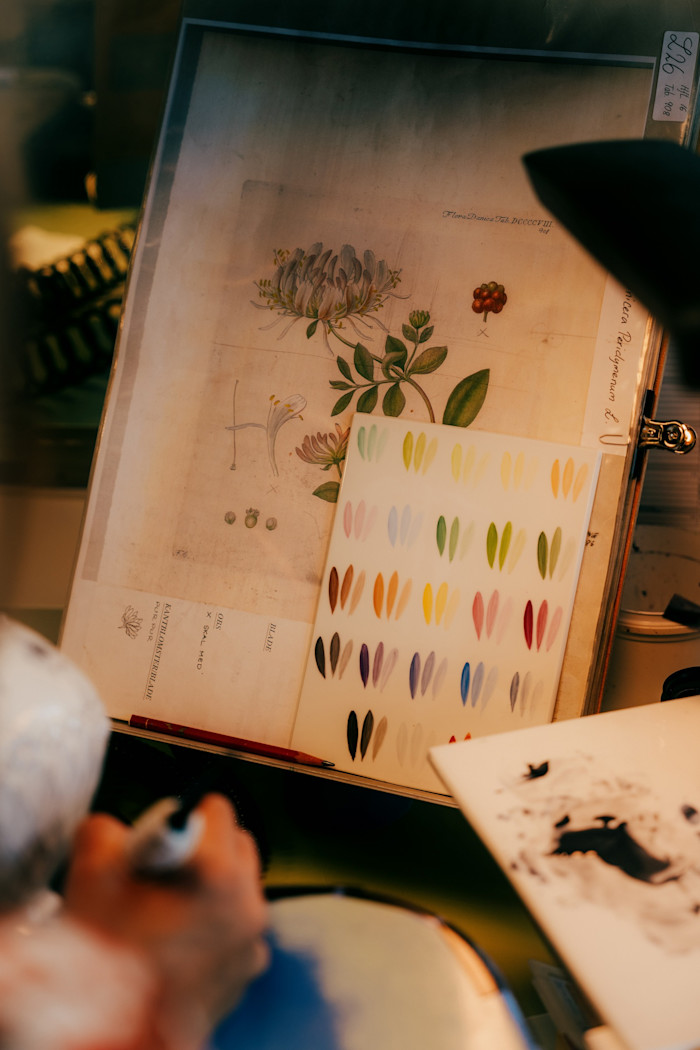
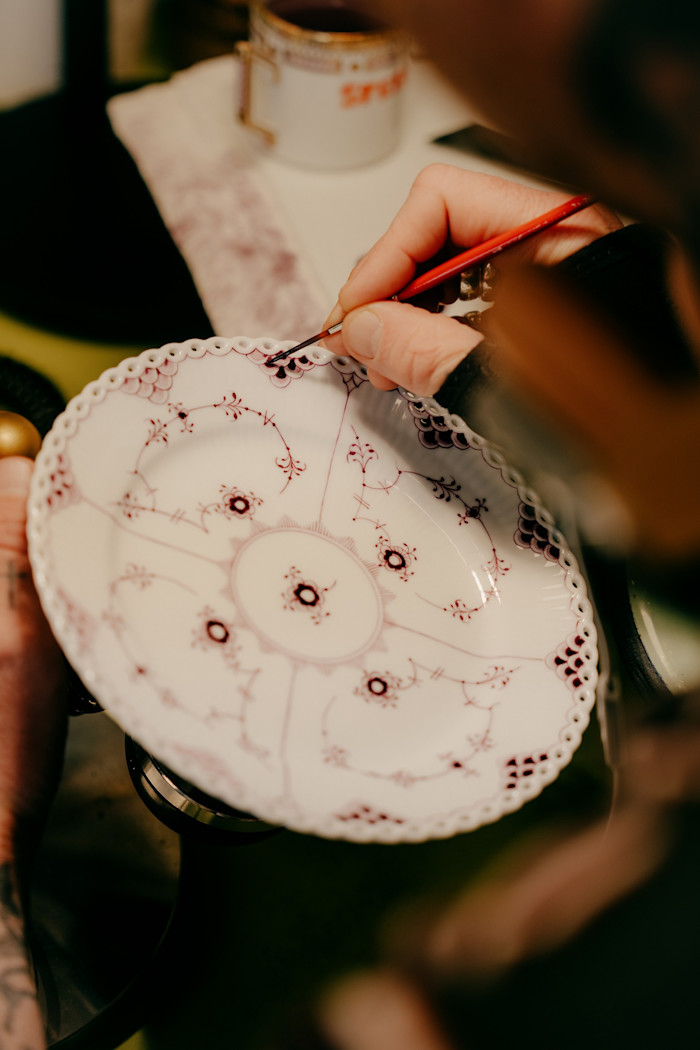
The Flora Danica range, originally commissioned in 1790 as a royal gift for Russia’s Catherine the Great, is handpainted here to order, based on a compendium of some 3,240 detailed botanical drawings. “It’s perhaps one of the most technically demanding porcelain collections to paint in the world,” says Stine Holte Jensen, Royal Copenhagen’s art and heritage manager. New painters have to train for up to five years before they are skilled enough to take on the task. Decorative plaques on the walls mark staff anniversaries: 25, 40 and even 50 years. Master modeller Bo Jørgensen, sporting a hot-pink T-shirt and a white beard, explains that both his parents worked at the Royal Copenhagen factory, and he has been there for 51 years. “I’m one of the new ones,” he jokes.
The ceramics industry is at an inflection point as changing consumer habits and increasing production costs are forcing cutbacks. Wedgwood froze production for 90 days last year and Royal Copenhagen has slimmed down operations – staff number roughly 400, compared to 650 in 2012. In May the UK government announced a £120mn funding package to support the sector that has seen several companies go into administration over the past two years. Although 217-year-old Derbyshire firm Denby Pottery closed its doors, subsidiary brand Burleigh was acquired by former fashion designer Christopher Bailey (who, coincidentally, hired Nielsen at Burberry).
“To remain resilient, the industry must continue investing in creativity, innovation and strong brand-building,” says Daniel Lalonde, chief executive of Fiskars’ Vita portfolio, which includes Royal Copenhagen as well as Wedgwood. In 2025 Vita reported net sales of €612.6mn, a 1.2 per cent increase from 2024, which Fiskars attributes in part to the good performance of Royal Copenhagen. “Consumers increasingly value authenticity, quality and longevity, all of which play to the strengths of our category,” adds Lalonde. (Siboni confirms that Royal Copenhagen’s sales have increased since Fiskars acquired the company, but declined to share figures.)
Over the past three years, Nielsen’s creative steer has quietly ushered in a new era for Royal Copenhagen. “You can barge into a house in many different ways,” he says. “But if you’re humble in how you approach it and don’t smash the door in, you can learn so much.” It’s about getting everyone on board, before “rolling out those bigger bets”.
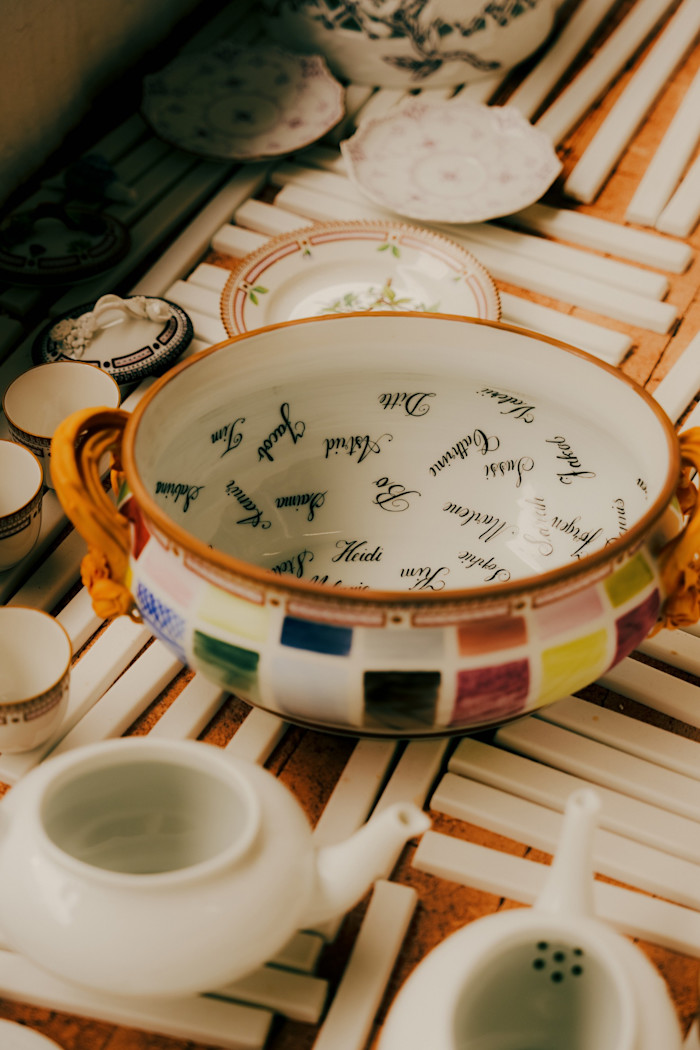
While Pattern No 1 remains the “beating heart” of the business, says Nielsen, his new collections play with colour and form – some subtly, such as the Iris tableware, with its soft, pastel sweeps of colour; others more boldly, including the graphically wave-like Kontur collection and a 250th-anniversary collaboration with Danish artist Klara Lilja, whose platters are strewn with starfish, butterflies, shells and snails. “Ways of gathering around the table have evolved, so that completely changes the items that you need,” says Nielsen, highlighting sharing dishes and small bowls for kimchi. There’s also a renewed focus on limited editions – and even non-ceramic additions. Last year he launched his first table linens and glassware for the brand.
Nielsen grew up in the town of Jægerspris, north-west of Copenhagen. “I was quite different to the other kids,” he says, referencing his love of design, art and drawing. He left for London aged 21 to study fashion and cut his teeth at Mulberry before joining Tom Ford in the early days of the brand. He then moved from head of design at Brioni in Rome to lead menswear at Givenchy in Paris, before joining Burberry. “Jasper always had such a sensitive eye for proportion, material and the smallest details,” says Bailey. “It feels very natural that he has found his way into ceramics, where so many of those same instincts come into play.”
Nielsen was also “really quite ready” to leave fashion, he says. “At those last shows I thought, ‘There’s no way I can be on my knees pinning trousers forever.’ And I loved the idea of moving into interiors or product design.” When the opportunity at Royal Copenhagen arose, it also represented a homecoming. Nielsen was surrounded by its wares as a child. His mother collected it, and he followed suit. He calls Pattern No 1 a “design icon”, likening it to the Burberry check.
While Nielsen spends much of his time at the brand’s design studio in Frederiksberg, west of Copenhagen, being at the factory and chatting to the makers is “crucial” to the development of new collections, he says. “In fashion, you can turn things around quite quickly. Here, it takes years to develop something new.” Those “bigger bets”, then, are imminent, says Nielsen, hinting that a substantial new collection with “a renowned international designer” is on the cards. “We can make much bigger changes now – and we are planning to,” he adds. “It’s just about how you turn up the volume.”