This is an on-site version of the White House Watch newsletter. You can read the previous edition here. Sign up for free here to get it on Tuesdays and Thursdays. Email us at [email protected]
Good morning and welcome to White House Watch! Let’s get straight to:
The pivotal Ohio Senate race
Juicy Treasury bonds
A $2bn bet on oil tankers
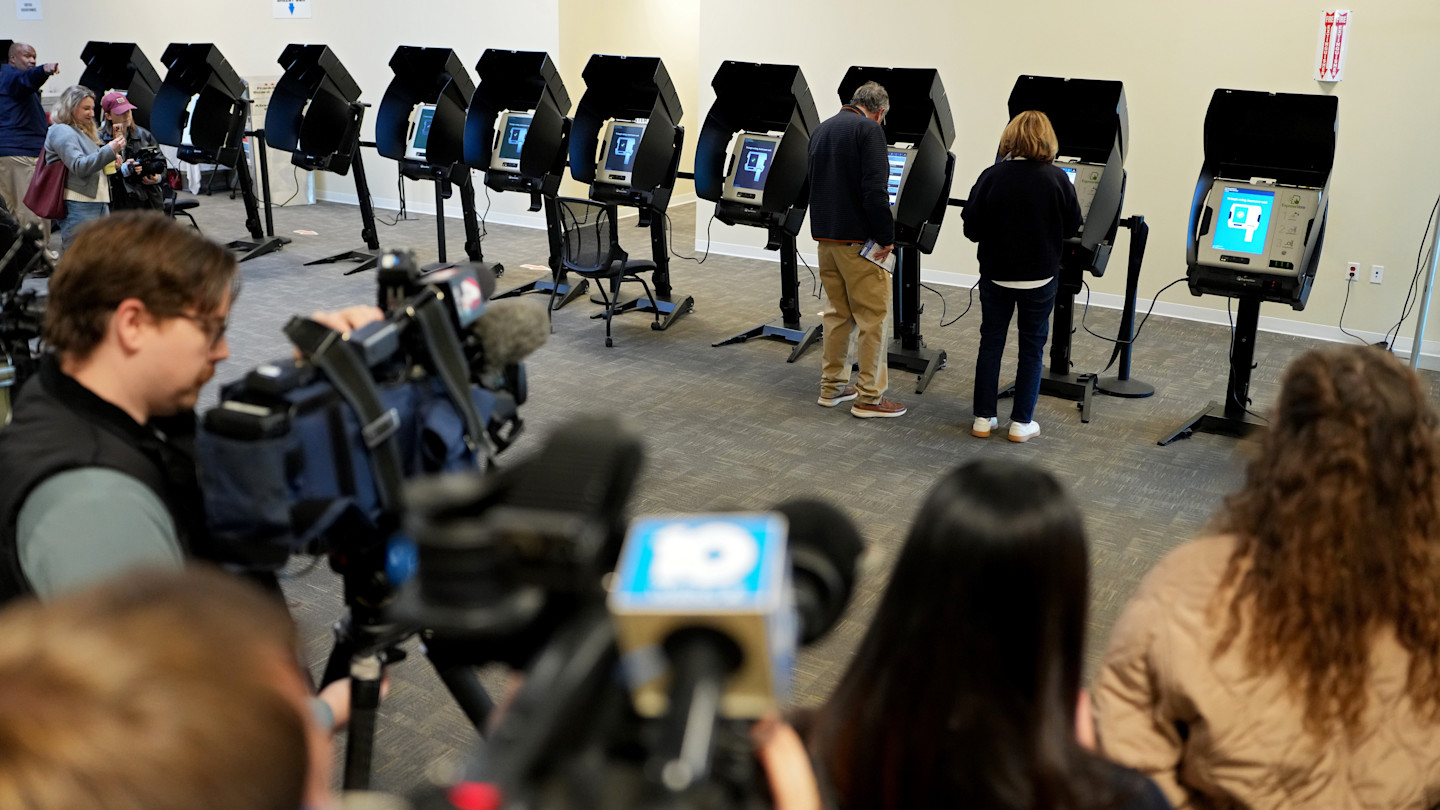
Less than a month away from the midterm elections, cracks in Republican support in Ohio are showing — and Democrats are increasingly optimistic they can shatter it.
In the outskirts of Cleveland lies a piece of the US industrial heartland that is now among the most contested electoral battlegrounds for the November 3 midterms, and it has turned the race for one of the state’s Senate seats into a referendum on Donald Trump’s second term.
Facing off: Republican incumbent Jon Husted and Democrat Sherrod Brown, who lost his Senate seat in 2024 to Republican Bernie Moreno.
Ohio has gone for Trump in each presidential election since 2016, with Ohioans pinning their hopes on the president’s promise to end decades of decay across the upper Midwest and revive industrial manufacturing.
Although Trump keeps saying that he’s brought a manufacturing boom to the country, it’s not that simple.
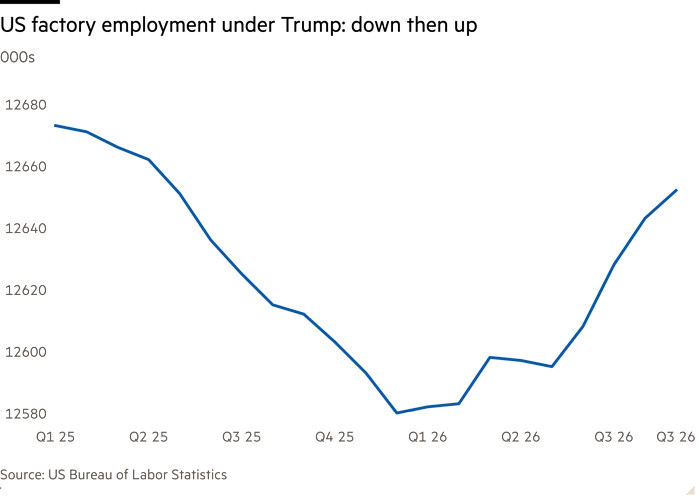
Ohio has seen a jump of about 13,000 manufacturing jobs since Trump returned to office at the beginning of last year. The St Louis Fed also estimates that the US has added about 70,000 jobs in the sector from a low point at the end of 2025.
But the overall picture remains worse now than before Trump began his second term: the US has shed more than 21,000 manufacturing jobs since January 2025.
Persistent inflation, which has pushed up the cost of basic necessities such as groceries and fuel, is stacked on top of the high costs of expensive tools and machinery needed by Ohioans with their own manufacturing businesses.
“Trump has repeatedly asked voters to consider him on the ballot as they choose their candidate,” Frank Luntz, a Republican political consultant and pollster, told the FT’s Aime Williams. “In Ohio, that would be problematic.”
Aime took a trip to Eastlake, Ohio, where small factories are sprinkled among the city’s barber shops and diners. There, she met Rob Hines, who hasn’t been able to get a new job since January, when he was told his factory — which was owned by top Wall Street Trump backer John Paulson — would close.
The plant, which made brass musical instruments for 60 years, laid off about 150 workers. The closure jarred with the president’s promise to reindustrialise the country with trade wars.
“A lot of our people believed in Trump, believed in Vance,” said Hines, referring to vice-president JD Vance, who is from Ohio. “This administration was good at selling dreams.”
The latest headlines
American defence contractors have warned that a US initiative to stockpile critical minerals could drive up prices and unduly compete with industrial buyers for scarce materials.
Trump is distancing himself from two of his closest campaign strategists after it was revealed they travelled to the Balkans to advise a pro-Russia party while working for the president’s Maga Inc political action committee.
Some investors are snapping up US long-term bonds that are paying the highest yields since 2002 after a steep sell-off driven by the surge in fuel prices sparked by the Iran war.
Newly minted media mogul David Ellison, whose family has close ties to Trump, has opted to keep CNN’s chief executive in place despite sustained attacks on the network from the president, partly because Democrats could regain power in Washington.
Democratic representative Jim Clyburn, a veteran of the civil rights movement, told the FT that Republicans should brace themselves for a backlash from Black voters in the south.
Secretary of state Marco Rubio has called on western nations to uphold traditional values on a trip to Athens or face a future of “atrophy, servitude and decline”, saying “we have much more to learn from the men of Ancient Greece”.
What we’re hearing
A Dallas oil trader says he’s buying a $2bn fleet of supertankers to get oil out of Iraq, as the Trump administration struggles to alleviate the global diesel shortage.
Ben Morrow, chief executive of PIF Energy, told the FT’s Stephanie Findlay that he’s assembling a fleet of up to 15 older ships that can carry up to 2mn barrels of oil apiece, to load cargoes in Iraq’s southern port of Basra and transit the Strait of Hormuz.
Morrow, who hasn’t secured all the ships yet, said they would help get oil from Iraq’s state-owned oil agency and Saudi Aramco to refiners in “India, China, Indonesia and Europe”.
Trump’s war on Iran has created a growing shortage of tankers willing to transit the strait, where they would be subject to attacks from Tehran’s forces, choking off the flow of crude from the Gulf, the world’s most important oil-producing region.
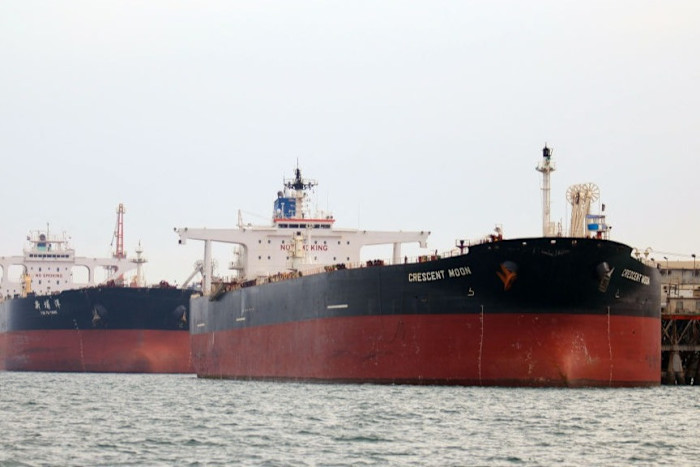
Shipping companies have been refusing to load in the Gulf because of the security risk. The resulting shortage has aggravated a global fuel supply crunch, with the wars in Iran and Ukraine disrupting supplies of diesel that power the world’s industry and agriculture sectors.
Traders have historically chartered vessels from shipowners rather than own them outright, making Morrow’s $2bn bet an extraordinary step underscoring the level of desperation to secure scarce shipping capacity and keep oil moving.
His plan capitalises on the protection the US military is providing ships that do make the risky transit through the strait. The ships will be given guidance by a “tier-one security team” cleared by the US government to provide security through the strait, according to a person familiar with the situation.
Viewpoints
US representative Brendan Boyle, the top Democrat on the House budget committee, calls on Republicans to have a serious conversation about the country’s mounting debt.
Martin Wolf notes that, while the Iran war has been a strategic blunder, its economic damage has been surprisingly modest.
Nicolas Guilhot considers how messages of looming apocalypse — including from Vance — are permeating in politics.