The immense dislocations wrought on markets by war in Iran have created opportunities for energy companies. Some are faring better than others. With transit through the Strait of Hormuz still highly unreliable, three specific qualities are now proving particularly valuable — and they play to the strengths of Europe’s unloved oil majors.
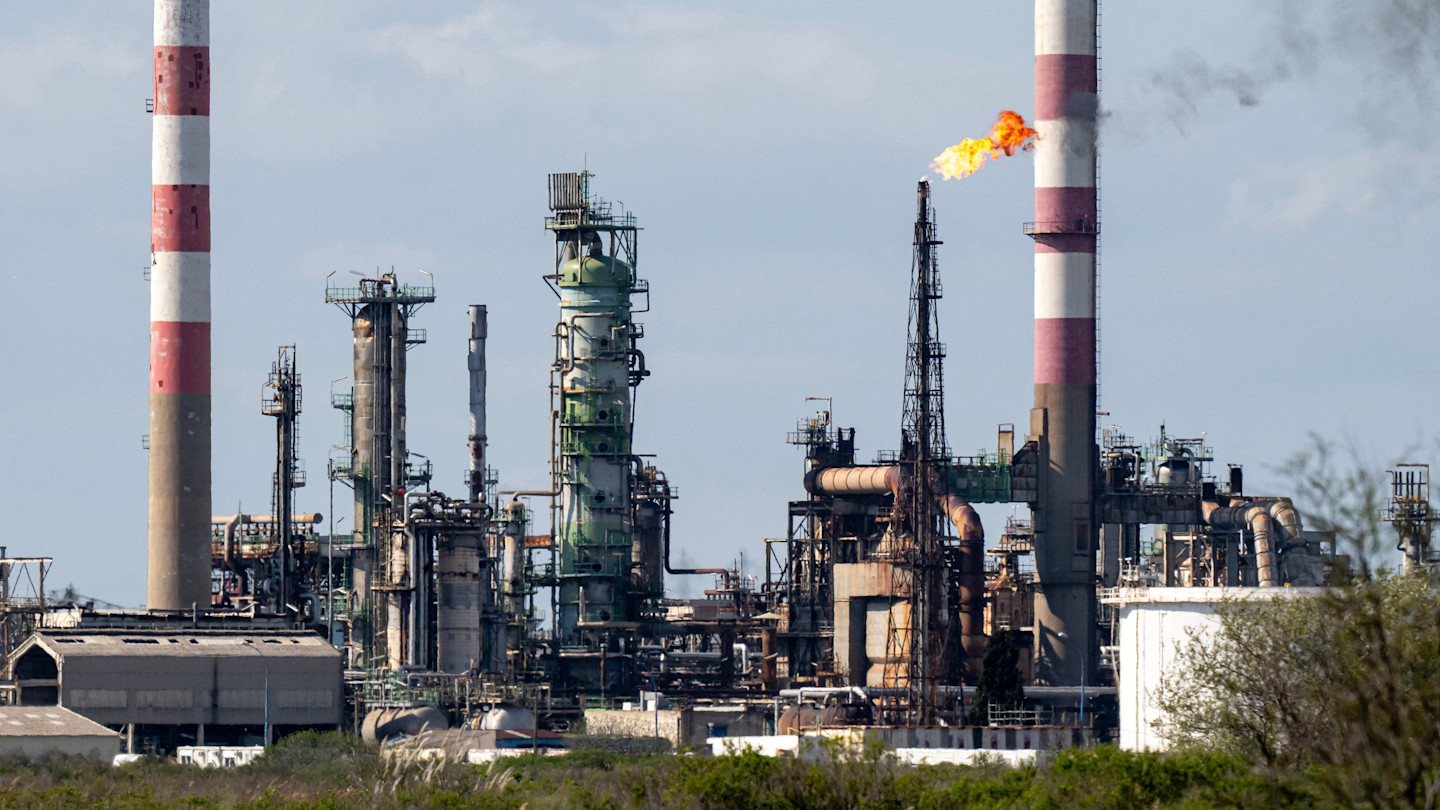
First and foremost is refining capacity. Not all oil drillers also turn the raw product into specialist commodities like jet fuel and diesel. Those that are big in both activities were, for a long time, out of fashion. It wasn’t easy for them to compete with bigger, newer and cheaper refineries in the Middle East and Asia.
But disruption in the Gulf has severely dented the availability of those refined fuels: supply has halved since before the war, according to data from analytics platform Kpler. That means refined products trade at much higher prices than their main ingredient, and the resulting spread is a windfall for those that can handle the transformation themselves.
ExxonMobil is one of those that are still big on refining, processing almost as many barrels of crude as it produces. But beyond this outlier, European majors are better placed. Shell and BP have sizeable refining businesses and Spain’s Repsol refines over 80 per cent more barrels than it produces.
The second great-to-have is a trading business. The Iran crisis has snarled up usually free-flowing energy markets: oil and gas trades have seen vastly different prices depending on where and when they are bought. That’s an opportunity for companies that have a global portfolio of fields, pipelines, storage terminals and refineries, fleets of ships, and a well-thumbed Rolodex of commercial contacts.
These, again, tend to be in Europe. At Shell, BP and TotalEnergies, trading accounted for 15-20 per cent of 2025 earnings in aggregate, according to Goldman Sachs. In the US, meanwhile, even the largest and best-organised companies prefer to sell as close to the wellhead, or refinery gate, as possible. Oil isn’t the only industry in which transatlantic differences in habit and culture have created unexpected winners and losers: European airlines’ propensity to hedge fuel prices, unlike their US counterparties, has also turned out to be in tune with the zeitgeist.
Finally, it’s good to be close to where the supply-demand balance is most out of whack. European spot gas prices have risen far beyond those in the US, and unsurprisingly, European majors tend to be more exposed to that market. Norway’s Equinor reckons that in the third quarter its fields will sell gas at a price roughly 50 per cent higher than in the first three months of the year.
If war and energy turmoil were fleeting, then Europe’s advantages might be too. The American majors have better growth prospects and a more supportive investor base. But the conflict in Iran is starting to seem endless, and even if it is resolved it will leave the world a more fractured place.
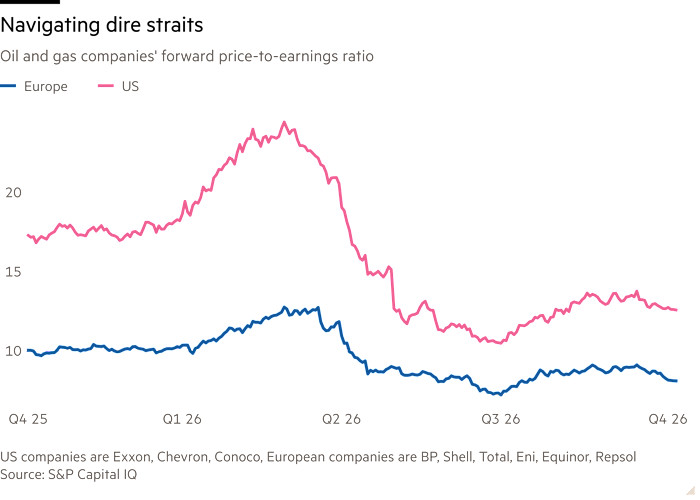
That may only gradually be dawning on equity investors. Europe’s oil companies still trade at a discount to their US peers, even though it has narrowed during the Iran crisis. In normal times when the free flow of oil seemed unassailable, it was perfectly rational to prize the US firms more highly; normal times are probably not coming back.