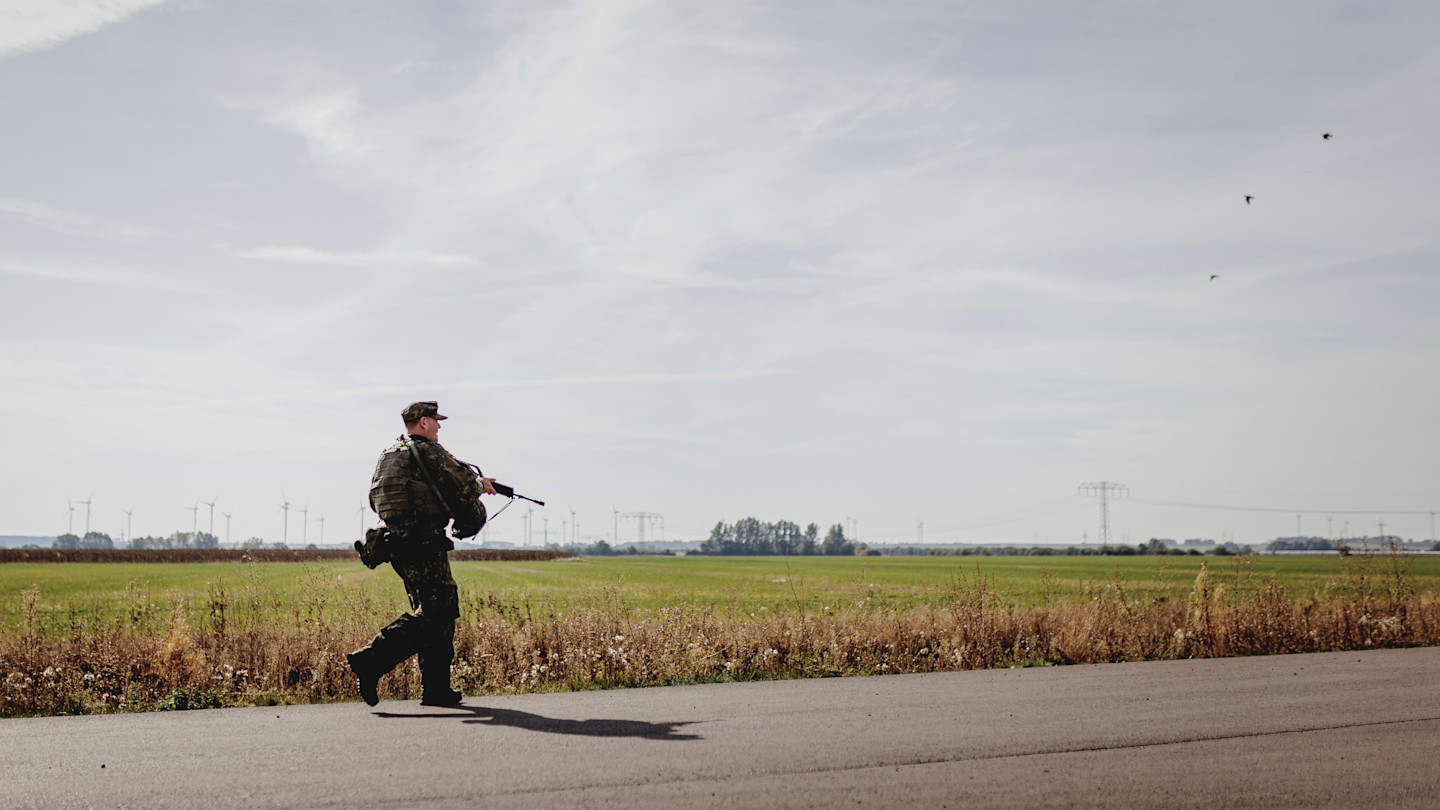
German rearmament has only just begun. The recent policy shift — started by Olaf Scholz in 2022 and supercharged under Chancellor Friedrich Merz — has prompted sighs of relief across Europe as Vladimir Putin’s Russia grows more threatening and Donald Trump’s US more unpredictable.
But German historian Liana Fix is already sounding the alarm. In Germany Rearmed she warns that her country’s old demons — and Europe’s fraught history with German military power — should not be forgotten.
Fix caused a sensation in February, when — midway through writing her book — she penned an essay for Foreign Affairs magazine with a more provocative title: “Europe’s Next Hegemon: The Perils of German Power”.
Those historically charged words reached the Chancellery. In a speech to the Munich Security Conference later that month, Merz felt the need to rebut any notion of German “hegemonic fantasies”. The following month in Washington, on the sidelines of a White House visit, he sought a private meeting with Fix to debate her views.
Fix’s thesis, which forms the central chapter in her book, is that Germany has a special historical responsibility towards its neighbours as it invests the more than €750bn earmarked for defence in the next four years.
Europe’s initial reaction to German rearmament may be overwhelmingly positive. But its sheer scale could revive old rivalries unless Germany’s military power is firmly embedded in a European framework, argues Fix, a senior fellow at the Council on Foreign Relations. The rise of Alternative for Germany (AfD), a nationalist party that questions the country’s postwar attachment to the west and advocates resuming economic ties with Russia, adds a layer of uncertainty.
“The AfD wants an autonomous German defense industry for the purpose of unilateral rearmament,” Fix writes.
Many in Berlin’s security establishment regard Fix’s intervention as not only premature but dangerous. After decades in which Germany neglected its armed forces and relied on the US for its security, dwelling on the supposed risks of German rearmament can seem counter-productive.
If, as European intelligence agencies assess, Russia could be capable of attacking a Nato country by 2029, shouldn’t Germany’s priority be to catch up quickly to assume its natural role as Europe’s largest conventional defender? Ask the Lithuanians, who have welcomed a permanent German brigade to defend Nato’s eastern flank against a potential Russian assault.
There are more pressing problems. Germany’s notoriously bureaucratic procurement agency needs to pick up the pace, the armed forces need the right technologies and equipment, and the Bundeswehr needs to attract more personnel.
As for the danger of European rivalries resurfacing, it is reasonable to ask whether the continent might have bigger fish to fry if Moscow further escalates its hybrid warfare, let alone seeks direct confrontation. Meanwhile, the AfD entering a federal coalition is still a distant prospect given the refusal of Germany’s established parties to work with it.
Fix confronts such criticism head on. She challenges those who believe decades of European integration might have created enough guardrails, institutional ties and solidarity to withstand the loss of Washington as the continent’s ultimate security guarantor. That confidence could amount to “a misreading of Europe’s security dilemma and its twentieth-century resolution,” she writes. “It may overestimate the ability of European integration to mitigate European rivalries in the absence of US hegemony.”
Fix is a pessimist. She belongs to a generation of Germans unwilling to trust that their country — and Europe — will behave itself once unmoored from the US-led security order. She offers solutions. It is worth hearing her out.
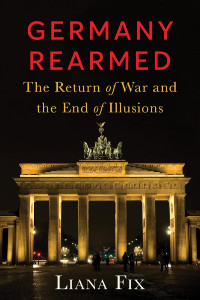
Germany Rearmed: The Return of War and the End of Illusions by Liana Fix Hurst £25, 216 pages
Anne-Sylvaine Chassany is the FT’s Berlin bureau chief
Join our online book group on Facebook at FT Books Café and follow FT Weekend on Instagram, Bluesky and X