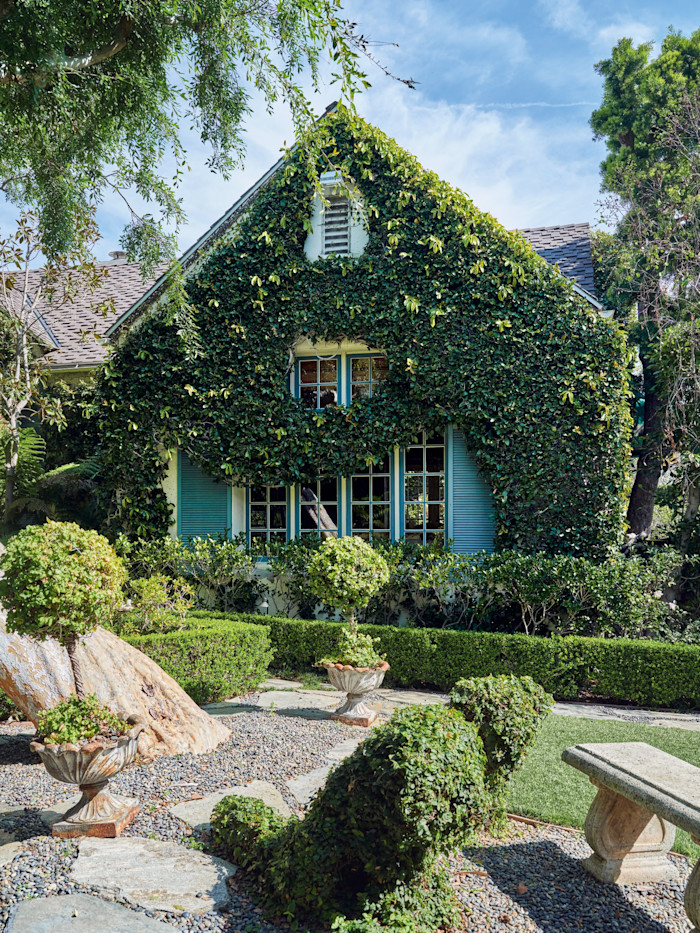
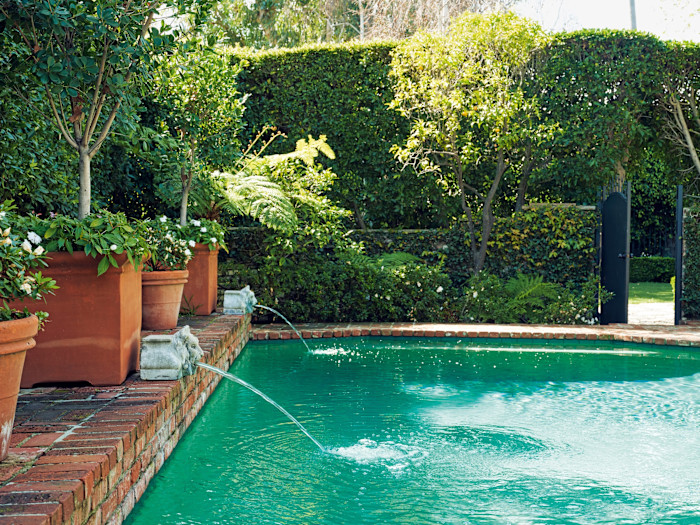
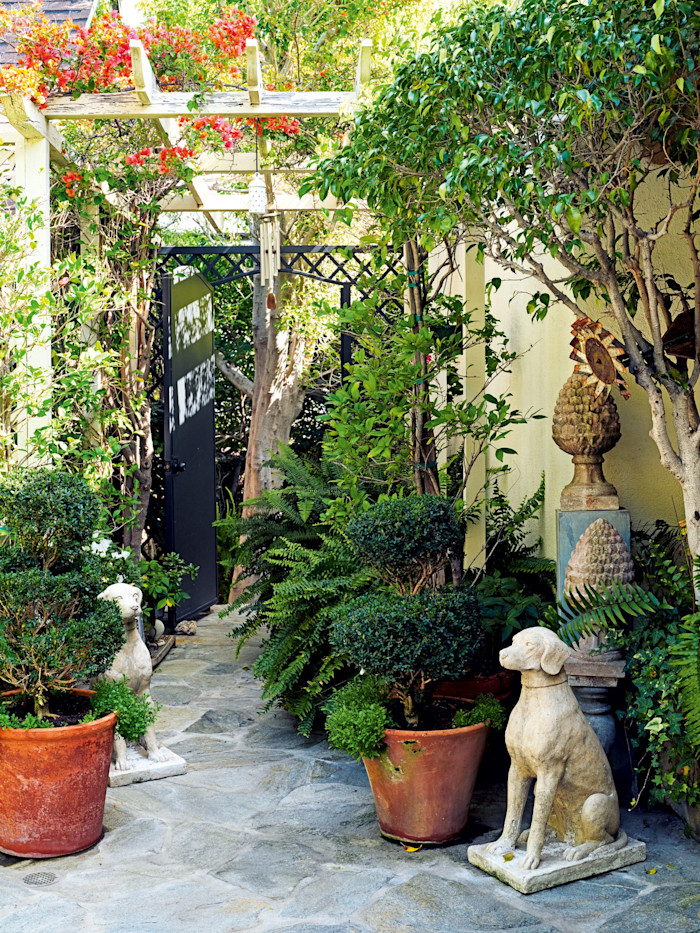
On a bright, golden morning in the Beverly Hills Flats, the air is tinged with jasmine as the famous towering palms catch a faint breeze. The LA neighbourhood’s elegant mix of homes spans Spanish revivals and modern builds among wide, walkable streets. One English-style house draped in ivy, however, is something of an anomaly. With its delicate blue trim, rough-hewn stone path and giant, blousy “Brandy” rosebushes, it reads as an enchanting countryside retreat, one mile from glitzy Rodeo Drive.
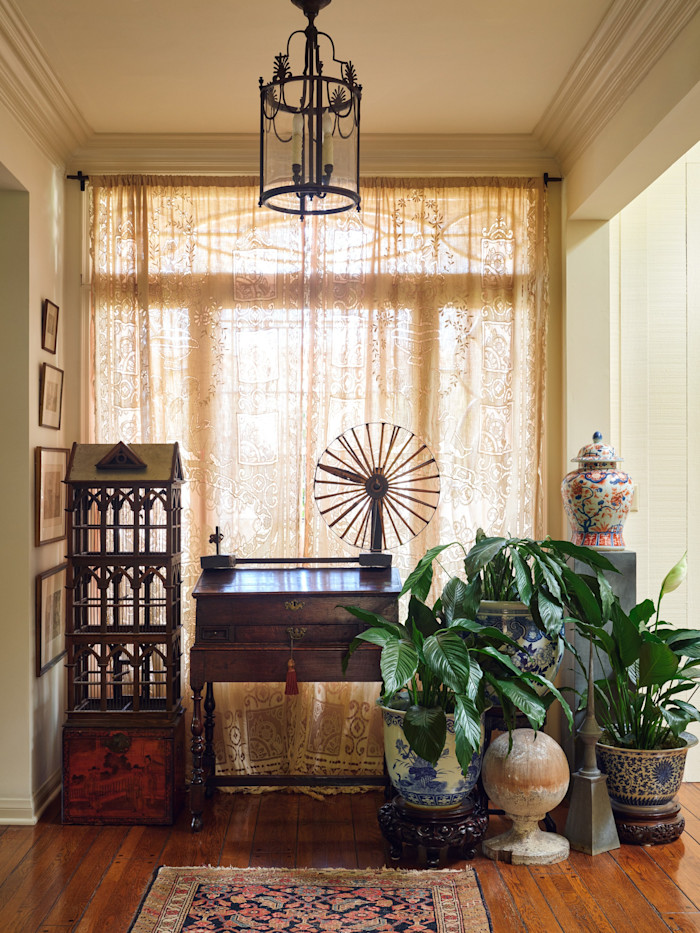
“I was always excited to come here as a kid,” says Kate Klausner, ushering me inside the home of her late grandmother, Harriet Raymond, and into a whimsically layered world. Almost every surface is adorned with fanciful objects: west African figures, pieces of coral and Dalí-esque hand sculptures. Walls are laden with lithographs and watercolours, from early-20th-century Japanese artists to California’s Jerald Silva. It’s an homage to Raymond’s eclectic style – as an interior designer whose Hollywood clientele included Mel Brooks and Anne Bancroft; a passionate collector who started her own antiques business; and a headstrong tastemaker who Klausner remembers fondly. “My grandmother was my best friend,” she says, remembering the formidable matriarch who died at the age of 89 last year.
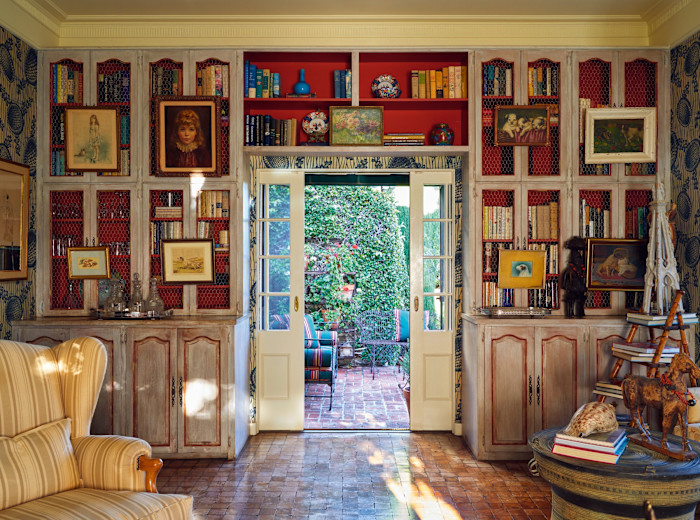
The property was built in 1925 to the design of British-born architect Gordon B Kaufmann, best known for transforming the Hoover Dam into an art deco monument. The original owners sold up in 1965, and Raymond and her husband Milt, “an aerospace entrepreneur who made airplane parts including the windows for Apollo 11”, moved in. Their initial plan had been to tear the place down; instead they extended and reconfigured, creating a home where they raised two children – and adding recessed, mirrored shelving for Raymond’s cache of Japanese and Chinese porcelain and crystal.
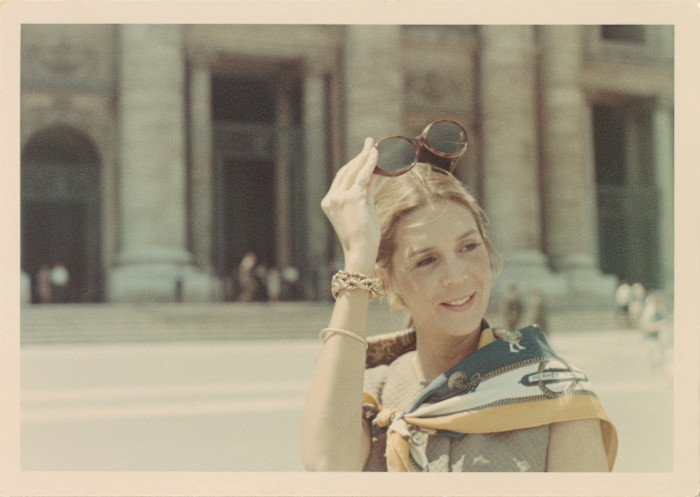
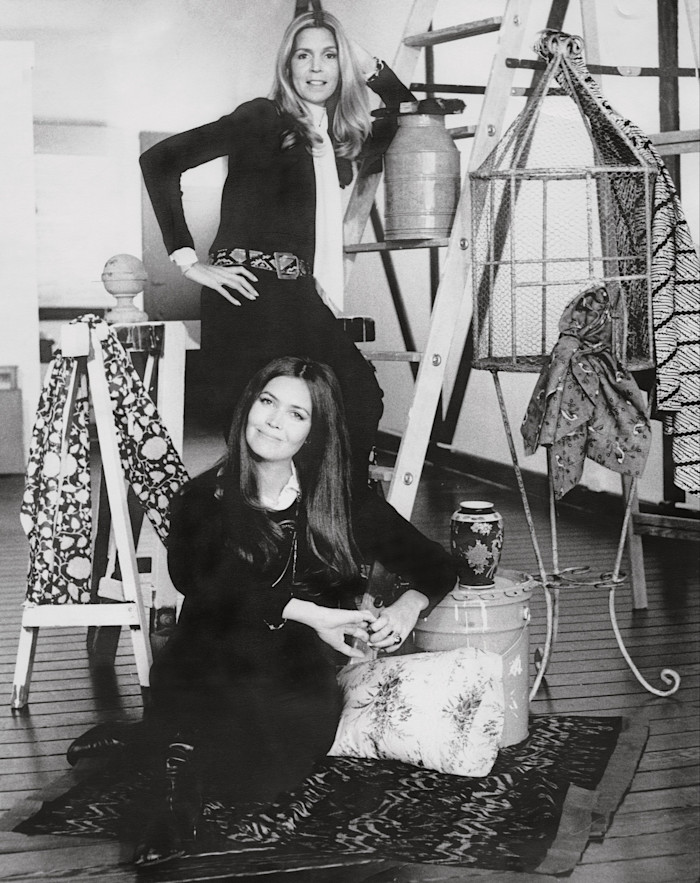
In 1971, Raymond turned her love of objects into an antiques store on nearby Robertson Boulevard, Raymond and Keith Interiors, opened with her high-school friend Diane “Chickie” Keith. A 1976 article in the Los Angeles Herald Examiner likened the pair to “heroines in a James Bond movie”. Raymond (nicknamed “Slim H” by her family) was described as “tall, bone thin, with a shaft of straight yellow hair”, and Keith as “medium tall with a glorious mane of slightly curled brown hair”.
The shop sold a mix of home furnishings, unexpected accessories and jewellery. “It had items like bamboo and jade bracelets, kimonos and tansu covers,” recalls Judy Briskin, who was an interior designer and a close friend of Raymond’s for more than 60 years. “People like Jeanne Martin, Dean Martin’s then wife, and Cheryl Tiegs frequented the store. Interior designers loved it. Everything Harriet touched had taste.”
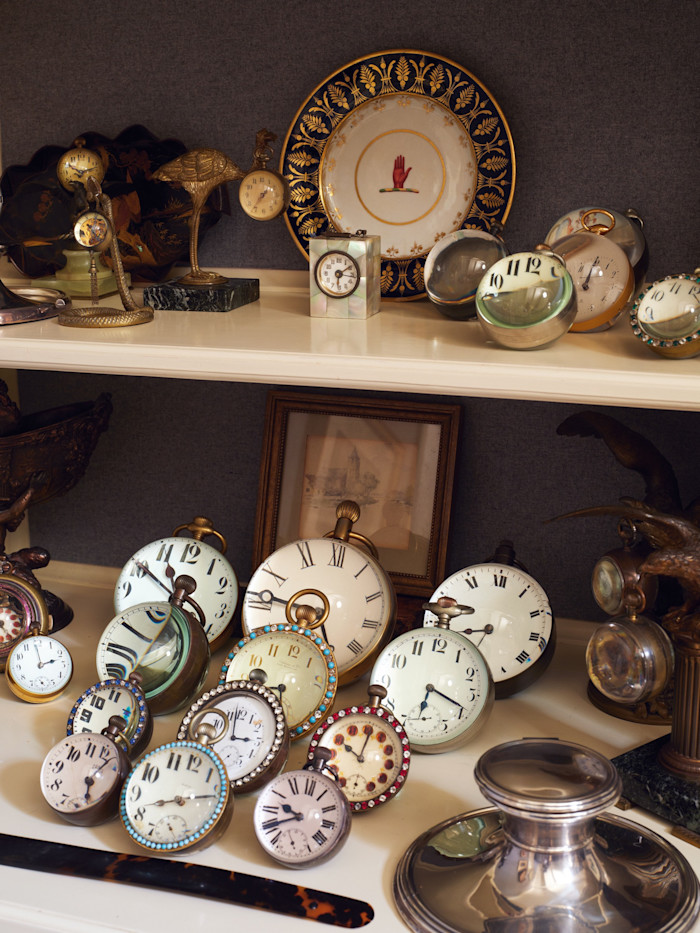
Raymond and Keith sourced their eclectic stock on buying excursions to Europe and regular forays to east Asia; sometimes Briskin, who lived across the street and ran her own interior-design business, joined them. “It’s a feminist story,” says Klausner of her grandmother’s adventures in an era when wives seldom flew to far-flung locales for work, and press for the store routinely referenced the two women’s looks and money. A Los Angeles Times piece ran the headline “Chic Set Joins the Working Class”. According to the writer, the women’s husbands imposed one condition: “Chickie Keith and Harriet Raymond could go into business as long as there was still time for togetherness and the kids.” Years later, Klausner remembers her grandmother showing her the newspaper clipping and rolling her eyes.
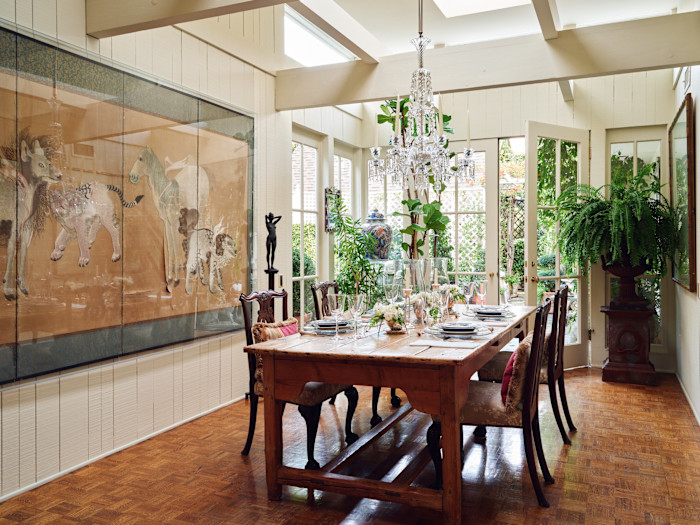
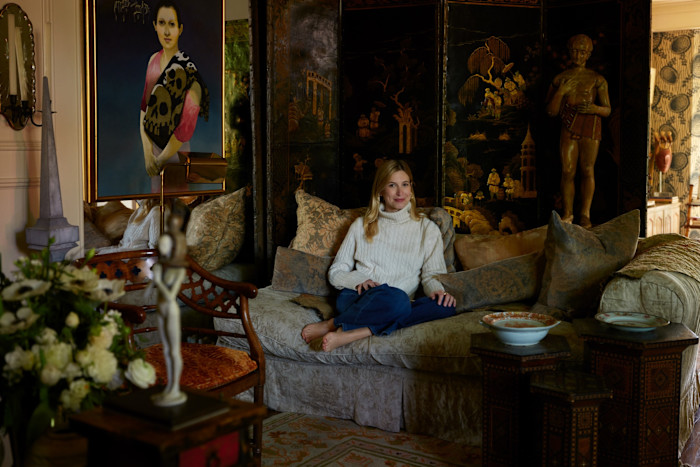
Klausner, a 32-year-old photography editor, grew up nearby but is now based in New York. At her grandmother’s formal 17th-century dining table, she serves coffee and scones. “We would do Rosh Hashanah and Thanksgiving here,” recalls Klausner. “My grandma had an amazing brisket recipe, and one for great baked ziti.” At her table, “it was always encouraged to be politically informed”, she adds, recounting how “obsessed” her grandmother was with President Obama. One Christmas, the Obamas sent the Raymonds, faithful donors to his campaigns, a pop-up White House card featuring drawings of their dogs’ paws; overjoyed, Raymond kept it on display in her bedroom. There is a distinct alchemy to Raymond’s interior-design aesthetic. It offers an offbeat take on glamorous LA style. Above the table, a dramatic waterfall of Baccarat crystal glints. Behind us, a massive Meiji-era embroidered Japanese silkscreen is hung next to Christine – a bronze sculpture of a skinny nude, created in 1993 by Mexico-born, California-based artist Robert Graham.
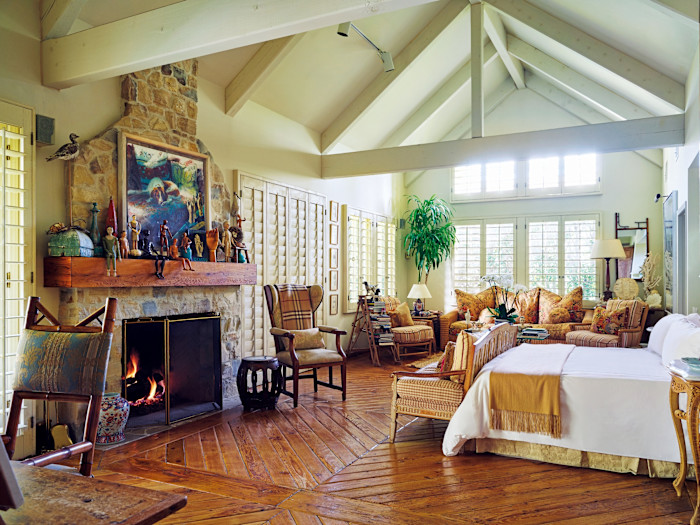
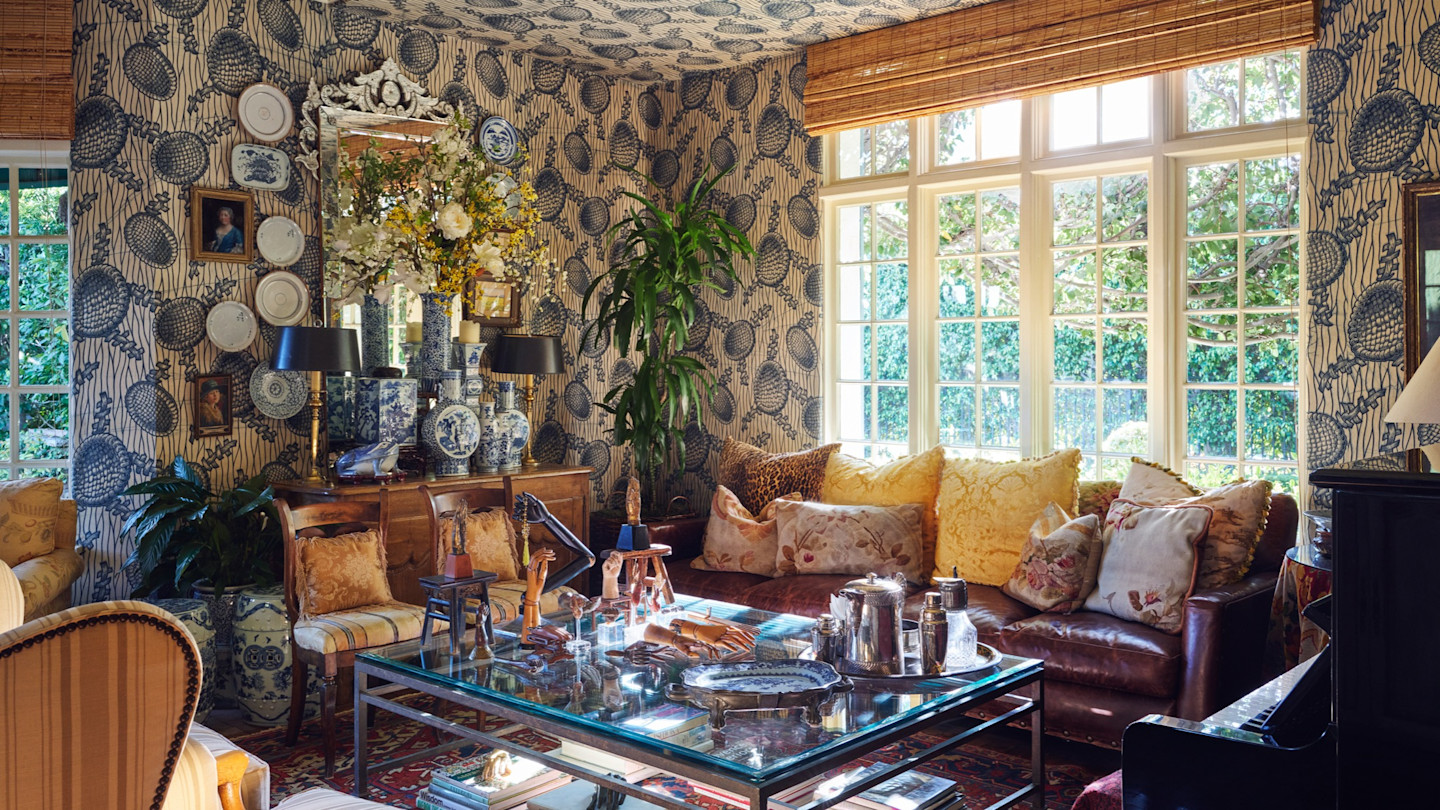
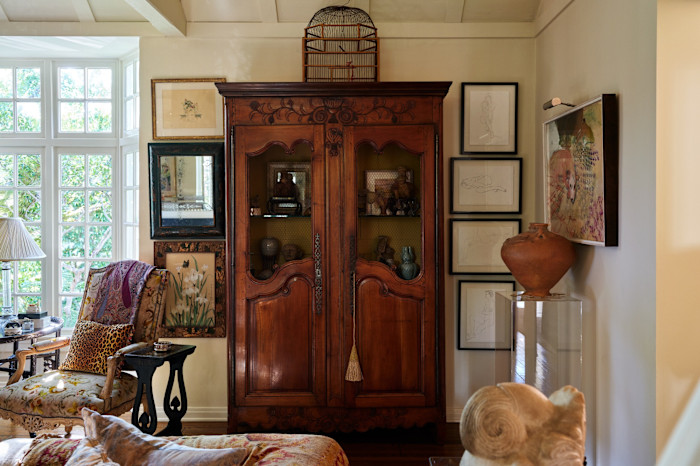
Raymond met Graham around the late ’80s through Briskin, who in turn knew Marcia Weisman, one half of the couple notably featured in David Hockney’s 1968 painting American Collectors. There are also sketches by Graham in Raymond’s living room – a space that defines her adventurous maximalism. A pair of relaxed country house-style slipcovered sofas are piled high with mismatched Fortuny cushions; a French oak birdcage is perched atop a Louis XV armoire; and a c1800 chinoiserie screen depicts a classic Japanese garden.
Klausner describes the connected den as her grandparents’ cocktail-hour spot; they would lounge on the Ralph Lauren leather couch, ’60s bossa nova playing in the background. It was also where they entertained, most famously throwing a party for the 80th birthday of Groucho Marx because they were friends with his son, Arthur, from the Beverly Hills Tennis Club.
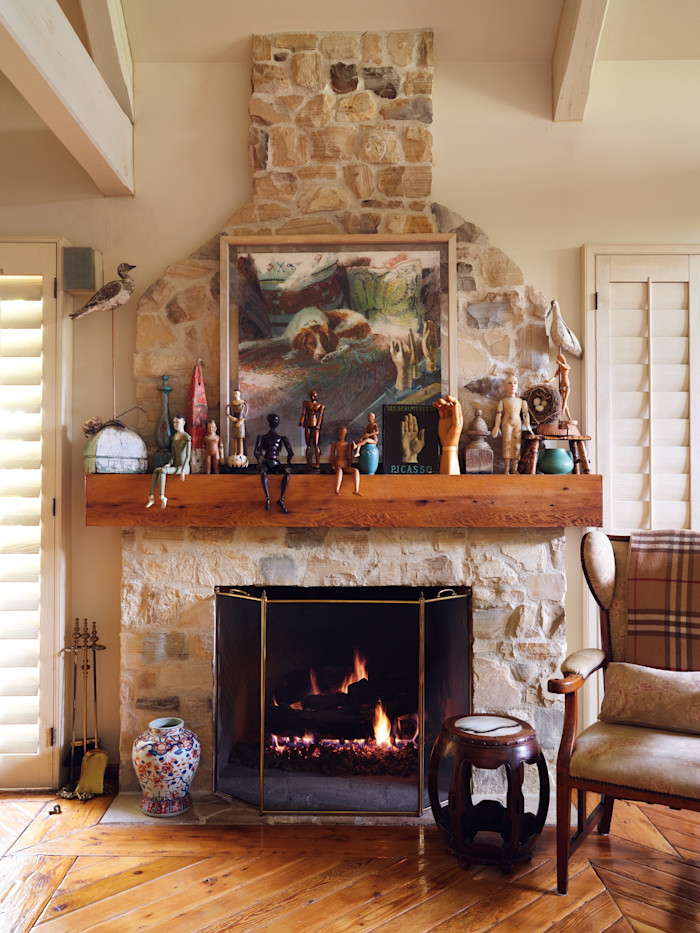
The den’s blue-and-white basket-patterned fabric wall covering is one of the house’s hallmarks. Raymond spotted the design in a 1971 issue of House & Garden magazine, on the walls of Susanna Agnelli’s New York City apartment, and hunted it down (although no one now remembers where from). Articulated hands are another signature. Raymond began collecting them on a trip to Rome in the late ’60s; versions made of wood and stone are scattered on tables, mantels and bookshelves. “I wrote my college admissions essay about the hands collection, and how I tried to find one for her one summer in Nice,” says Klausner. “It was really about my relationship with my grandmother.”
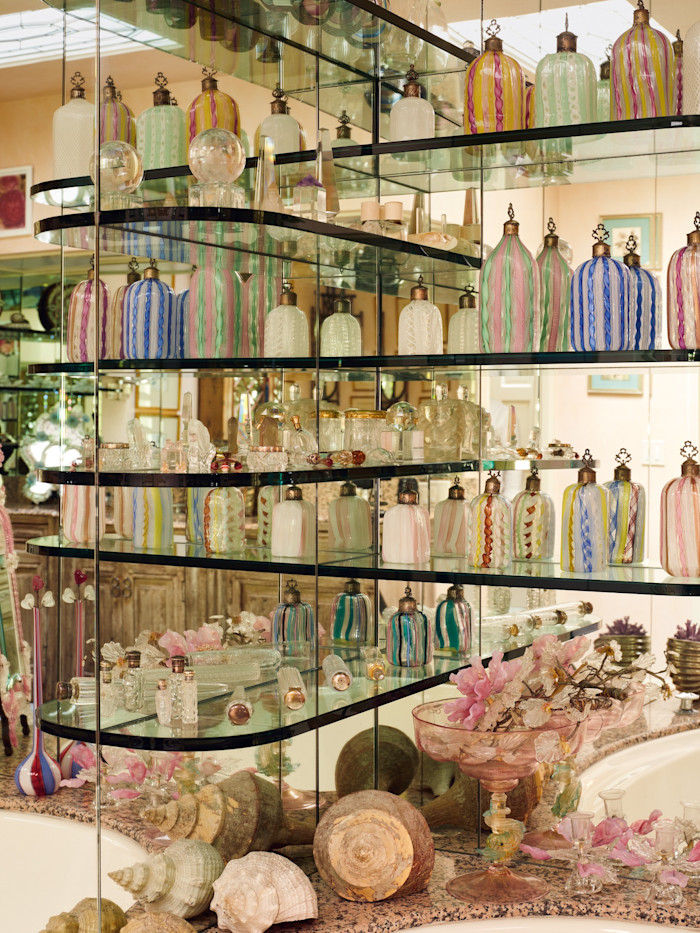
This autumn marks a bittersweet milestone. A year after Raymond died, Klausner and her family are preparing to hand the keys over to new buyers. They intend to keep as many of the objects and pieces of furniture as they can, and later auction the rest. “Imagining these objects having a second life in a different space does give me a kind of solace,” says Klausner. If she could only keep one piece from the house, it would be the Christine, she says without hesitation. A collection of antique Venetian cologne bottles, displayed in the bathroom, is next on the list, as are some of her grandmother’s beloved Armani outfits. “She was always in a different kind of suit or a great blazer,” smiles Klausner. “My favourite is a black, buttery silk jacket with a mandarin collar. I always joked that she was significantly hipper than my contemporaries.”
Florist, Lance Williams at LA Botanicals