
In January 1946, Hannah Arendt received a furious letter from her friend Gershom Scholem in Jerusalem. Arendt had published an essay arguing that the push for a solely Jewish nation-state threatened both Jewish security and democratic ideals. Scholem read it as a betrayal of their people — written in the immediate shadow of the Holocaust, by a woman who had herself fled the Gestapo. He demanded she recant.
Arendt defended her argument point by point. But what makes her reply worth reading 80 years later is how it ends. Not with an argument — with a plea. She begged Scholem not to become a “fanatic for truth”, not to let an “orgy of truth-telling” dissolve a friendship that had survived exile and war. “A human being,” she wrote, “is far more valuable than his opinions.”
It is a startling sentence from a thinker devoted to truth — she called it the ground on which we stand. And it answers a question most of us are now living inside: the uncle who thinks abortion is murder, the old friend who won’t stop posting about Gaza (or the one who won’t stop posting about Hamas). You used to argue, or at least agree to disagree. Now you mostly avoid each other. Can you be friends with someone whose opinions make you cringe? Arendt’s answer was yes — and her reasons are far more demanding than the civility we usually preach.
Friendship with someone whose views we dislike is at the heart of both what it means to be human and any meaningful politics. We have ignored Arendt’s warning not to set agreement about truth above friendship. Truth matters. Facts matter; without them, cynicism corrodes the common world and propaganda rushes into the vacuum. We must insist on facts. But facts only tell us what is; they cannot tell us what should be, or what makes our collective lives meaningful.
It is a fact that the Earth is warming and that human activity is in large part responsible. Those facts constrain and inform any honest response. But the facts themselves cannot tell us what to do about global warming — how quickly we should act, which risks we should accept, or how the burdens of a response should be distributed. Those questions require political judgment and will be answered differently depending on one’s interests and perspectives.
Too often, however, the demand for facts bleeds into a claim that my interpretation of facts is true, when it is really just my opinion. We present our political judgments as though the facts have already settled them. This is almost never the case. The real struggle of politics is not to come to an agreement about truth; it is, rather, to build a shared world with those who see our shared world differently than we do.
To consider a fellow citizen who disagrees with us — even fundamentally — an enemy of humanity is not moral seriousness. It is how a shared world rips apart.
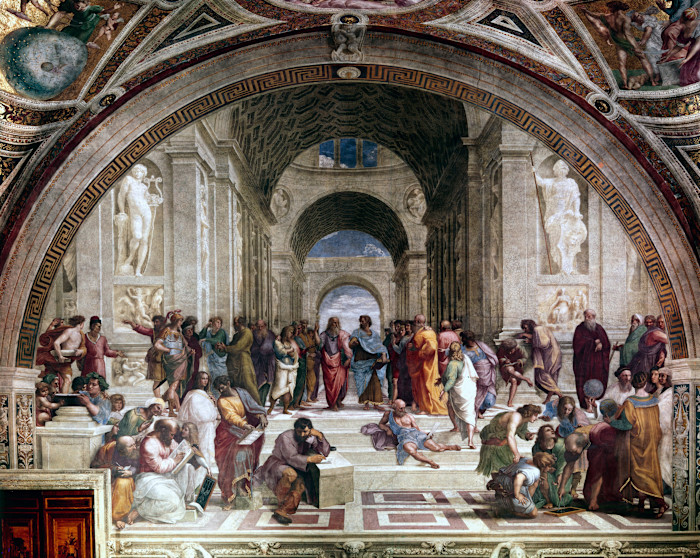
Aristotle was the first to see that building a shared world within a plural democracy depends more on friendship than truth. Plato dreamt of a city unified by the knowledge of a philosopher-king; Aristotle insisted that a polity is a gathering of different people around a common life. The bond between them is civic friendship: the lived experience of talking to and coming to respect those with whom you disagree, and yet still recognise as fellow citizens.
Hannah Arendt lived Aristotle’s idea of friendship in both her personal life and her political thinking. Her friend Hans Jonas said she had a “genius for friendship”. When Scholem and Arendt clashed in 1963 about her book Eichmann in Jerusalem, Scholem accused her of lacking Ahavath Israel — a love for the Jewish people. Arendt agreed. She wrote back that she would never deny or apologise for being a Jew but that she could not love any “people or collective”. “I love,” she wrote, “only my friends.”
Friendship, for Arendt, is based on direct, honest and sustained talking among friends. With our friends we speak about the sunset, the plight of refugees, the coming election, the joy of the Knicks’ championship, and the horrors of war in Ukraine, Israel, Gaza and Iran. We share pictures of our children on summer vacation, celebrate our hopes for their happiness and confess our worries about their future. In such friendships, we transform the incomprehensible and strange into a world fit for human habitation, a shared world that we can love.
This world-building power is why civic friendship, not agreement, is the ground of political solidarity. When we talk to people with whom we fundamentally disagree, we find, to our surprise, that we share more than we think. We may disagree about abortion, but we do want to treat people with dignity and make the world better. That common ground is where we begin to found and re-found a meaningful politics, a world we actually share, and a world in which people with different politics and beliefs can live, respectfully, as equals.
And yet a shared world has sharp edges. If friendship is the bond of the people, are there those who simply do not belong to it — people with whom we cannot be friends or perhaps people we cannot even respect? Should we read Carl Schmitt, the Nazi jurist, or Céline, the unrepentant antisemite? As we build our shared world, we also need boundaries.
When the comedian Bill Maher described President Donald Trump as “gracious and measured” over dinner, Larry David responded with a satirical essay, “My Dinner With Adolf”. David was setting boundaries. Beneath his provocation lies a serious question: does treating a dangerous political figure as a friend help preserve a common world, or does it normalise someone who threatens that world? Are some people beyond conversation, friendship or even respect?
Arendt faced a far more extreme version of this question after the second world war. She permanently cut off friends who had become enthusiastic Nazis — yet she defended her old teacher Martin Heidegger, who had joined the party in 1933 and served as rector of Freiburg University until 1934. Although he remained a party member, Arendt believed that Heidegger had never crossed the line into supporting murder or the machinery of extermination. Most importantly, she took to heart his private confession that his effort to work with the Nazis was “the greatest stupidity of my life”.
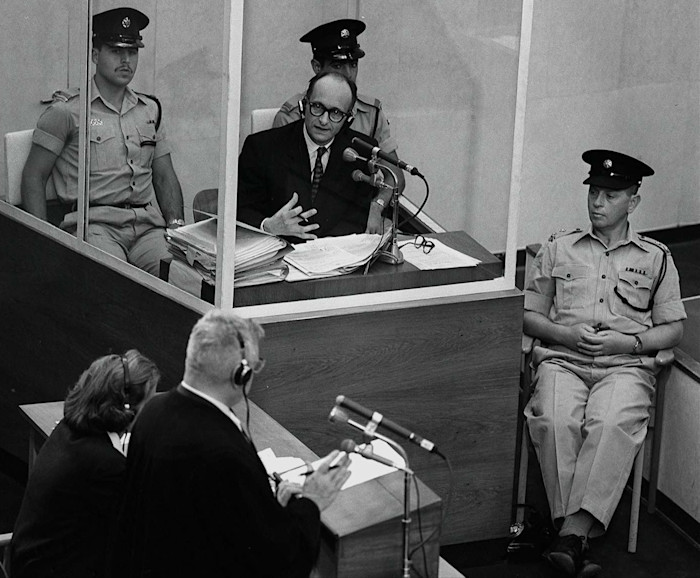
Arendt’s answer — and the practice we should put in place today — is that friendship is not infinite tolerance. She concluded that Adolf Eichmann should be hanged because no member of the human race could be expected to share the earth with him. Yet she reached that judgment only after making an extraordinary effort to understand him. Understanding, for Arendt, did not mean forgiveness. It was what made judgment possible.
But Eichmann marked an extreme boundary. The limit of friendship is not disagreement, however bitter; it is conduct that denies others a place in the common world — racially based mass murder, religious persecution or participation in a machinery of dehumanisation. Such people exist, but they are far rarer than our righteousness suggests. Most people with whom we disagree — even those who may break laws or hurt others — remain people with whom we can converse, trying to persuade them — or allowing them to persuade us — as we build a more nuanced understanding of our common world.
In a 1964 interview, Arendt said the real shock of Hitler’s rise was not that a dictator could win a democratic election. It was personal: the moment her own friends “co-ordinated”, fell into line and found reasons for the new regime. “The problem,” she wrote, “was not what our enemies did but what our friends did.” Around her, she said, an empty space formed.
This empty space is where we have gone wrong. We have begun to treat ordinary opponents — such as the colleague who signs an angry letter or the neighbour with the wrong yard sign — as if they are beyond the reach of friendship. They are not.
What about the friend who votes for the wrong candidate? Or even the one who commits a crime, accepts judgment and serves his punishment? The temptation to cast out those whose opinions and actions disgust us feels like moral clarity. More often, it is an escape from understanding, a reduction of character and a refusal of politics. It is based on the fantasy that the common world can be purified by removing everyone who sees it differently.
Friendship offers no exemption from judgment. We can and should judge our friends. But it demands that we judge with understanding, considering their actions and opinions from their perspective, whether or not we agree. It does not promise reconciliation. It remains open to the possibility that our shared world is worth sharing in spite of our real and at times angry disagreements.
Friendship asks something harder than moral clarity: it asks that we judge without pretending that our judgment contains the whole of another person. A human being is worth more than his opinions because the world we share depends upon our treating him as one.
Roger Berkowitz is professor of politics, philosophy and human rights, and founding director of the Hannah Arendt Center for Politics and Humanities at Bard College. He is author of ‘A World We Share: Hannah Arendt and the Power of Friendship in a Broken World’ (Yale University Press)
Find out about our latest stories first — follow FT Weekend on Instagram, Bluesky and X, and sign up to receive the FT Weekend newsletter every Saturday morning