Northern Ireland secretary Chris Bryant on Friday sought to head off mounting tensions over the region’s most contentious Protestant parade by banning the Orange Order from marching through a predominantly Catholic housing estate on the edge of Portadown.
Bryant’s ban on the march from a church at Drumcree along the Garvaghy Road — whose Catholic residents are mainly Irish nationalists — follows a 13-day stand-off over efforts by the pro-British Orange Order to use the route to reach the centre of Portadown.
A planned Drumcree march on September 27 received initial permission from Northern Ireland’s Parades Commission — set up after previous violence around such events — but with strict conditions.
The march would have been the first on the route since police forced residents aside in 1997 to allow the event to take place.
Last month residents of the Garvaghy Road secured a court ruling suspending the Parades Commission’s decision before the Portadown district of the Orange Order had that determination overturned on appeal.
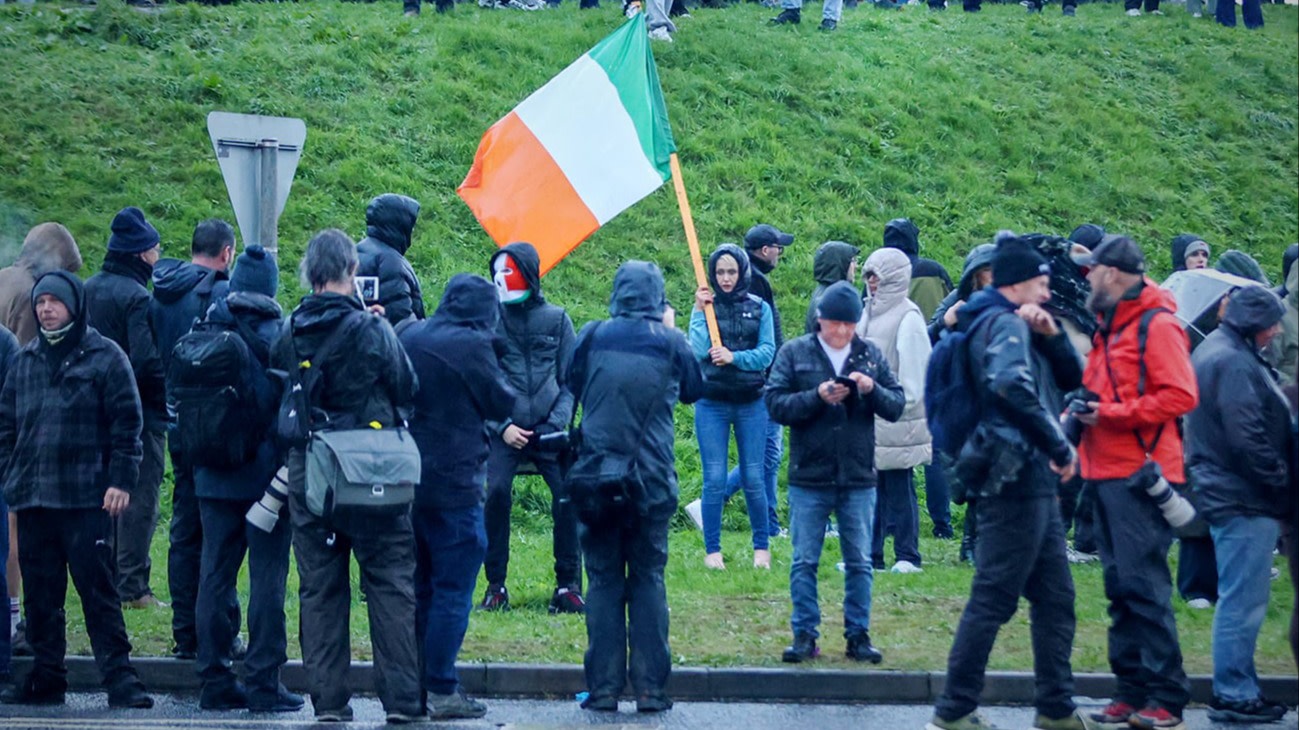
Residents nevertheless blocked the route on September 27, leading to a stand-off that has persisted since, stoking political divisions in Northern Ireland.
Bryant issued the ban on the Drumcree march after a request from Jon Boutcher, chief constable of the Police Service of Northern Ireland, because of the risks of serious disorder.
“The chief constable has advised me that it would not be possible to enable the procession to happen without a major intervention which would carry an unacceptable risk of serious injury, disorder and a wider contagion effect across Northern Ireland,” Bryant said in a statement.
Bryant added the Parades Commission had told him that, in the light of the chief constable’s request, its original permission for the march no longer had legal effect.
“Consequently, and in the interests of wider public interest and safety, I’ve come to the conclusion that the circumstances under which that decision was made have now changed considerably,” Bryant said. “As a result, the procession cannot go ahead as it was determined.”
Garvaghy Road residents welcomed Bryant’s ban. But Breandán Mac Cionnaith, spokesman for the Garvaghy Road Residents’ Coalition, said there was “no real cause for celebration”, adding “relationships within Portadown” needed to be rebuilt.
The Portadown district of the Orange Order said on its Facebook page that members would not leave their planned route for now.
“We are aware judicial review proceedings are now being lodged against the secretary of state’s capitulation to the rule of the mob,” the group wrote in a post. “The Portadown district will be remaining on Drumcree Hill pending the outcome of this legal challenge.”
The Irish government “welcomed the certainty” that Bryant’s decision brought.
This year’s attempted Drumcree march has caused further tensions within Northern Ireland’s troubled power-sharing executive, with unionist politicians angered by how senior figures in nationalist Sinn Féin have supported the Garvaghy Road residents’ protests.
Police are investigating first minister Michelle O’Neill of Sinn Féin and other politicians over their role in blocking the Garvaghy Road.
Protestant organisations traditionally hold parades with bands and banners starting in July to mark significant historic occasions.
These include the July 12 anniversary of the victory of the Protestant King William III — originally Prince William of Orange — over the forces of the Catholic James II at the Battle of the Boyne.
The route of the annual march back from Drumcree Church into Portadown has been the subject of controversy since at least as far back as the 1980s.
However, the worst violence took place in July 1996 when Protestant groups staged protests across Northern Ireland for days before police forced the Orange Order through the Garvaghy Road.