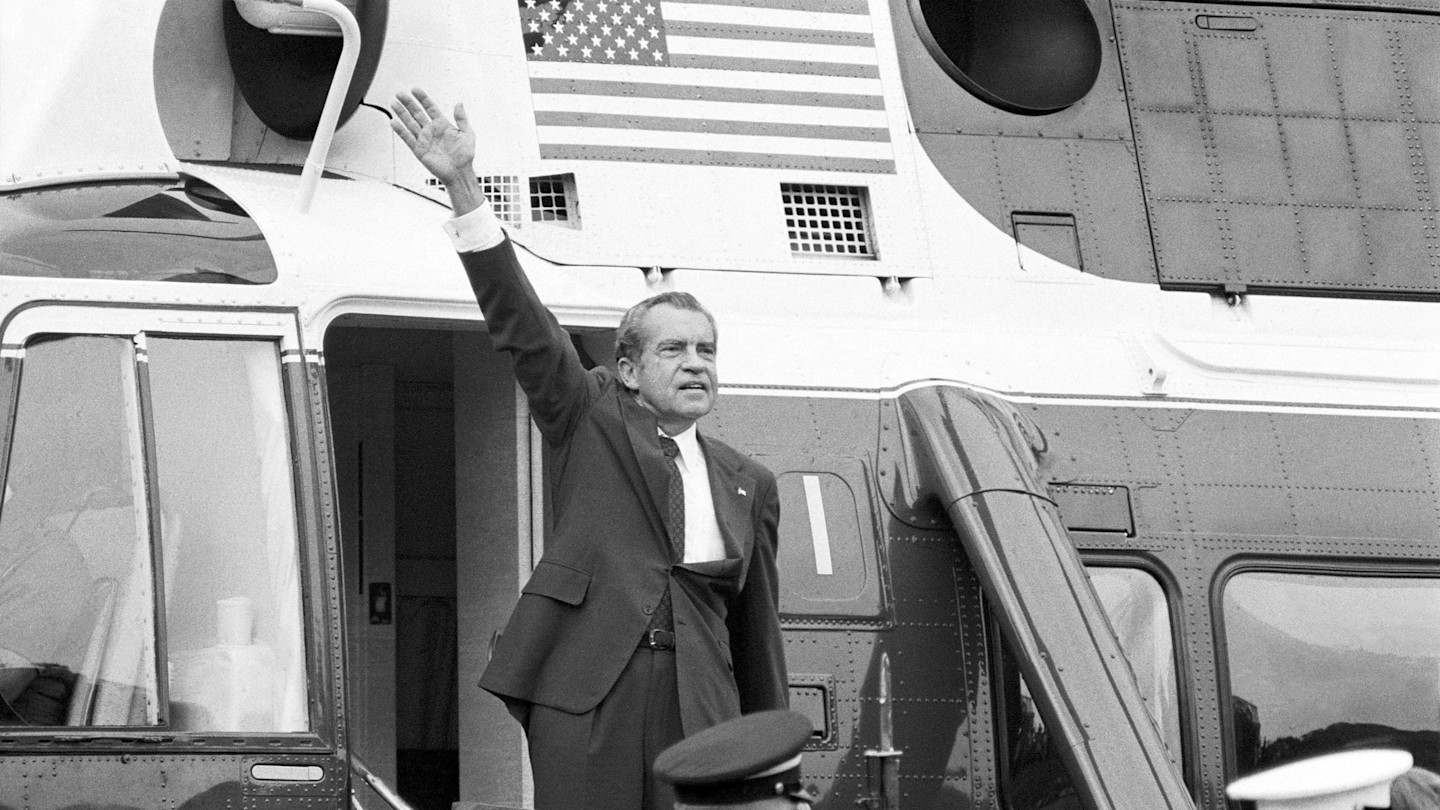
In the ballroom of Washington’s Ritz-Carlton hotel this month, Republicans gathered to honour a beloved president who mounted “the greatest political comeback”.
But the adulation of the mostly Maga crowd was not for Donald Trump; instead they were hailing Richard Nixon.
With the help of Gen Z influencers, the US president who was forced to resign more than 50 years ago is being rapidly rehabilitated on the right, with even vice-president JD Vance urging supporters to reassess his legacy.
“If Watergate happened tomorrow it would be like a 12-hour news story,” Vance said in June, referring to the wiretapping and hush money scandal that led to Nixon’s removal from office. “The idea that it would have taken down a presidency is crazy”.
Video description
A highlight reel of former US president Richard Nixon portrayed as a national treasure
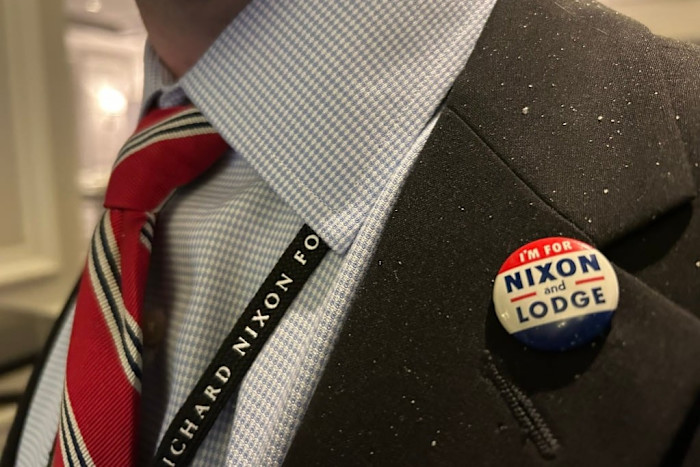
On social media, “Nixonmaxxing” videos, featuring snippets of Nixon’s speeches or archive footage — sometimes set to hip-hop soundtracks — are racking up millions of adoring views. In the real world, Nixon baseball caps are becoming a popular fashion accessory at rightwing parties in DC and beyond.
To many of his modern fans, Nixon’s most consequential policies, such as his détente with the USSR, his law and order crackdown and his economic nationalism, were a precursor to “America First” and ought to be reappraised.
Last month, Trump’s Department of Justice took the Nixon renaissance a step further, conducting a review — first reported by The Wall Street Journal — into how the former president and his allies were treated by federal attorneys on the “Watergate Special Prosecution Force”.
While there have always been some conservatives who believe the 37th US president was unfairly hounded out of the Oval Office — Roger Stone, one of Trump’s closest political confidantes, has a large tattoo of Nixon on his back — much of the recent revival is being fuelled by media-savvy staffers at the California-based Richard Nixon Foundation.
The foundation, which was set up in the 1980s, is now run by 33-year-old Jim Byron. In 2023, he hired young marketing director Chris Barber, the man behind much of the viral Nixon content circulating online.
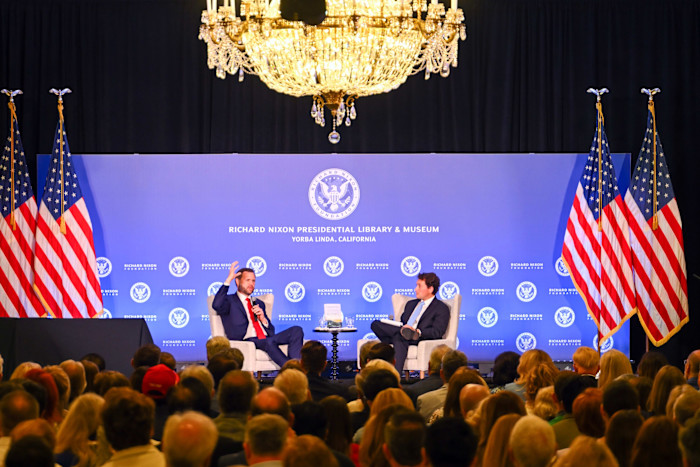
“We are seeing renewed interest in President Nixon . . . because social and alternative media are giving new audiences the chance to hear his voice — often for the first time — opining on issues from 50 years ago that are still remarkably relevant and resonant today,” Barber said.
He added that while the foundation had found success in engaging young people online, it “is using this newfound interest to encourage people to go deeper than the memes and explore [Nixon’s] full record . . . and impact had over a decades-long, consequential career.”
Some of Nixon’s rehabilitation is driven by a reassessment of his alleged misdeeds — and a belief that he was targeted by the same “deep state” that tried to prove Trump colluded with Russians in the run-up to the 2016 election.
“People are coming now to the truth . . . Richard Nixon was absolutely couped out of office and was framed,” said Republican Congress member Riley Moore, who is campaigning for an aircraft carrier to be named after the former president.
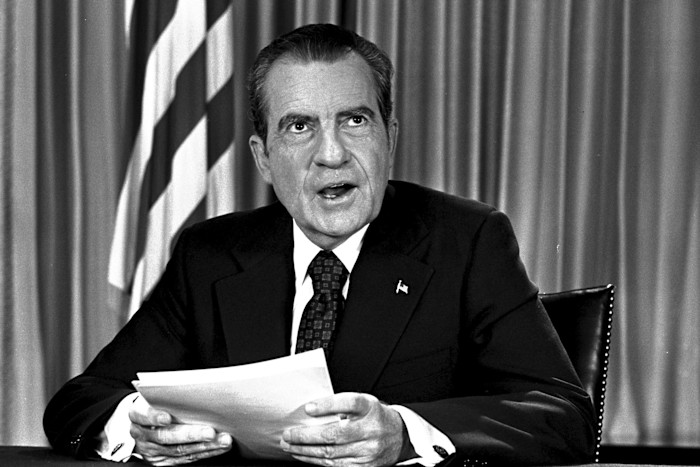
This line of thinking has led the Trump administration to look into how Nixon was treated during the Watergate investigation. Last month, the justice department’s Office of Professional Responsibility called in former Nixon worker Geoff Shepard, author of The Nixon Conspiracy, to deliver a two-hour presentation on how his former boss and his allies were unlawfully targeted.
According to documents he posted online, Shepard hopes the DoJ will go to court and ask that verdicts against Nixon’s accomplices — few of whom remain alive — be vacated “on account of prosecutorial and judicial misconduct”.
The Department of Justice said Shepard was invited by attorneys to give a presentation, “given his expertise and scholarship on Watergate” but stressed that the presentation “does not constitute an investigation”.
The Honorable Richard M. Nixon pic.twitter.com/xjDbQPvqa1
— Richard Nixon Foundation (@nixonfoundation) May 20, 2026
Regardless of whether Nixon is ever exonerated over Watergate, his policies are already being resuscitated by conservatives.
At the Grand Strategy Summit in DC, which was held by the Nixon Foundation this month, Republican lawmakers and thinkers lined up to laud the former president’s “playbook” for the Middle East, his focus on “American energy self-sufficiency” and his “stand against the media” over the Vietnam war.
Trump’s resurgence has also helped Nixon nostalgists make their case. Some summit attendees — who asked not to be named — told the FT that corruption scandals in recent presidencies had made Watergate pale into insignificance.
On the positive side, Moore said he saw a “tremendous amount of similarities” between Nixon and Trump, including a love of tariffs and a “reorientation back to the American worker”. Both men, he noted, were endorsed by the International Brotherhood of Teamsters labour union.

For other Nixon fans in attendance at the summit, the former president’s “vibes” and political dominance were his primary appeal.
“I don’t think it’s all of a sudden, Gen Z is interested in Nixon because of détente or because of Title IX [which prohibited sexual discrimination in institutions receiving federal funding] or whatever,” said Brendan Boreth, a member of College Republicans in Montana who travelled to the event. “I think it’s more what he represents as kind of this fighting spirit of an American.”
One popular Nixonmaxxing clip shows Don Draper, the suave lead character in the TV show Mad Men, lionising Nixon as “a self-made man . . . who was vice-president of the United States six years after getting out of the navy”.
Vance, who has said he sees some of himself in Nixon, has also praised the former president’s pre-Watergate political prowess. He pointed out that Nixon won 49 states in an election and that he staged a remarkable comeback after losing in 1960 and failing to secure the governorship in his native California in 1962.
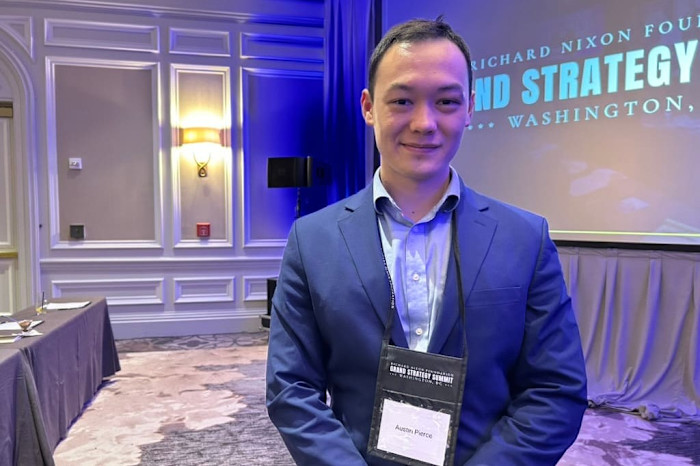
One attendee at this month’s summit, 21-year-old student Austin Pierce, said that “contrarianism” among his peers accounted for some of the Nixon buzz.
But the key to the former president’s revival, he added, was that his legacy was previously “a product of Watergate and that whole media frenzy” and that “the generation that lived through that are dying”.
“They are less influential,” Pierce said of the baby boomers. “They have less of a hold on our public discourse . . . We are able to look at that administration with a clear, more fair lens, and we’re able to appraise it more fairly, more neutrally.”