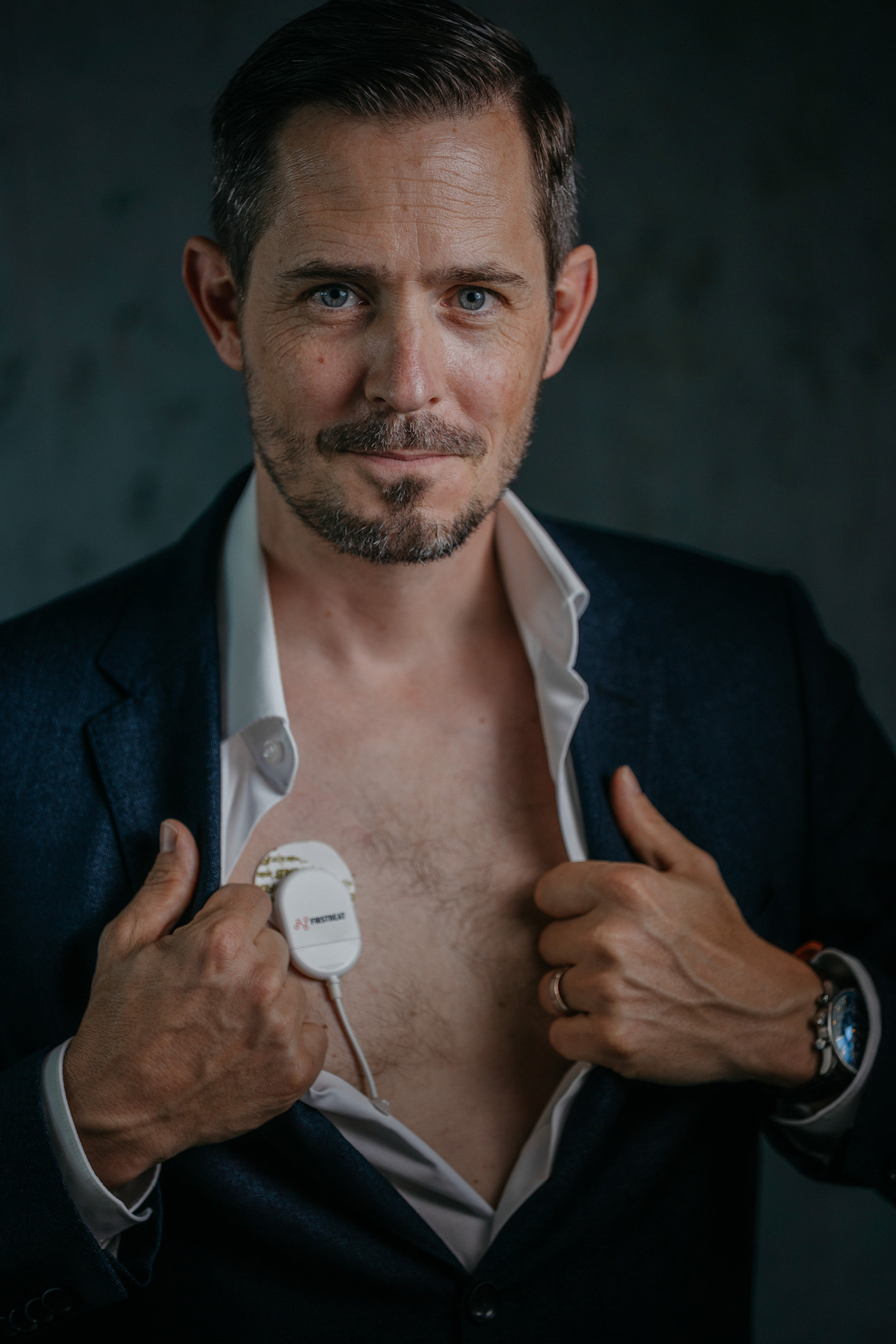
One particularly demanding morning, Daniel Ulbrich had a packed diary of meetings, difficult discussions and almost no downtime at his office in Zug, Switzerland. By lunchtime, the Capri Sun Group senior director assumed he would be exhausted.
But a stress monitor he was wearing as part of his Executive MBA at IMD in Lausanne told a different story. Much of the morning registered as physiological recovery. Ulbrich realised that, although intense, the work had involved subjects that inspired him. “It was a powerful lesson that intensity and stress are not necessarily the same thing,” he says.
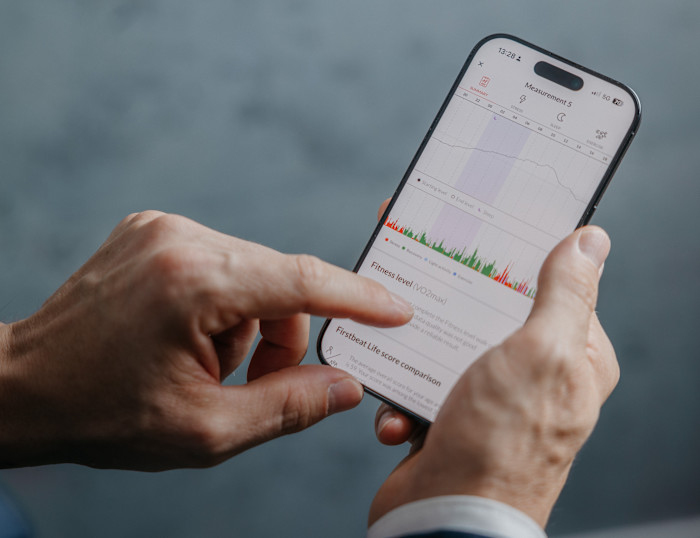
The Firstbeat monitor, which IMD EMBA participants can wear for several months, also challenged some of Ulbrich’s assumptions about recovery. His readings suggested that even one glass of wine delayed his overnight recovery, while adding 60-90 minutes to his habitual six hours of sleep was associated with particularly strong recovery during that extra period.
For Alyson Meister, professor of leadership and dean of degree programmes at IMD, such experiments reflect a broader change in management education, away from treating wellbeing as remedial support and towards teaching executives how to sustain performance.
“Previously, wellbeing or resilience were framed as one-off special topics,” she says. IMD has now put “managing energy for sustainable performance” into its core curriculum.
The change reflects what participants share in classroom discussion. Meister says executives are dealing with geopolitical volatility, rapid AI adoption and changing workforce expectations after several years of near-constant crisis management. Permanent digital connectivity has also eroded traditional recovery periods such as evenings and weekends.
Business schools are having to consider whether they should focus more on making executives resilient to pressure, or on helping them recognise when their own behaviour is creating unsustainable working lives.
At Rotterdam School of Management, wellbeing is embedded throughout the personal leadership development programme that accompanies its EMBA. Agata Kuflewicz, associate director of coaching services, says burnout can be linked to precisely the behaviours that help executives to succeed, including taking excessive responsibility, maintaining high standards, remaining relentlessly task-focused and finding it difficult to delegate.
“The aim isn’t to help executives tolerate an unsustainable level of pressure for longer,” she says. Instead, participants examine the experiences, assumptions and automatic behaviours shaping how they lead under pressure, supported by individual and group coaching.
Some business schools are leaning further into healthcare. The EMBA at Polimi Graduate School of Management in Milan partners with local digital healthcare service Dr.Feel to give participants access to medical professionals, telemedicine and specialists in nutrition, mental health and physical wellbeing. Its Kids Camp also provides activities for children while parents attend classes or programme events.
Executive MBA Ranking 2026

This is an early article from the EMBA report publishing on October 12
Other schools deliberately expose participants to pressure. At HEC Paris, an outdoor leadership seminar takes executives out of the classroom for challenges led by former elite military leaders, alongside leadership faculty. “It isn’t commando training, but it isn’t a walk in the park either,” says Brad Harris, associate dean of MBA programmes. Participants discover how they actually lead when pressure rises, rather than how they imagine they would respond to a classroom case study.
At Essec Business School in France, meanwhile, coaching runs throughout the 18-month EMBA. “Resilience is trained and nurtured, not switched on,” says Romaine Johnstone, head coach for EMBA programmes. The aim is to provide psychological safety as participants juggle professional, personal and financial pressures.
Students themselves are pushing wellbeing higher up the agenda. At the University of California, Berkeley’s Haas School of Business, EMBA participants Lauren Levin and Jack McSweeney became their cohort’s first “wellness leadership VPs” after recognising that the greatest challenge was often not coursework but fitting it around senior jobs, entrepreneurial ventures and family responsibilities.
Initiatives included a wellness newsletter, vision-boarding — creating visual representations of their goals — and a group walk into the Berkeley Hills. The latter involved participants pushing through a challenging climb together, ending at sunset. “It built a different kind of trust, more than a classroom ever could,” says McSweeney.
For Ulbrich at IMD, the most useful lesson has been neither to avoid pressure nor to pursue perfect wellbeing. With two young children, an EMBA and a senior job, he says eight hours’ sleep every night is unrealistic. Instead, the stress monitor encouraged him to make conscious trade-offs and experiment with micro-breaks and walk-and-talk meetings. “For me, resilience now means being able to perform at a high level today without systematically borrowing from tomorrow.”
Sporting wins
Elite athletes have long understood something executives are only beginning to embrace: that recovery is part of performance. Athletes alternate intense effort with structured recovery rather than expecting endless peak performance
At IMD, Alyson Meister says executives are being taught similar techniques, including recognising fatigue, managing daily recovery and changing how they interpret stress. Its EMBA participants also practise breathing regulation while making decisions during a three-day crisis exercise with the Swiss Army.
Published IMD research found that specific breathing patterns can alter brainwave activity in ways that measurably improve attention, according to Meister. That could give executives a technique to use immediately before a difficult conversation or decision.
At Polimi, a “mental economy” methodology combines neuroscience, data analysis and techniques inspired by elite sport including Formula 1 to develop focus, pressure management and decision-making.
Rotterdam School of Management borrows a “peak performance pyramid” from elite sport, encouraging executives to consider their physical, cognitive and emotional capacity and sense of purpose. Participants also draw lessons from martial arts and practise mindfulness. The underlying principle can sound paradoxical. Björn Atterstam, leadership expert at RSM says: “In order to move fast, you have to slow down.”