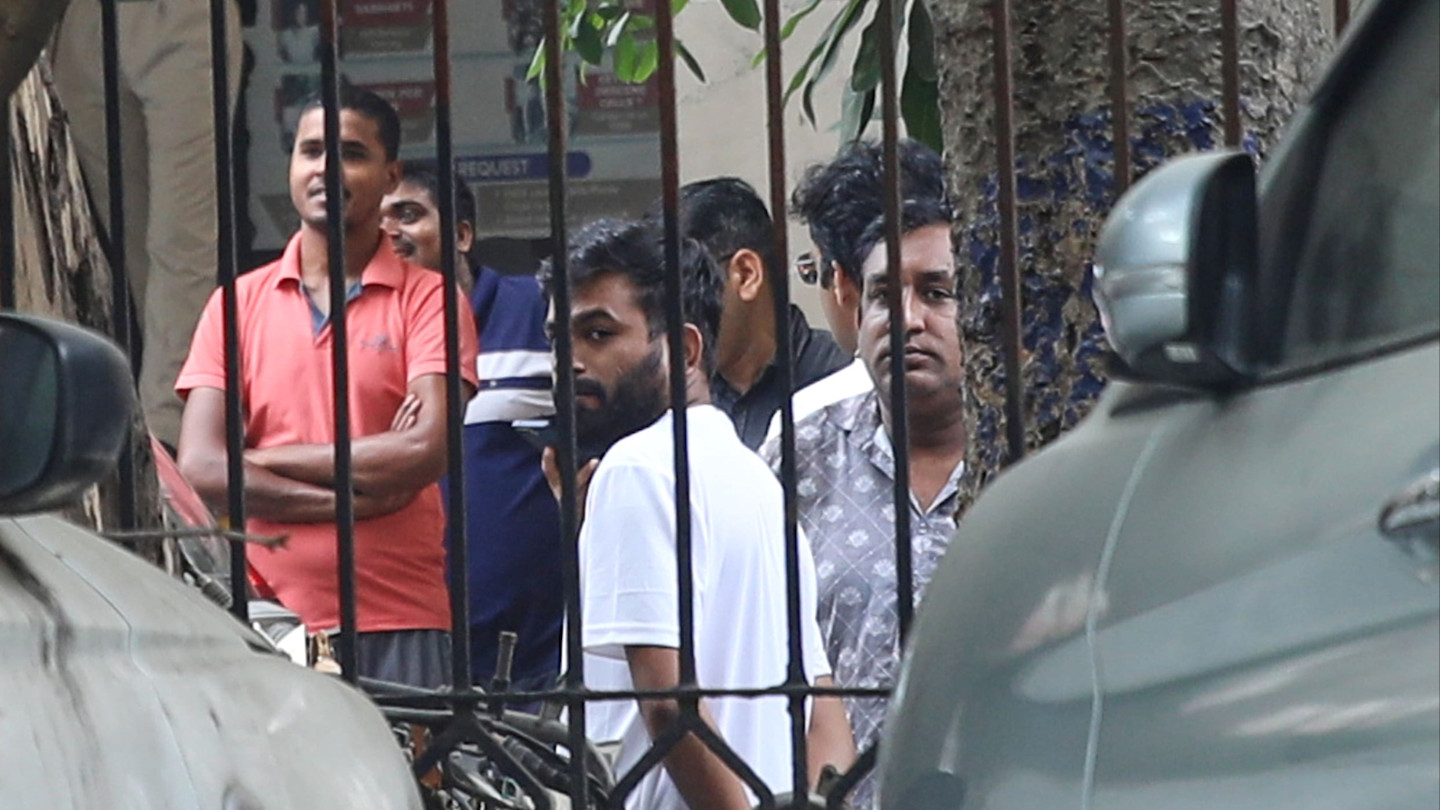
Indian police have released the founder of the youth-led “Cockroach” political movement after a day in custody over widespread protests in the capital that are challenging the government of Prime Minister Narendra Modi.
Abhijeet Dipke of the upstart Cockroach Janta Party and two of his close associates were let go by a court order in New Delhi on Sunday. He had been detained inside an airliner shortly after it landed in the capital the day before.
Dipke, who at the time of his release sported a shirt with Mahatma Gandhi on it, had called for peaceful protests demanding the resignation of the elections chief. The Delhi police denied permission for the Saturday demonstration· and tightened security across the Indian capital of more than 20mn.
“Narendra Modi is the biggest coward this country has ever seen,” Dipke told journalists after his release. The prime minister has yet to comment on the protests.
After being released from detention in New Delhi, Abhijeet Dipke, founder of India's 'cockroach' movement, calls Indian prime minister Narendra Modi a 'coward'.
The trio of leaders of the “cockroaches”, as they call themselves, were released on the condition that they would maintain “peace and good behaviour” for a year.
“The government has made a big mistake by arresting our leaders and clamping down on democracy,” Ajinkya Shinde, another CJP leader, said on Sunday after calling for further protests and labelling the detentions “unlawful”.
The movement said in a social media post after Dipke’s release: “You forgot what cockroaches do best — survive. We are back.”
Delhi was turned into a fortress by security forces over the weekend — with barricades and tens of thousands of police and paramilitary personnel — following a week of protests demanding the resignation of the head of the election commission, Gyanesh Kumar, over a controversial voter verification drive.
Police were seen dragging protesters by their clothes and stuffing them into buses and cars. Senior members of the opposition, including former chief ministers of West Bengal, Mamata Banerjee, and Delhi, Arvind Kejriwal, were also detained as they headed to protest on Saturday.
“This is worse than the Emergency,” said Kejriwal, in a reference to 1975, when the late former prime minister Indira Gandhi imposed a state of emergency under which civil liberties were suspended and political opponents were jailed.
On Saturday, Shinde claimed that “over 15,000” people “faced illegal detentions and police clampdowns” after Dipke called for elections chief Kumar’s removal. Delhi police did not reply to requests for comment.
Some demonstrators were detained during scattered flash protests in central Delhi on Sunday. “We are under a state of emergency. The government of India is at war with its own young citizens,” said Saurav Das, one of the released CJP leaders.
Earlier on Sunday, India’s top court ordered the government to restore the internet, ensure metro and rail services functioned normally, permit the free movement of people and stop detentions of those gathering peacefully.
The anger against what Kumar called an exercise to “purify” the electoral rolls, which removed an estimated 130mn names from the register, has turned into one of the biggest political challenges to Modi since he rose to power in 2014.
Young dissenters and veteran politicians claim the voter deletions may have benefited Modi’s Bharatiya Janata Party (BJP) in some recent state elections, casting a pall on the electoral process in the world’s largest democracy.
The CJP began in May as a satirical online campaign conceived by postgraduate student Dipke in the US after he heard a Supreme Court judge dismiss India’s unemployed youth as “cockroaches”.
After Dipke returned to India in June, it morphed into a national protest movement seeking reforms to India’s education system to stop corruption and improve fairness and opportunity. In July, it staged the biggest protests seen in the capital in years, forcing the education minister to resign, marking one of the worst political crises of the 12 years in power of the prime minister.
Amit Shah, Modi’s powerful home minister, said on the eve of the weekend protests that the BJP continued to win elections despite “lies and disinformation campaigns” by the opposition led by Rahul Gandhi of the Indian National Congress party, whose coalition called for further rallies on Monday.
After being released, Dipke said on Sunday he was going to the western state of Maharashtra to mourn his grandmother, who died while he was in custody.
But Das said: “The country’s youth has been awakened. They are demanding accountability.”