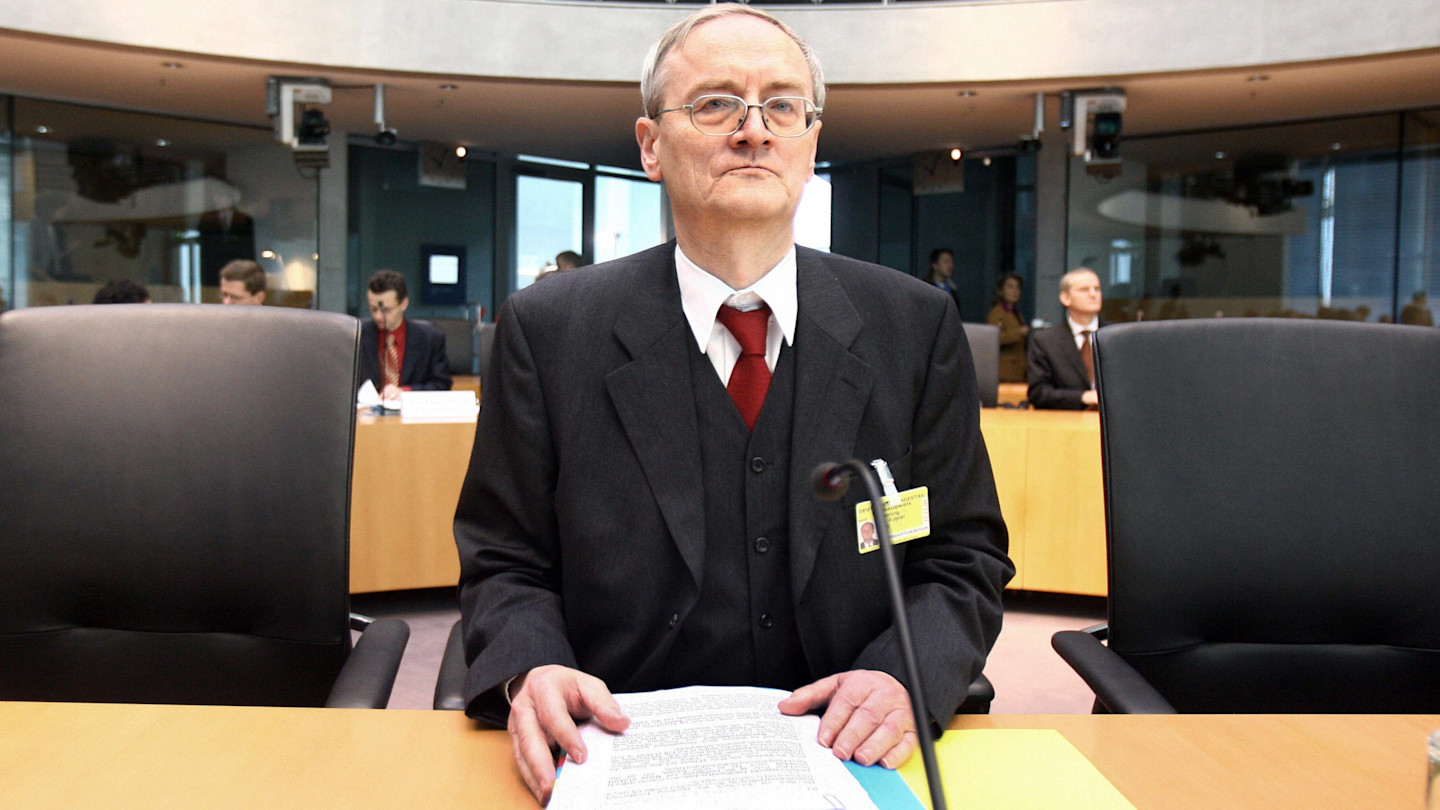
Few former intelligence chiefs can say their spying career really took off after they left office.
Not so August Hanning, president of Germany’s foreign intelligence service, the BND, from 1998 to 2005.
Until this week Hanning, a lawyer by training who came to security relatively late in his professional life, was best known as one of the BND’s most acid critics.
“A vegetarian among secret services,” he once quipped, comparing his organisation with more carnivorous counterparts in allied countries.
The 80-year-old is now behind bars.
On Tuesday morning, masked police raided his country home and took him into custody. Germany’s federal prosecutor accuses him of an astounding crime: illegally purchasing over more than a decade thousands of classified documents from the very top of the service he once headed.

Hanning, the prosecutor said, had recruited and paid a former protégé at the BND — a man who was the chief of staff to three successive chiefs — to leak classified documents “on an ongoing basis”.
Hanning’s lawyer has admitted his client was in possession of secret documents but denied the former chief paid for them or passed them on to foreign powers. Hanning, his lawyer said, has never done anything to the detriment of Germany.
The scandal has sent shockwaves throughout the country, where lawmakers have only just begun discussing new legislation to give the BND expansive new powers amid a rapidly deteriorating international security situation.
Overnight, the affair has become a shorthand for the BND’s failings and for the German establishment’s complicated relationship with spying and security matters.
Hanning was born in 1946 into a wealthy north-western German family. His father was the owner of a brickworks. (It was at the family estate in Nordwalde, close to the Dutch border, where Hanning was arrested.)
After high school in Osnabrück, home of the British Army in Germany, Hanning studied law. He began his undergraduate at Freiburg, where an elderly Martin Heidegger still dominated the intellectual life. Hanning returned to Münster, close to his hometown, to complete a doctorate in environmental law in 1975.
A career in the local state civil service beckoned, in tax affairs. In 1981 he moved to Bonn, joining the West German chancellery as a specialist in environmental matters. In 1986, however, his area of focus took a turn. He was deployed to East Germany, as a security official at the West German mission in Berlin. His responsibility was to handle the West German government’s Häftlingsfreikauf plan: the “purchase” of political prisoners from a cash-strapped German Democratic Republic hungry for international currency.
By the time of German reunification after the fall of the Berlin Wall, Hanning had forged a friendship with Bernd Schmidbauer, a Christian Democratic Union politician, which would also prove fateful. Hanning and Schmidbauer shared an interest in environmental affairs, and in 1991 the latter was made a junior environment minister. Schmidbauer was then moved to the chancellery as minister of state, where his responsibilities included the intelligence services.
Schmidbauer brought Hanning to the chancellery to work for him. And in 1998, Hanning, under Schmidbauer’s aegis, became the new president of the BND.
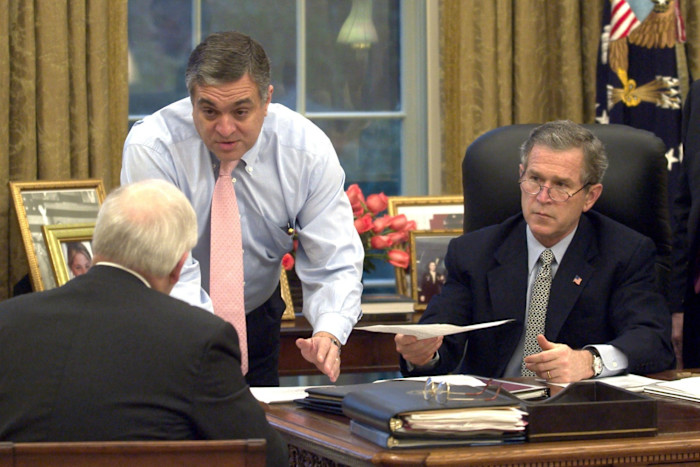
Hanning led the BND at a crucial moment in its history: the US war on terror began during his term. It was a BND informant, known as “Curveball”, who was the main source for the US government’s case to the UN that Iraq’s Saddam Hussein was manufacturing and hiding weapons of mass destruction. Hanning personally protested to CIA director George Tenet they had misused the BND’s evidence, to no avail. The German government refused to back then-president George W Bush’s invasion of Iraq.
Hanning’s final year in office was also marked by controversy: in late 2005 he publicly admitted the BND had systematically spied on German journalists — although he denied having been aware of the activity.
From the BND, Hanning reached the highest rung on the German civil service ladder: between 2005 and 2009 he served as state secretary at the interior ministry.
Despite retiring on a generous state pension of €11,000 a month, according to government data, Hanning set his sights on making money in the private sector.
It was at this very time, in 2010, that prosecutors allege Hanning also entered into an “arrangement” with his own former chief of staff at the BND — a man named only as “Manfred D” — to receive sensitive agency materials “on an ongoing basis” in return for cash.
The mystique of Hanning’s former profession as well as his contact book guaranteed him clients.
In 2013 he became a board member of the Azerbaijan-German forum, a lobbying group for Baku. He had clients in Israel, the US, Germany, Austria, Ukraine and the Middle East.
Hanning also became a frequent — and sometimes strident — political commentator, wading into a range of topics. In 2015 he criticised then-chancellor Angela Merkel’s response to the migrant crisis, proposing that Germany seal its borders and separate migrant families if necessary.
In 2017, when a scandal over Russian influence in the Austrian far right toppled the government in Vienna, Hanning turned on the journalists who broke the story. Police should investigate them and their sources, he said.
In recent years, according to people who know him, Hanning increasingly came across as arrogant and imperious: a man used to getting his own way who suddenly found himself far from the political centre of power. Others — including one of his clients — told the FT he remained a formidable operator who “got things done”.
Concerns about the nature of his commercial relationships had begun to circulate in Berlin’s political and security circles before his arrest, officials privy to such conversations told the FT. Hanning was criticised for being too close to unsavoury figures and businesses with questionable government connections in the Middle East and Russia.
Hanning was aware of such rumours. He sent a letter in August to the current BND leader, angrily criticising the agency for passing on information to prosecutors implying he might be a Russian spy, without having given him an opportunity to rebut the allegations. The letter was reported by the German newspaper Die Welt on Friday.
Not all of Hanning’s commercial relationships would prove as financially rewarding as they first appeared.
In 2017 he joined the supervisory board of Latvia’s PNB Banka. When the bank went bust in a Russian money-laundering scandal in 2019, Hanning was again in the spotlight. Police investigated him on suspicion of failing in his supervisory duties. The collapse, for which he was held partially liable, cost him “millions,” he wrote to then-chancellor Olaf Scholz in 2022, in a letter unearthed this week by German media.
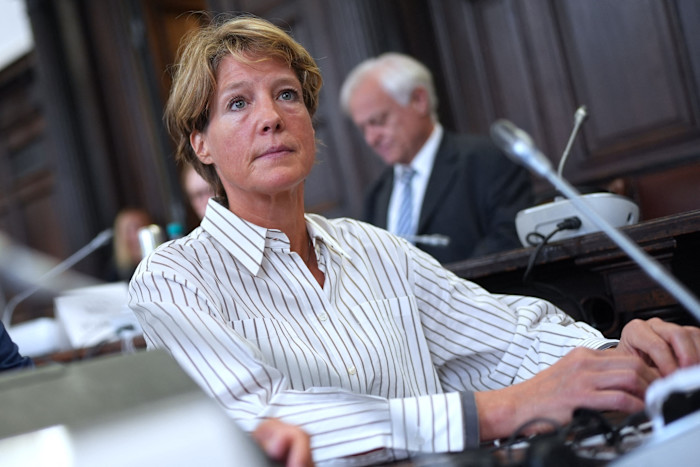
Ultimately it was another client that proved his undoing. The same year as he wrote to Scholz, Hanning, via his company System 360, was hired by the German steakhouse heiress Christina Block to help her regain custody of her children.
What ensued in 2023 was a botched kidnapping operation involving former Mossad agents who attempted to abduct two of Block’s children from their father in Denmark and bring them back to Germany.
Block, who denies knowledge of the operation, is on trial in Hamburg. Hanning is not a defendant but was called as a witness because of his advisory role. In September 2025, prosecutors raided his house looking for evidence for the case.
It was in the course of that search that they unearthed Hanning’s trove of classified BND information.
And in May this year, Germany’s federal prosecutor stepped in, wiretapping his devices and gathering evidence that led to his arrest this week.