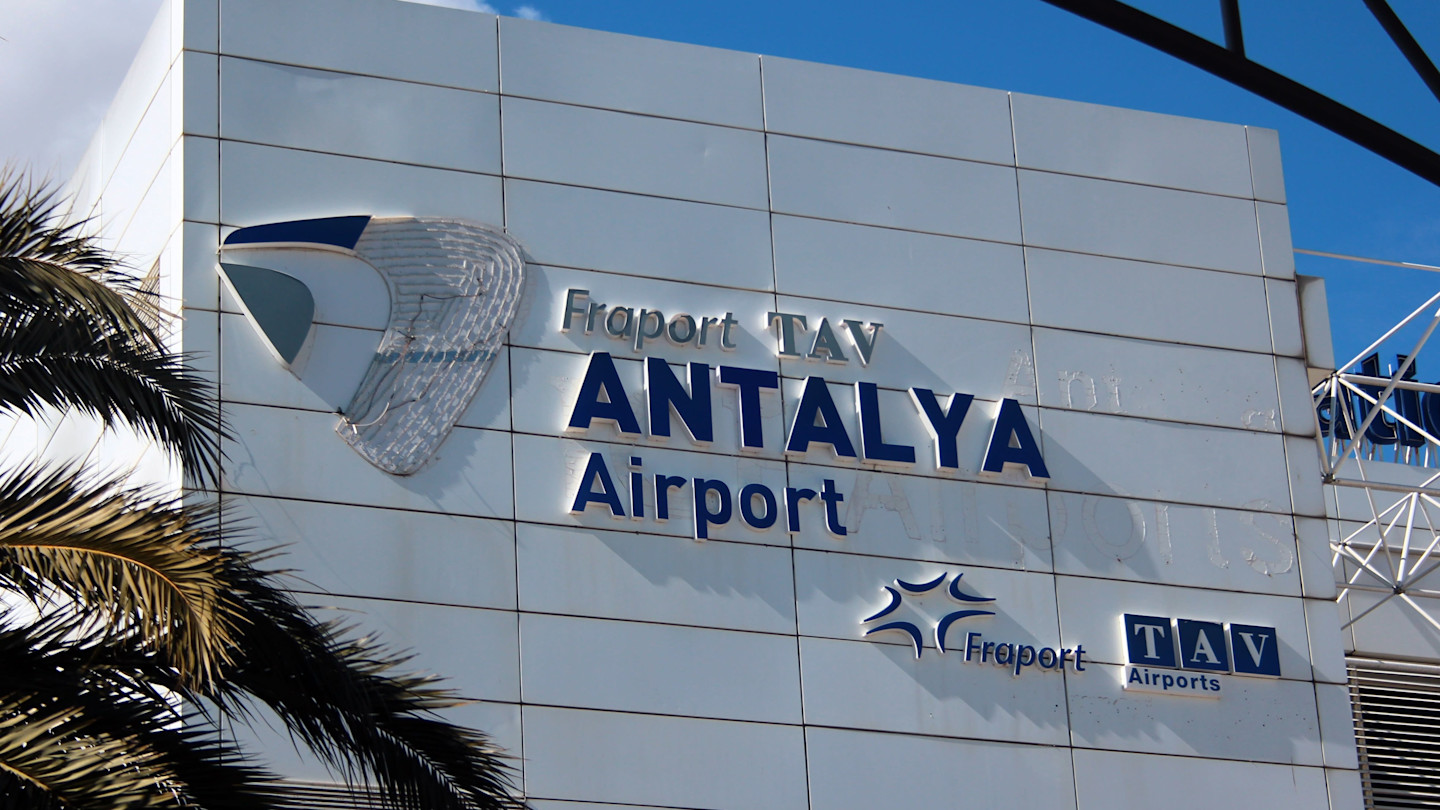
An airport operator backed by the French government has received fees from Russian and Iranian airlines placed under sanctions by the EU and US, highlighting the limits of western blacklists targeting Moscow and Tehran.
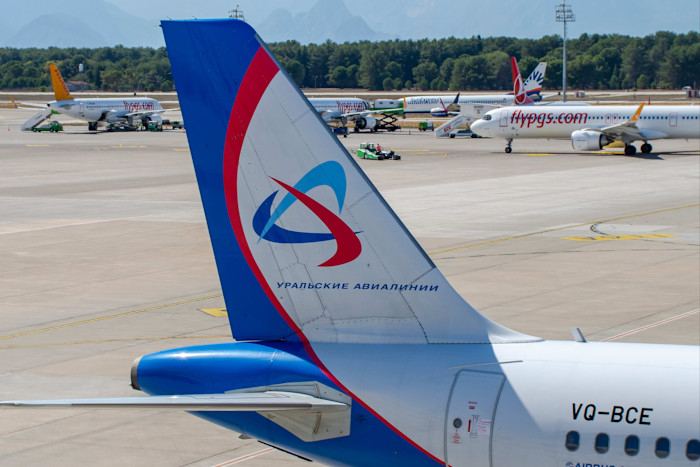
TAV Airports — a subsidiary of French state-controlled Groupe ADP — has continued to service flights by Russia’s Ural Airlines at Antalya airport in Turkey, through a joint venture with Germany’s Fraport, despite the carrier having sanctions imposed by Brussels in June 2024. Groupe ADP’s flagship asset is Paris-Charles de Gaulle airport.
The operators collect fees from airlines for providing services such as boarding and security, although Turkish aviation authorities control which flights can land at the airport.
At least 54 Ural flights have been listed on the airport’s online arrival and departure board for locations such as Volgograd and Moscow since September 21.
TAV’s wholly owned subsidiary, Havaş, is also listed as Ural’s ground-handling provider at Antalya.
The EU sanctions on Ural — part of a crackdown on Russia following its full-scale invasion of Ukraine — initially applied only to entities within the bloc, meaning the actions of overseas subsidiaries such as Turkish-incorporated TAV were not in scope.
Brussels later added a requirement for companies to make their “best efforts” to ensure they do not “undermine” sanctions tied to the war through their non-EU entities. This has applied to Ural since February 2025.
Companies that fail to do so “may be subject to legal penalties”, according to European Commission guidelines that define “best efforts” as “all actions that are necessary and feasible”.
One senior international trade and sanctions lawyer said the actions of Groupe ADP “would appear, at least, to go against the spirit of the EU sanctions”.
Groupe ADP said it “is ensuring strict compliance with applicable regulations and sanctions”.
TAV said it did not violate sanctions and “places the utmost importance on sanctions compliance”.
The company said it had no control over which airlines use Antalya airport, which was a decision for Turkish authorities. It added that where a sanctioned airline operated flights to Antalya, TAV provides “only the minimum level of services as required by local regulations and governmental contractual obligations and imposed by civil aviation authorities, without violating any US or EU sanctions requirements”.
EU law provides some leeway in situations where a company is unable to “exercise control” over a non-EU subsidiary for reasons outside its control such as local legislation.
The senior international sanctions lawyer said a “mere contractual obligation” was “unlikely” to be enough to allow an EU entity to succeed in arguing that it was unable to exercise control of a non-EU subsidiary.
Fraport said it was “in full compliance with applicable laws and regulations” and “remains committed to conducting its business in accordance with applicable sanctions regimes and all relevant legal requirements”.
While EU sanctions are set in Brussels, enforcement is left to the member states.
France’s economics and finance ministry and L’Agence des participations de l’État — which manages the state’s corporate investments — declined to comment. The European Commission declined to comment on an individual case.
Interactions with sanctioned airlines have come under increased scrutiny in recent weeks after the US blacklisted 27 Iranian carriers in a bid to maximise pressure on Tehran.
At least eight of the companies targeted by Washington have historically used Turkish and Georgian airports with TAV-operated terminals and continued to do so in the weeks after the US designations on September 8.
Most of the routes appear to have now closed, although, for example, a Meraj Airlines flight travelled from Tehran to Ankara airport, which TAV operates, on Monday October 5 before returning overnight to Iran.
TAV said it had “stopped providing services” to the Iranian airlines sanctioned by the US on September 8 “within our scope of control”.
US primary sanctions apply only to American people and companies. But under secondary sanctions Washington can target overseas organisations that it deems to have “materially assisted” a sanctioned entity, cutting them off from the US banking system.
The senior international sanctions lawyer said Groupe ADP and its subsidiaries “could be at risk” of secondary sanctions if the US decided they met its legal test of having “materially assisted” a designated entity.
A senior US sanctions lawyer said Washington would be “highly unlikely” to impose such sanctions due to the diplomatic risks of targeting a Paris-backed group.
Secondary sanctions were typically a diplomatic tool to “cajole and influence” foreign countries and companies, rather than being formally deployed, they said.
“That said, it’s the Trump administration . . . it put the Turkish defence ministry under sanctions in its first term and used that as leverage,” they added.
A US Treasury official said: “We don’t preview potential sanctions actions, though we are monitoring these issues closely and take any and all potential allegations seriously.”
Additional reporting by Laura Dubois in Brussels and Sarah White in Paris