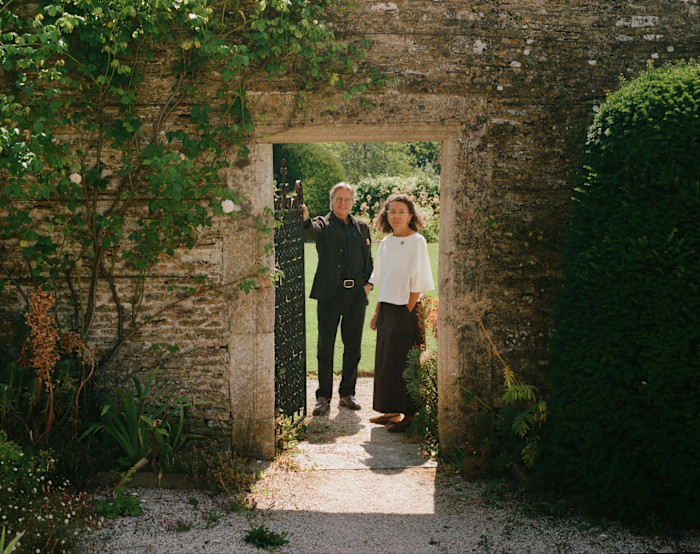
Tamsin Wimhurst has a thing for saving houses. It began in 2009, when the social historian visited the Cambridge home of 94-year-old Elsie Palmer. “I expected it to be a normal terrace,” she recalls. “But inside all the walls and ceilings were beautifully patterned in what looked like William Morris wallpaper but [they] were actually handpainted.” The arts and crafts workmanship had been executed a century earlier by Palmer’s grandfather, decorative artist David Parr. “I just saw it and felt it needed to be saved,” says Wimhurst. “I wanted to maintain the atmosphere of the people who had lived there.” She bought the house, founded a charitable trust, and opened it to the public in 2019.
Wimhurst has since been involved in a number of other preservation projects, including the homes of outsider artists and a tithe barn theatre. She and her husband, Mike Muller, a co-founder of tech company ARM, have also rescued and renovated several homes of their own – from a Victorian house in Cambridge to one in Norfolk, “all wood, with an almost New England feel to it”.
Their current home was another act of salvation: a rundown Wiltshire manor house that they purchased five years ago. “When we were preserving the David Parr House we talked about how much dirt we should take off and how much we should leave,” says Wimhurst. “Here, we wanted to get rid of all the grime,” adds architect Richard Parr, who was commissioned by Wimhurst and Muller to renovate the property.
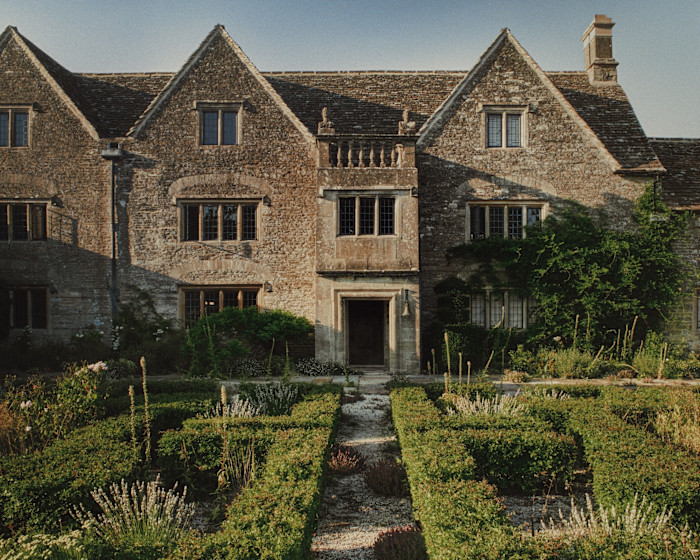
Built in the 17th century in local Cotswold stone, the Grade II*-listed main house and the separate farmhouse had been joined together in the 19th century, while a restoration in the 1920s had introduced arts and crafts elements. “From the outside, there was something terribly romantic about the place in its slightly dishevelled state,” says Wimhurst. Inside, says Parr, “it was a shocker. It was dark, deteriorating, with avocado bathrooms and a reproduction of an Elizabethan staircase that was completely wrong. The house had lost its way. We’ve very gently pointed it back in the right direction.”
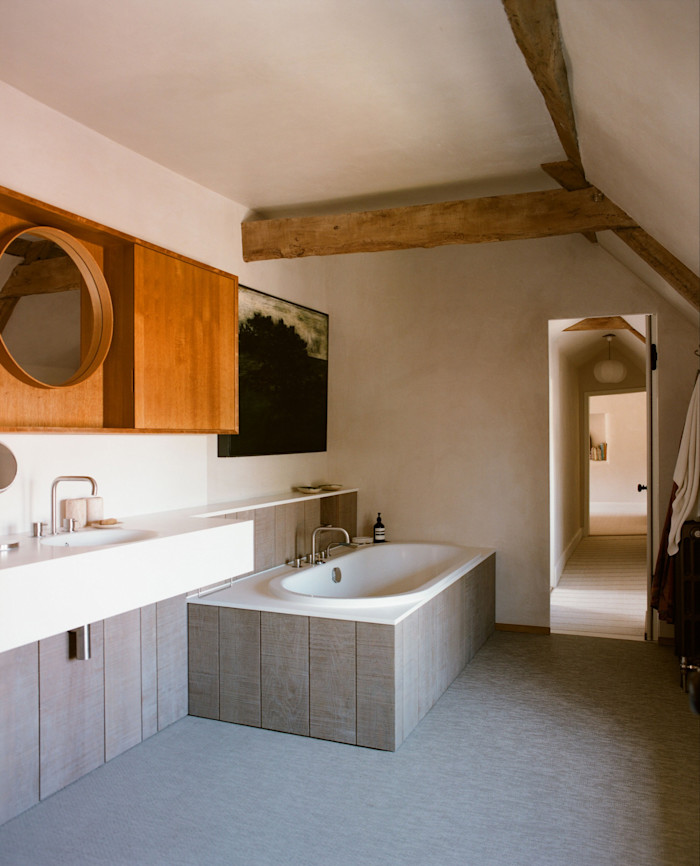
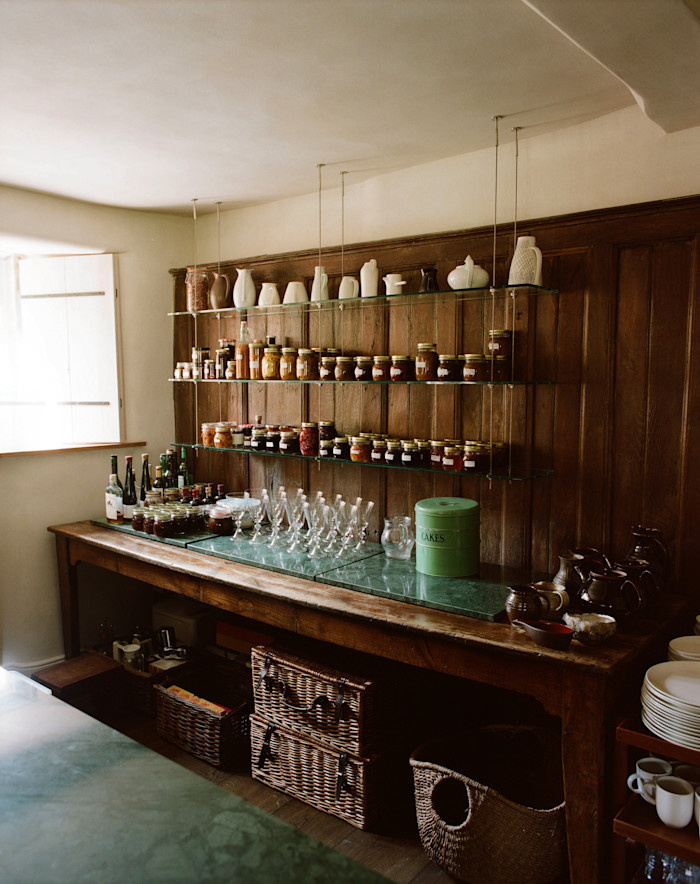
It was a substantial undertaking. “I saw a project – and I do like a project,” smiles Wimhurst, a spry 60-year-old, whose wishlist for the build included a yoga room, a larder for pickling homegrown vegetables, a 20m swimming pool and a bathroom conducive to reading. “It came at a time when my husband had retired, and I felt it was something we could do together.”
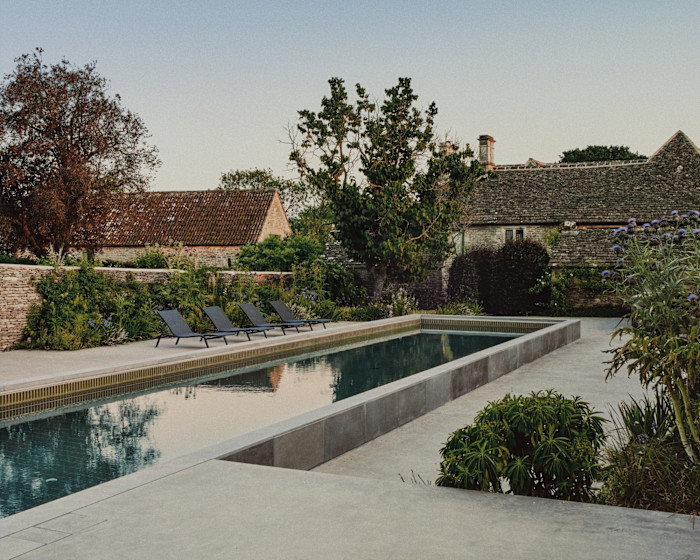
It was the first time they had worked with Richard Parr Associates. “We are not heritage restoration architects,” says Parr, who founded his studio in the mid-1990s. He describes his team as “modern traditionalists”, whose projects include Somerset hotel The Newt, new-build homes from Sussex to Chamonix, as well as renovations of historic manor houses. In Wiltshire, Parr’s approach involved elements of painstaking recreation – when the roof was redone, for instance, the original mossy tiles were sensitively retained – but “without being a slave to nostalgia”, he says.
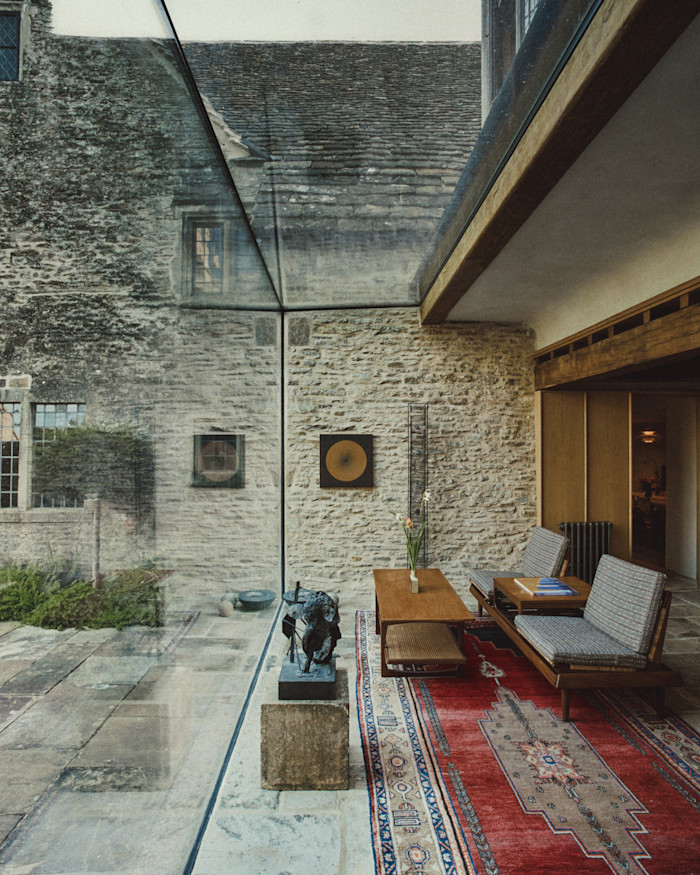
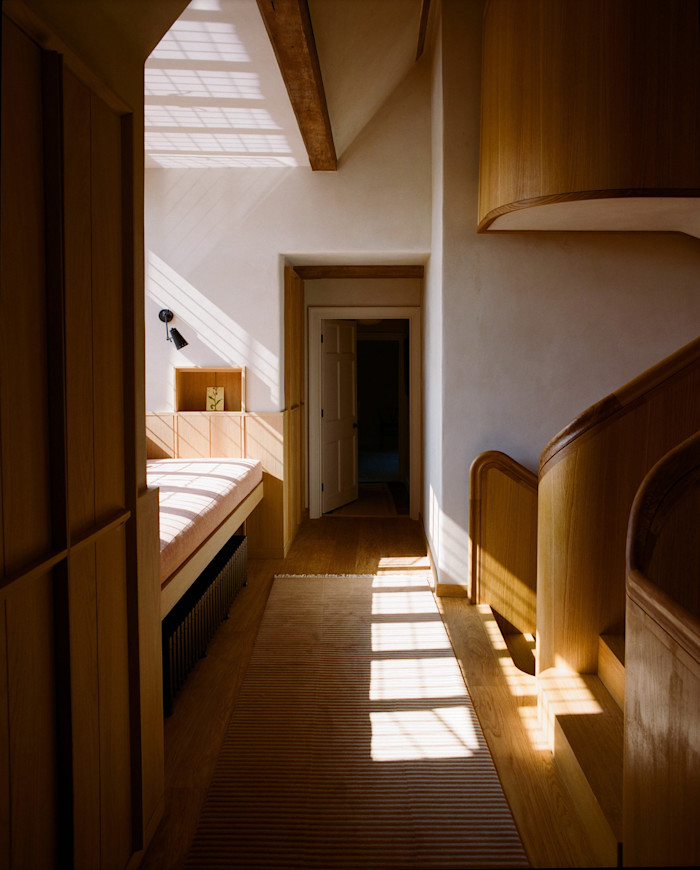
The result is “very gentle, through to removing all the hard lines of the plaster work”, says Parr, pointing to the clay finish that curves around corners. A contemporary rethink of the way the two original buildings were joined is at the core of the scheme, replacing “a warren of corridors” with a vast picture window and a sweepingly sculptural central staircase. “It could just be a hallway that you walk through, but we’ve created a stopping point,” says Wimhurst. A table downstairs is used for breakfast and family games of mahjong; upstairs on the landing a window seat is so deep it’s more like a bed.
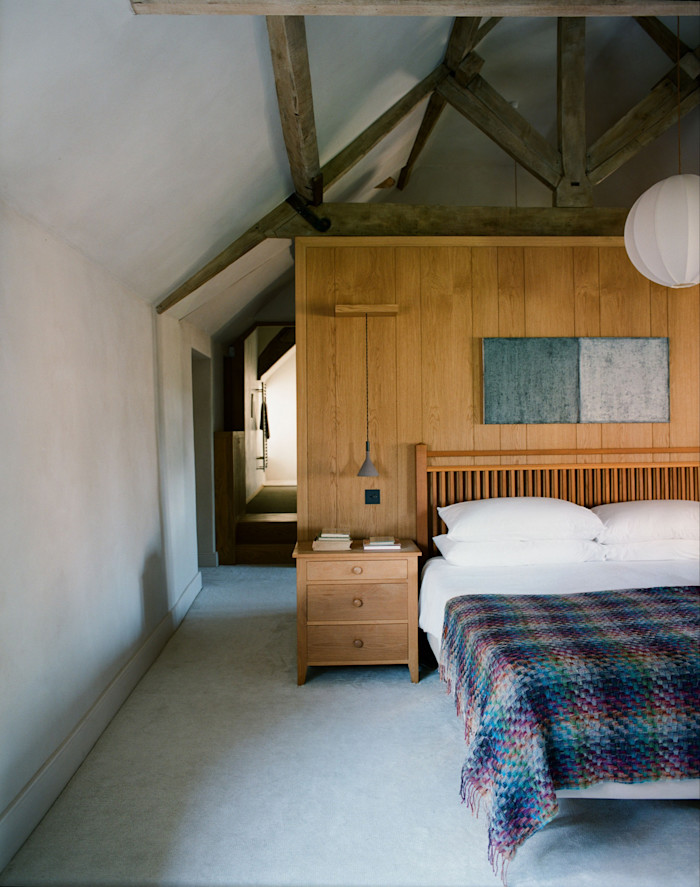
“For me, this sort of project is about making a house fit for the next 100 years,” says Wimhurst. “In order to save these old houses, it’s important that they work for their time and the people living in them. We’ve ended up with something very useful.” The opened-up kitchen-dining room leads on to the living-room hall and a cosy snug beyond, while the loft space, originally the servants’ quarters, is referred to as “the Christmas wing” – a run of guest bedrooms that last year accommodated 20 family members.
The first floor is dominated by Wimhurst’s “study and craft space” (“mainly I do Blue Peter-level stuff”), and Muller’s office, which connects to a “mending room” in the eaves. As the chief technology officer of ARM until 2019, Muller designed microchips for mobile phones. “He’s the architect of the chip world,” says Wimhurst. In 2016, ARM Holdings was sold to Japanese firm SoftBank for £24.3bn.
Together, the couple run Muller Wimhurst Trust. “We like to fund things that people think are unfundable,” says Wimhurst. This has included Gerry’s Pompeii – the canal-side London sculpture garden created by Irish outsider artist Gerry Dalton – and Ron’s Place, the Birkenhead home of Ron Gittins, which he covered in murals and sculptural features. In Cirencester, two projects are in their early stages: the Rory Young House, the home of a late stonemason (“we’ve still got lots of money to raise for that one”), and Bretforton Grange & Theatrebarn, which is being recast as an “incubation hub for new theatre productions”, says Wimhurst. As to whether there is a unifying theme to the projects, she adds: “I like individuals; quirkiness is maybe an overused word, but people who dare to be themselves.”
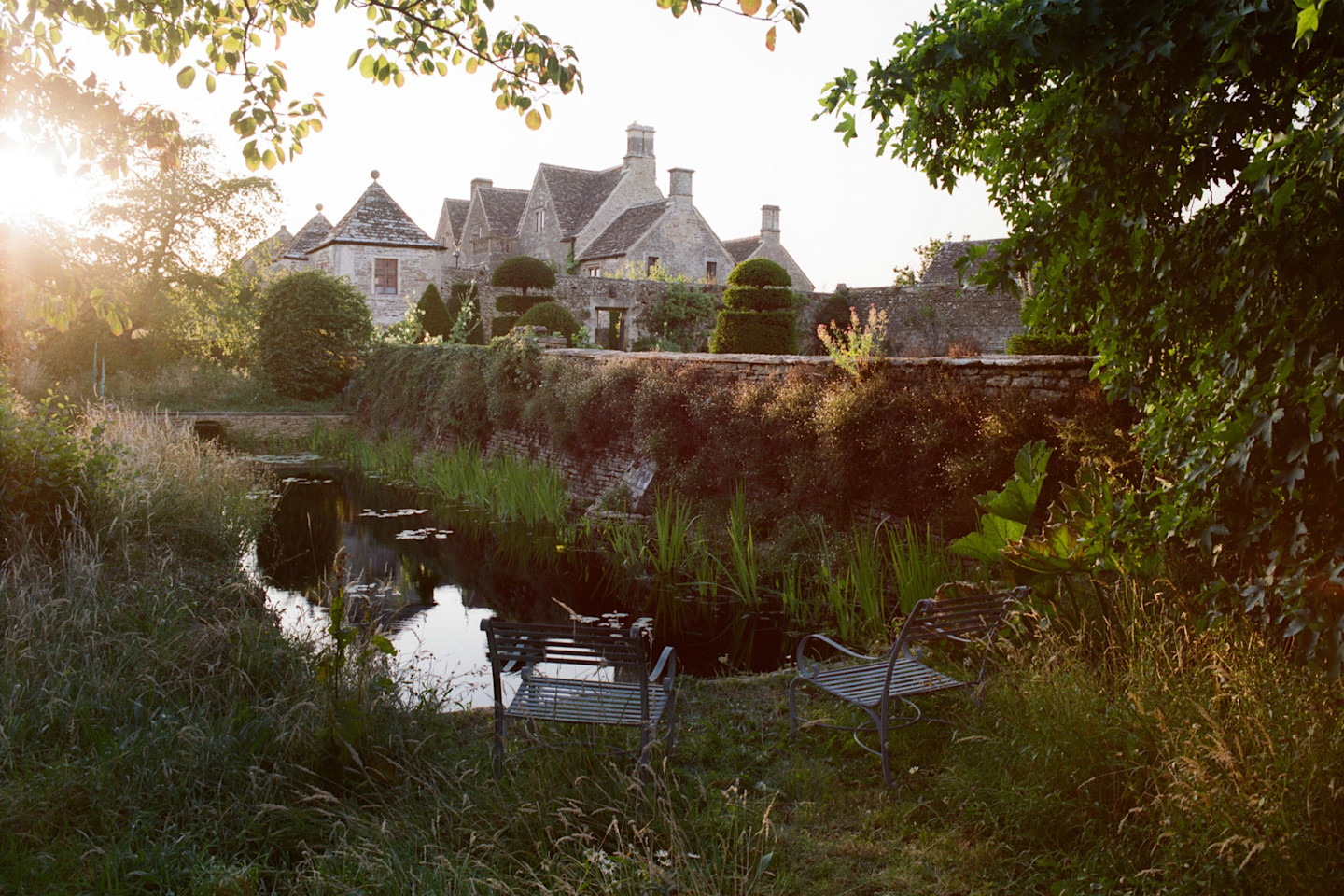
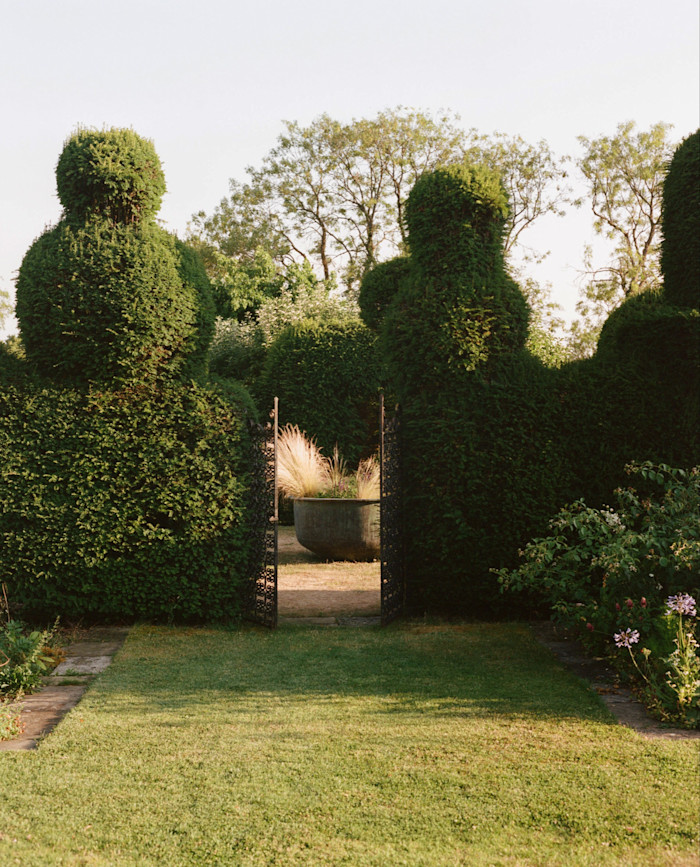
The manor-house garden reveals another unsung creative: theatre designer Norman Wilkinson, whose designs for scenery and costumes graced London’s Savoy and Duke of York’s theatres. His outdoor spaces also flaunt a sense of theatricality, delineated into distinct areas with yew hedges – a layout that has been reinvigorated by Monmouthshire-based garden designer Arne Maynard.
“The way the garden was laid out, with its divisions and subdivisions, gave us these wonderful blank canvases to work within,” says Maynard, who also looked to the earlier history of the house for inspiration. “We explored Elizabethan pattern-making in the front court, with the hawthorn knots, and plants that would have been grown in that period like potentillas and Geum rivale ‘Album’.” He reinstated a stew pond in front of the house, and added topiary and wide, colourful double herbaceous borders.
Wimhurst and Muller came to the creation of their home from vastly different viewpoints, notes Parr. “Mike gave me a spreadsheet and Tamsin very evocative descriptions of things. The house is a wonderful blend of Mike’s rigour and practicality, and Tamsin’s more artistic side.” Much of their furniture came with them from their former Cambridge home, including the midcentury Louis Poulson PH5 pendants above the kitchen table. “Being a historian, I like the memories that the objects bring with them, so I wouldn’t throw something out because it didn’t fit in the space,” says Wimhurst.
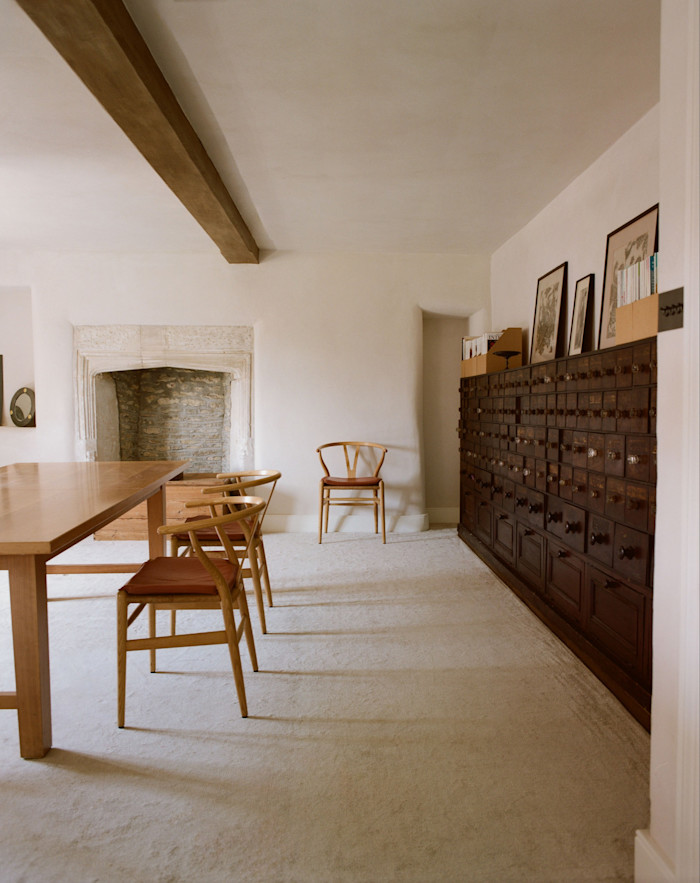
New purchases include an antique table from Gallery BR in Tetbury and a pair of Knoll Matic sofas, surrounded by art and objects collected over the years. There are baskets from Japan. Two pots on the kitchen worktop are brimming with wooden spoons. “I have a spoon fetish,” says Wimhurst, of a collection that spans generations. “I stir my jams with my granny’s spoon.” A wall-mounted cabinet of beach-found relics is by Scottish artist Richard James; several paintings are by Cornwall’s Sax Impey.
“I like buying art from living artists because I want to support them,” says Wimhurst. “Craft is really important to me. It goes back to William Morris; when he talked about beauty it wasn’t just about aesthetics but the beauty of how things are made and the person who’s making it – and those are values I want to bring to a place.”