This article is part of FT Globetrotter’s guide to Tokyo
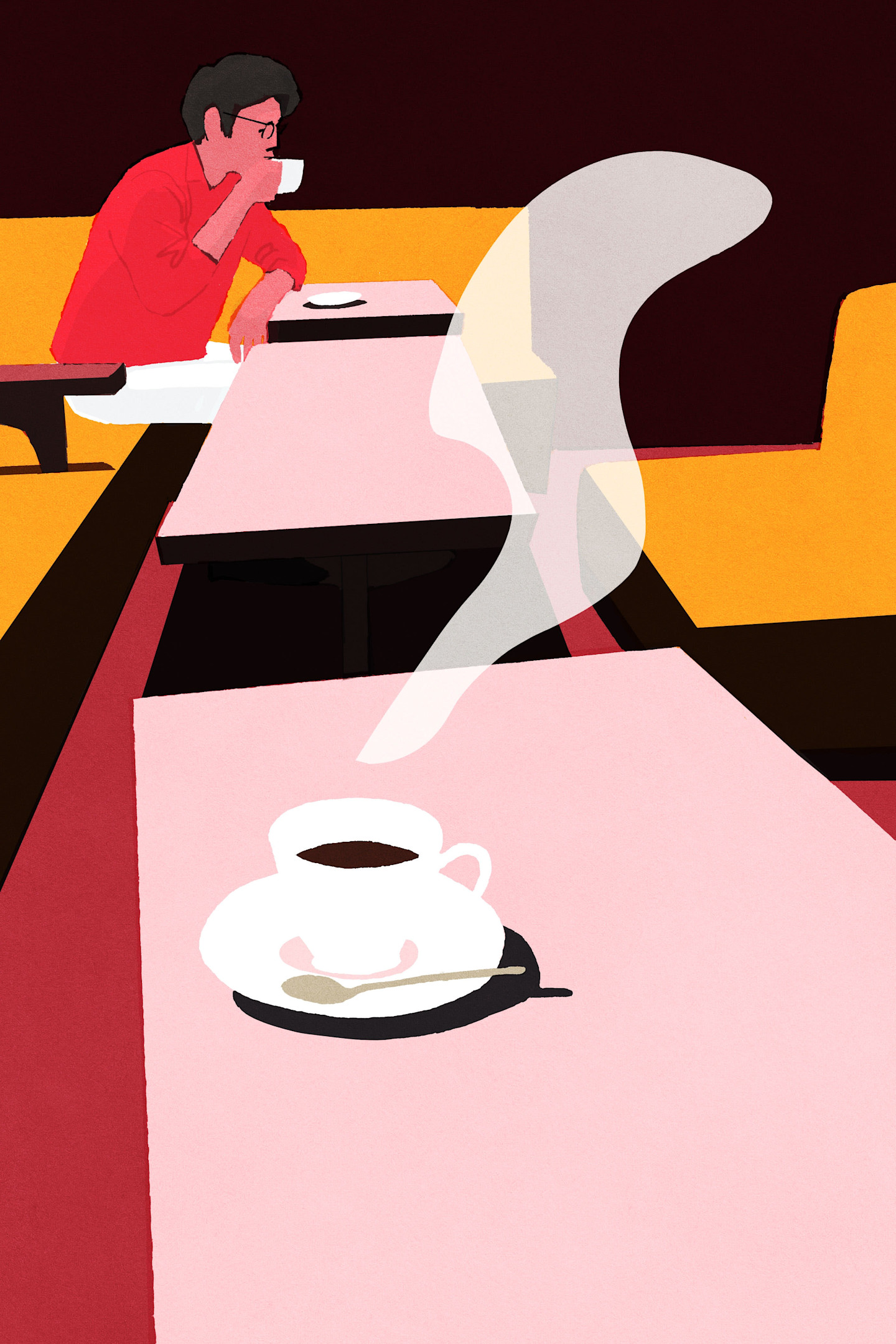
When I’m struggling to write, I’ll often go to a coffee shop. Not just to the well-known cafés, but to what we call jun-kissa; retro coffee houses that have stood quietly in the backstreets for decades. If the first doesn’t change my mood, I’ll sometimes go on to a second or third.
I have rather particular tastes. A dim interior with indirect lighting. The smell of aged wood and faded menus on the walls. An owner who pays next to no attention to customers coming in. Waiters who show no sign of evicting you, even after two or three hours. I don’t even mind if the owner isn’t one for social interaction. In fact, curiously, that sometimes makes it easier for me to relax. I think what I need is that sense of time standing still.
People often ask me to recommend a coffee shop. But to be honest, in a lot of cases, the better the café, the less likely I am to ever find it again. I’ll be wandering around a new town and pop in for a coffee on a whim. Nice place, I’ll think, telling myself I’ll come again, before completely forgetting where it is. I’m not very good with directions, so it happens a lot. A dreamlike encounter. I sometimes wonder whether the coffee shop ever really existed.
In Japan, we have an expression: “ichigo ichie” (literally “one lifetime, one meeting”). It was born from the spirit of the wabi-cha tea ceremony, perfected by tea master Sen no Rikyū during the 16th-century Warring States period. Those gathered in the tiny teahouse would engage fully with their bowl of tea, aware that this particular encounter would only occur once in their lifetime. The wisdom of the tea ceremony has been handed down through this expression. This encounter, at this time, in this place, with this person, will never happen again in the whole history of time, from the birth of the universe to its end. Which means that we must do our very best to treasure this cup, this afternoon.
I believe the spirit of ichigo ichie resides in the jun-kissa. The time I spend in a coffee shop I happen to wander into isn’t something I can share with anyone, nor is it something I can recreate. It’s unrepeatable. Which is precisely why such an experience remains indelibly etched in my memory.
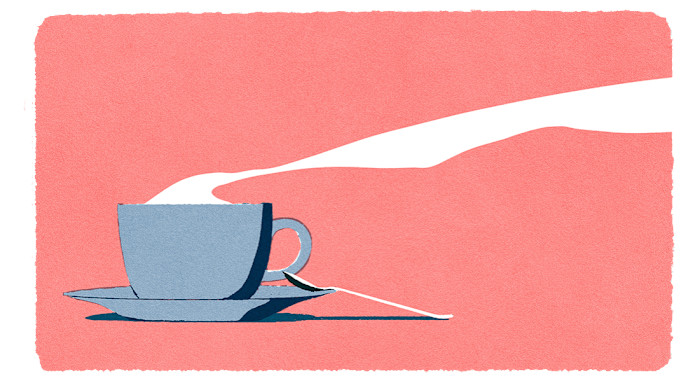
Spending time in coffee shops always brings me a strange kind of peace. As I write this column, I realise that this is precisely what gave rise to the idea at the heart of my Before the Coffee Gets Cold books. You can travel back in time but, try as you might, you can’t change reality. Yet a change to your own heart and mind can bring happiness within that same reality. Maybe that’s what these coffee shops have been teaching me, without me realising it, by giving me the time to reflect on my life.
It makes me think, too, that I can’t be the only one who has a jun-kissa.
Perhaps you, the reader, have a similar place of your own? A café where you have a regular table. A counter where your usual appears without you having to order. A coffee shop that allows you to just be, without the need for words; a place you can always rely on.
When I think of places like these, that have existed throughout the decades even as the towns around them have changed, I sometimes find myself imagining the future: 10, 50, a hundred years from now. In a coffee shop in an unfamiliar land, someone is reading one of my books. In the dim light, only the ticking of an old wall clock reverberates in the afternoon silence. I’m not there. But the coffee shop connects me to the reader through time and space. The thought strikes me as unbearably romantic.
Three Japanese coffee shops to add to your hit list
Coffee Tei, 1F/B1F, Tohkoma Building, 1−7−2, Higashi-Ikebukuro, Toshima-ku, Tokyo. Website; Directions
Rokuyosha Underground, B1F, 40 Daikoku-cho, south of the Kawaramachi-Sanjo intersection, Nakagyo-ku, Kyoto. Website; Directions
Cafe Apart Ibaraki, 4-6-7 Ekimae, Ibaraki, Osaka 567-0888. Instagram; Directions
Toshikazu Kawaguchi is the author of the “Before the Coffee Gets Cold” book series
Do you have a favourite coffee shop in Japan? Tell us in the comments below. And follow us on Instagram at @FTGlobetrotter
Cities with the FT
FT Globetrotter, our insider guides to some of the world’s greatest cities, offers expert advice on eating and drinking, exercise, art and culture — and much more
Find us in Tokyo, London, New York, Los Angeles, Washington DC, Chicago, Istanbul, Paris, Lagos, Rome, Frankfurt, Singapore, Hong Kong, Miami, Toronto, Madrid, Melbourne, Copenhagen, Zurich, Milan, Vancouver, Edinburgh and Venice