SpaceX and Tesla are studying a deal to unite Elon Musk’s two public companies in a multitrillion-dollar combination that would be the largest merger of all time.
The world’s richest person on Tuesday said both companies had formed special committees to study a tie-up. It marks the biggest step towards a merger that would create a sprawling conglomerate oriented around AI and potentially worth more than $3tn.
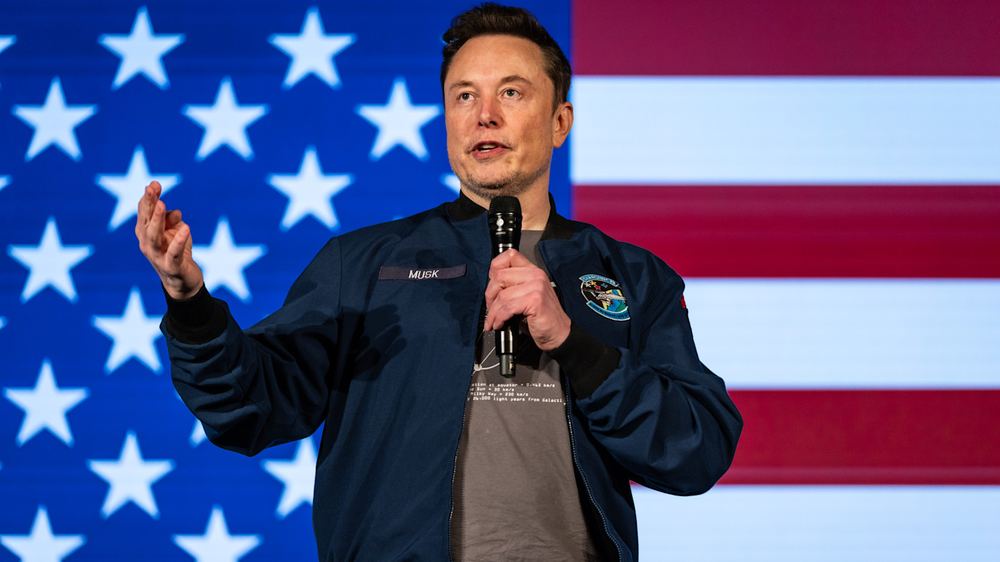
“Do I think it would be a good idea? Yes. But at the end of the day the shareholders have to be supportive of this,” Musk said, adding that as chief executive of both companies he cannot participate in the discussions.
“The special committees have not reached agreement on the terms of any transaction and obviously there is no guarantee that they will,” he added.
SpaceX has a market value of $2tn, while Tesla is worth nearly $1.5tn. On paper, combining the seventh and 11th most valuable companies in the world would vault Amazon and leave the new entity behind only Microsoft, Alphabet, Apple and Nvidia.
The electric-car maker has deepened its ties with SpaceX in recent years. In March, Musk announced a joint venture called Terafab, a massive semiconductor manufacturing plant in Texas that will produce chips for his autonomous vehicles, humanoid robots and orbital AI data centres that could ultimately cost $119bn.
“There is a lot of merit to combining the two companies as we are pretty much in the superintelligence singularity,” Musk said.
The two companies have also teamed up to produce a “flying” sports car called Roadster, unveiled last week. It performed a series of inverted backflips and jumps using cold-gas thrusters developed by SpaceX. Musk’s AI model Grok is provided for free in many Tesla vehicles.
Video description
Elon Musk comments on a possible merger of Space X with Tesla
“There is a lot to be gained from co-operating on developing superintelligence software, chip design, the Terafab, robotics, mass to orbit with the [Starlink] constellation connectivity,” Musk said. He has previously rolled the social media platform X and his AI lab, xAI, into SpaceX.
Tesla shares rose about 1.5 per cent after hours, while those of SpaceX climbed 8 per cent after it reported strong earnings.
SpaceX said its revenue more than doubled in the third quarter, swinging the company into profit and calming investor nerves about accelerating spending on AI.
Revenue surged 161 per cent to $14.6bn in the third quarter, up from $5.6bn a year ago and beating analysts’ estimates for $12.9bn, the company said.
SpaceX posted a net profit of $4.4bn in the three months to the end of September, exceeding Wall Street’s expectations of about $2bn. It made a net loss of $1.1bn in the same period last year.
The outperformance was driven by sales of cloud computing services, with revenue from AI surging ninefold to $7.6bn from $813mn a year ago and tripling from $2.56bn in the previous quarter.
SpaceX continued to spend heavily on AI. Capital expenditure rose to $19.6bn from $18.4bn in the prior quarter and more than consensus estimates of $18bn compiled by FactSet.
The vast majority of that investment was on data centres and chips, and Musk said capex would climb again to between $35bn and $40bn in the fourth quarter — much more than analysts expected.
Musk has rapidly transformed the company into an AI data centre provider, striking deals to lease its excess computing capacity. Rival model developers, notably Anthropic and Google, have proven willing to pay premium prices to secure access to the chips needed to train and run their models.
Musk said he was being “hounded relentlessly by every hyperscaler and dozens of smaller companies to rent more of our compute. We could rent out our compute several times over if we said yes to everyone.”
SpaceX said it had 1.7 gigawatts of installed computing capacity at the end of September. The size of its pair of Colossus data centres now surpasses the 1.5GW of active power that CoreWeave, the largest listed “neocloud”, had online at the end of June.
On a call with investors, Musk said he would be “surprised” if SpaceX did not have 13GW by the end of next year, with a “small, non-zero possibility” that capacity could reach 20GW. That is roughly equivalent to twice the peak power consumption of New York City.
Video description
A computer-generated video of SpaceX's Starship landing back on Earth
Musk’s opportunistic move into renting out data centres has grown into a lucrative business but has led to concerns that SpaceX’s internal AI efforts are failing to gain traction.
The earnings report is the second since the rocket-and-AI group raised $86bn in the largest initial public offering ever in June at a $2tn valuation. The shares initially surged but have tumbled from a peak of $225 in the week after going public to $148 on Tuesday.
Revenue from Starlink, its 11,000-strong network of broadband satellites, rose to $5.2bn from $3bn the year before and reported net income of $2.4bn in the quarter.
SpaceX has recently become embroiled in tensions between Ukraine and the Trump administration. Starlink terminals used by Ukrainian forces have been hit by speed limitations that disrupted the ability to deploy drones, which President Volodymyr Zelenskyy blamed on a “planned operation . . . to restrict us”.
SpaceX’s launch business rose to $1.8bn in revenue but it made a small loss during the period. Last month, its skyscraper-sized rocket Starship reached orbit for the first time, deploying 26 Starlink V3 satellites that it says will significantly increase the network’s capacity.
The 400ft rocket is core to Musk’s sci-fi ambitions to build a network of orbital AI data centres, start a lunar economy and colonise Mars. On Tuesday he said SpaceX would attempt to catch the booster and spacecraft stages with mechanical “Mechazilla” arms during the next test flight in November.