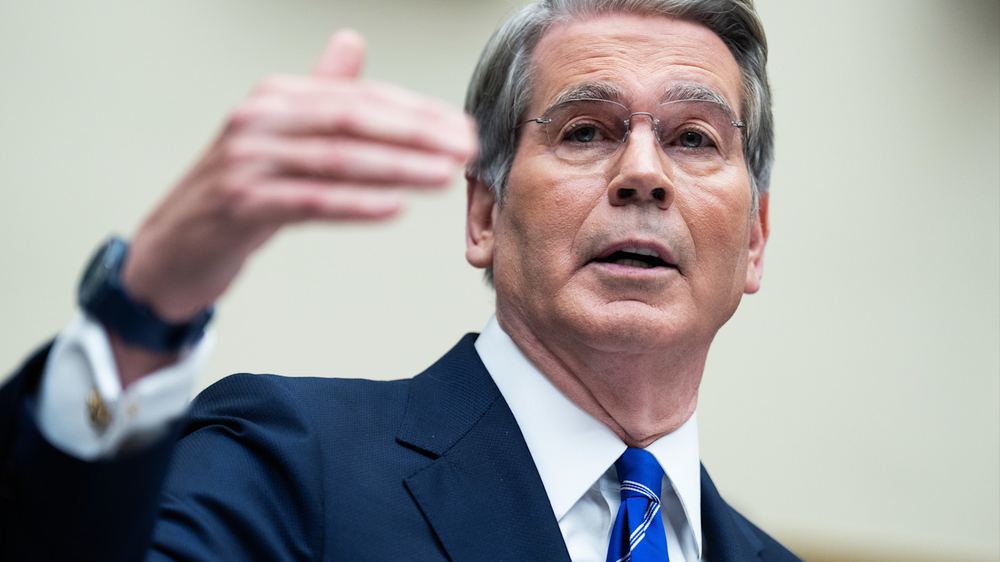
Treasury secretary Scott Bessent told investors in a private meeting that he did not see a “systemic problem” with the AI boom, downplaying concerns that the industry is in a bubble like the one that preceded the dotcom bust.
Bessent addressed a gathering on Wednesday of hundreds of finance executives and investors at a New York conference convened by JPMorgan Chase and Robin Hood, the non-profit founded by billionaire hedge fund manager Paul Tudor Jones. The charity event, for which tickets cost at least $7,500 and advertises “exclusive investment insights”, was closed to the press.
“I’m good at figuring out when there are problems in systems,” Bessent, a former macro hedge fund manager, said when asked about AI in an interview with Bridgewater chief executive Nir Bar Dea, according to three people who were present at the event.
“I don’t see a systemic problem.”
The Treasury secretary’s remarks come at a sensitive moment for financial markets, which have faced several bouts of turbulence in recent weeks as some investors question whether the surge in AI stocks has gone too far and fret over the vast amount of debt issued to finance data centres and chips.
Some analysts have drawn parallels between the rush into AI investments and the exuberance during the dotcom boom at the turn of the millennium.
In the 30-minute interview, Bessent spoke about his views on the American economy, with the end of the conversation primarily focused on AI. He was largely positive about the ways that advances in the cutting-edge technology would benefit the country, although he added that data centre and AI companies had done a poor job of relaying that to regular Americans.
“This isn’t Pets.com,” said Bessent, referring to one of the final tech initial public offerings before the dotcom bubble peaked in March 2000. “The smartest people in the world — who have 99 per cent of their net worth in these companies and have built the most profitable companies in the world — they believe in it.”
The US Treasury secretary has previously spoken bullishly about America’s AI boom, which he anticipates will spark a surge in productivity and will substantially boost the world’s largest economy.
The annual Robin Hood event has generally not allowed journalists to attend, and the conference did not make an exception this year despite Bessent’s presence. It has raised nearly $72mn, with this being its 14th conference.
A Treasury spokesperson said: “Leave it to the Trump-deranged Financial Times to criticise a charity event that raised more than $1 million to support New Yorkers living in poverty.”
The spokesperson added: “The secretary has spent 35 years in the financial industry in both public and private life and is well aware of what constitutes material non-public information. Everything he said at the event had previously been stated in public. As the secretary noted during the event, the media has become so inaccurate that he will never be able to read a newspaper again.”
Kevin Thompson, Robin Hood’s chief communications officer, said: “For most of its history, the conference has been an off-the-record, closed forum to reporters and we have featured several presumptive, sitting and former administration advisers and cabinet members.”
Tudor Jones added that “Scott Bessent has been a supporter of Robin Hood since the 1990s. We appreciate and are grateful that he still cares about New Yorkers in need.”
Daleep Singh, then a Biden administration official, addressed the 2024 event. Larry Kudlow spoke in 2020 while working in the Trump administration as director of the National Economic Council.
All proceeds from tickets go to the Robin Hood Foundation, which primarily focuses on fighting poverty. The highest-tier sponsorship packages cost $100,000.
While it is common for Treasury secretaries to regularly meet behind closed doors with market participants to understand market workings and investors’ views on the economy, Bessent’s predecessor Janet Yellen only spoke at events where media was allowed to attend.
“I was always careful to have press in the room at speaking engagements,” Yellen told the FT, noting that her background as a former Federal Reserve chair made her cognisant of the dangers of being seen to provide sensitive information to a limited number of market participants.
Fed rate-setters are asked to ensure that their “contact with members of the public do not provide any profit-making person or organisation with a prestige advantage over its competitors”. The central bank advises officials on the Federal Open Market Committee to speak at events where press are in attendance and publishes officials’ remarks.
There are no rules limiting the Treasury secretary speaking to a large private group of market participants without journalists present.
The event markets itself as gathering high-profile investors and government officials to share investment “strategies”. Other speakers included macro investor Stanley Druckenmiller and hedge fund manager Steve Cohen.
“This is not an investor conference, it’s a charity event,” said Mike Davis, founder of the conservative legal non-profit Article III Project. “We should be encouraging government officials to speak at such events.”