The Iran war risk premium that swept through crop and fertilizer markets is rapidly evaporating as fears of prolonged supply disruptions fade, easing one of the biggest threats to food inflation.
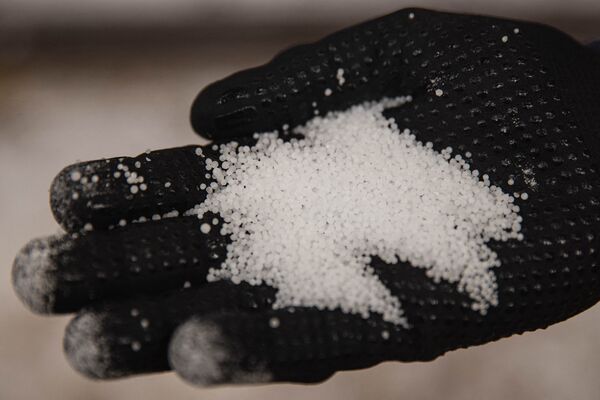
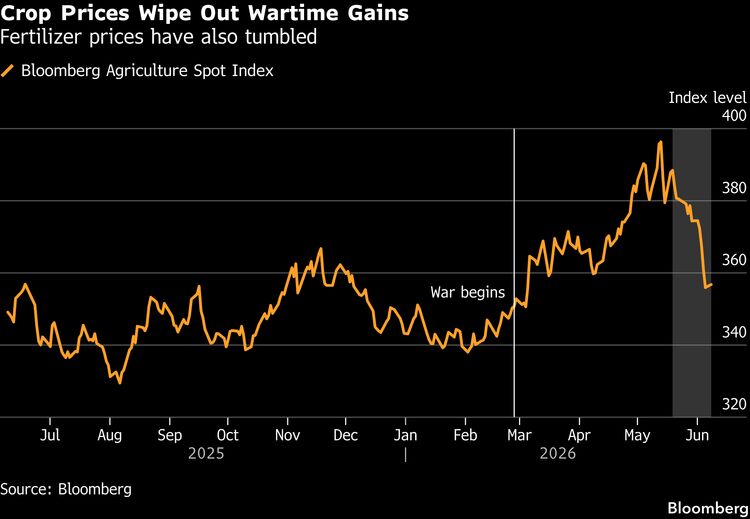
Prices of urea — one of the world’s most important crop nutrients — have plunged more than 30% since mid-April, wiping out the gains triggered by the conflict. That’s dragging down prices of corn, wheat and other farm products, with the Bloomberg Agriculture Spot Index tracking 10 of the world’s most-traded crops falling to its lowest level since March 5 on Friday.
It’s a dramatic reversal from the early weeks of the war when the effective closure of the Strait of Hormuz choked off about a third of globally traded urea supplies, sending prices soaring and leaving farmers scrambling for alternatives . The decline may curb farm input costs and slow the pace of food inflation, but experts caution that energy prices remain elevated, while fertilizer is still sensitive to flare-ups in Middle East tensions.
“What we’re seeing is the market unwinding the risk premium,” said Kang Wei Cheang, an agricultural broker at StoneX in Singapore. “That said, we’re not fully out of the woods. The initial shock was real.”
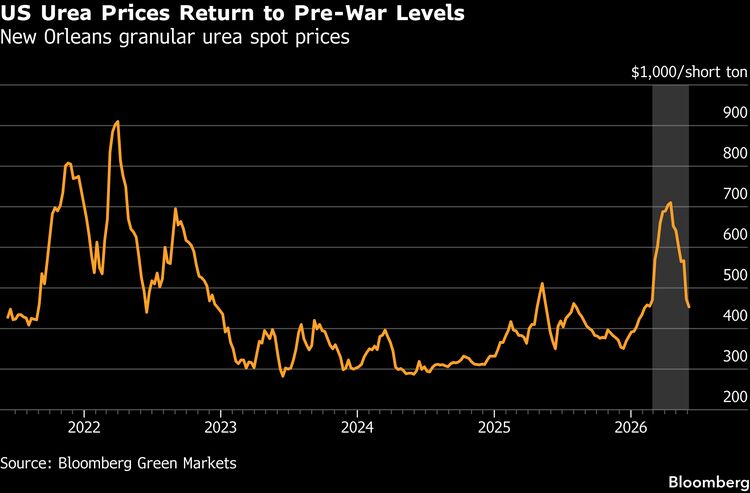
The collapse in prices of urea, the most widely-used nitrogen fertilizer, came after China eased export restrictions and as the market takes into account supplies stranded at Hormuz, according to FertiStream , one of the world’s largest fertilizer traders. Lackluster grain prices have also curbed demand from farmers, said Milton Sato, the company’s head of global market intelligence.
Some South Asian producers resumed output after curtailments in the early weeks of the conflict.
The urea market is also seasonal and the planting season in much of the Northern Hemisphere has wound down, while Brazil deferred purchases and reduced imports from a year earlier, according to Bloomberg Intelligence. As concerns over Middle East supply ease, buyers have become less concerned about immediate shortages, according to Andrew Whitelaw, founder and director at agriculture market analysis service Episode 3.
“The fertilizer market has undergone a remarkable shift over the past month,” Whitelaw wrote in a website post on Tuesday. “Today, the conversation has changed to how much further prices might fall.”
Crop Turnaround
The turnaround in crop prices has also been marked. The Bloomberg Agriculture Spot Index has fallen about 10% from a peak reached in mid-May and is approaching levels seen before the war, when bumper harvests and ample global stockpiles had weighed on farm commodities.
Favorable US crop conditions and the start of Northern Hemisphere harvests have ramped up global supply, driving grain prices lower. Global stockpiles remain ample and even with higher farm input costs and El Niño risks, “the global balance sheets are not concerning,” said Ishan Bhanu, Kpler’s lead agricultural commodities analyst.
(Sign up to our Business of Food newsletter, delivered every Friday.)
Still, as the conflict drags on, the market continues to be sensitive to energy and geopolitics, and any renewed disruption can push prices higher again, StoneX’s Cheang said. Fuel costs remain elevated, putting pressure on food and grocery prices.
Brazil will be key to watch. Urea prices should firm up in the second half of the year, starting to rise as early as July as buyers step up purchases of the nutrients, according Alexis Maxwell, an analyst at BI in Chicago. “All eyes now pivot to Brazil,” she said, while adding that she believes urea prices have reached their peak for 2026.
Traders will also focus on how farm-level fertilizer prices perform later this summer and into the fall, when farmers start securing supplies for next year’s crop, according to David Ortega, a professor of food economics at Michigan State University. If a peace deal comes together and a ceasefire holds, prices should stabilize, but inflationary risks remain, he said.
“The market correction is good news, but I’d be careful about treating it as the end of the story,” Ortega said. “There are still many inflationary pressures at play from the conflict, plus a great deal of uncertainty.”