Tighter US sanctions on Cuba have led to a spike in infant mortality and plummeting survival rates for child cancer patients, the United Nations warned in one of its strongest rebukes of Washington’s pressure campaign against the island.
US President Donald Trump’s push to force change in Cuba by cutting off almost all fuel shipments to the government is depriving the nation of 10 million people of access to water, food and healthcare, UN High Commissioner for Human Rights Volker Türk said Monday in a statement .
Those and other restrictions “are directly harming Cubans, especially the most vulnerable,” Türk said. “Children are dying because doctors lack access to essential medical supplies and medicines. This is unacceptable. These sanctions must be lifted immediately.”
Asked about the UN criticism, the State Department said US sanctions don’t “prohibit legitimate humanitarian assistance delivered through appropriate channels, as long as it directly benefits the Cuban people rather than the illegitimate regime.” Food and medical goods are generally excluded from the US embargo, the State Department added in an emailed response.
Washington is squeezing Cuba’s economy as part of a broader campaign to dislodge the communist government that has run the island for 67 years. In early January, the US captured Venezuelan President Nicolás Maduro and cut off that nation’s oil exports to Cuba. Trump then threatened any country that provided fuel with punitive tariffs . While the private sector can import its own gasoline and diesel, the island has only received a single tanker of Russian crude since the de facto blockade was imposed.
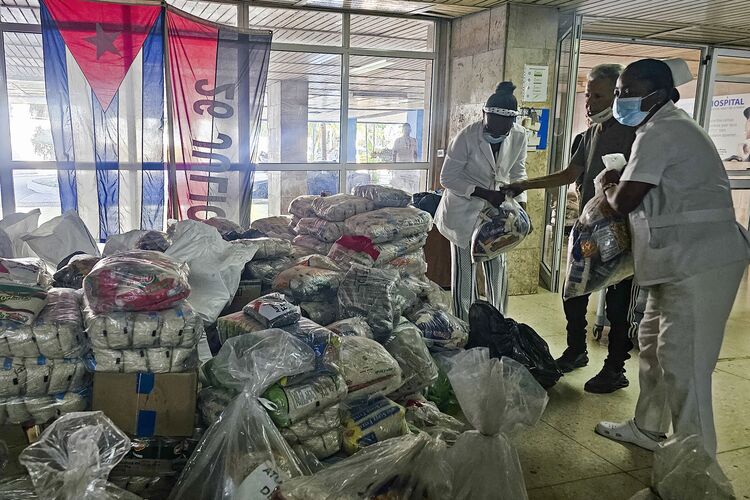
At the same time, the Trump administration has pledged $100 million in humanitarian to Cuba, so long as it’s delivered outside government channels. “We do want to help the people of Cuba, who are being hurt by this incompetent regime that’s destroyed the country and the economy,” US Secretary of State Marco Rubio said in first announcing the offer after meeting Pope Leo XIV in Rome.
The UN, however, said blackouts, which were chronic before the latest round of sanctions, now frequently exceed 20 hours a day and have had a deep impact on medical services.
“Recent public health data shows alarming trends, including a doubling of infant mortality to 9.9 per 1,000 births and a decline in childhood cancer survival rates from 85 per cent to 65 per cent, since the fuel restrictions were imposed,” the UN said. “Essential medicines are in critical short supply, with supply levels down to about 30 per cent.”
In addition, the UN said Washington’s decision to sanction foreign entities doing business with the island has disrupted humanitarian work. When shipping companies recently suspended service for fear of running afoul of the US, it affected more than 2,900 metric tons of humanitarian food cargo, the UN said.
Trump withdrew the US from the UN Human Rights Council in both his first and second terms. The State Department, in its emailed response, accused the council of pushing “anti-American rhetoric and antisemitism all while it appeases repressive regimes.”
The UN also called on the Cuban government to release political prisoners and “engage in constructive dialogue and confidence building efforts to ease social tensions.”
Washington and Havana have been negotiating, but the talks have produced few tangible results. The US insists regime change is a necessary precondition for the island’s economy to improve, while Cuba’s leadership has repeatedly said its political system is not up for debate.