By Clive Crook | Updated on Jun 09, 2026 at 10:00 AM
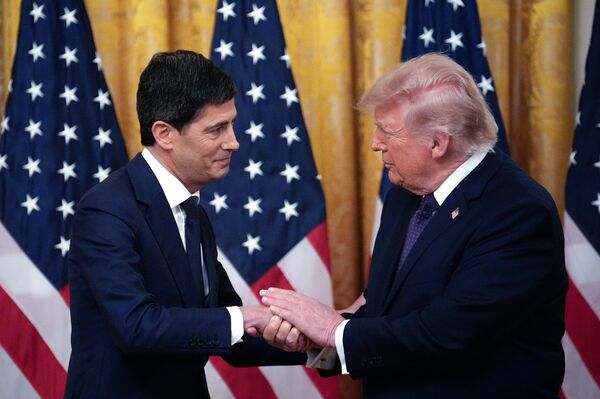
New Federal Reserve Chair Kevin Warsh’s biggest problem, beyond a doubt, is the president who chose him. Donald Trump wants much lower interest rates — “1% or lower” — regardless of economic conditions, and he isn’t shy about saying so. Warsh’s stated views will constantly be judged not by whether they make sense on the merits but whether they comply with what he might or might not have told the president to get the position.
One can only sympathize: The job would be difficult enough without this inevitable second guessing. But this focus is also misplaced. Winning the appointment was one thing: Now he’s got the job, his goal will be to get monetary policy right, and above all to be seen to get it right. In a speech in 2010 entitled “ An Ode to Independence ,” he said, “The only popularity central bankers should seek, if at all, is in the history books.” I dare say that he’ll be guided by that maxim, for impeccably self-interested reasons.
In fact, the more you pay attention to what Warsh has said on monetary policy — not just years ago, before he was in the running for the top job, but also more recently — the odder Trump’s nomination of him seems. As an amply credentialled and experienced central banker, he’s long advocated a tight focus on controlling inflation as opposed to muddling that goal up with others. Less understood is that his recent pronouncements are pretty consistent with what he’s said in the past. Sure, he’s cast his ideas as criticisms of the Fed’s recent performance, shrewdly aligning himself with the president’s low opinion of the central bank. But the underlying ideas remain much more hawkish than Trumpish.
For instance, he’s criticized the Fed’s reliance in recent years on “forward guidance” —advertising its intentions for future interest rates through the periodic Summary of Economic Projections (the SEP, or so-called dot plot) or using its various policy announcements to convey a bias one way or the other. He’s right. To be sure, forward guidance can make sense when the economy is floundering and the policy rate is stuck at zero: At such times, kind-of-promising to keep interest rates “low for longer” is one of the few ways to ease monetary policy further. But now, with the policy rate well above zero and appropriately so, it’s harder to see what useful purpose forward guidance serves.
Orthodox thinking has come around to this view. A thorough new paper by Christina and David Romer reviewing Jerome Powell’s time as Fed chair says that “the bar for using [forward guidance] should be high.” In any event, Warsh’s dislike of forward guidance and the SEP is skepticism about a method for easing policy. It’s hawkish.
The same goes for his views on the Fed’s balance sheet. Warsh is a critic of quantitative easing, arguing (correctly) that it can impose big losses on the central bank and (also correctly) that it can slide into tacit accommodation of recklessly expansive government borrowing. As with forward guidance, the Fed might find it necessary to buy trillions of debt when the economy is stranded with interest rates at their lower bound, but otherwise that tactic is best avoided. Warsh has called for a new understanding of when QE does and doesn’t make sense and wants the Fed’s balance sheet slimmed down. Most hawks agree with him.
Granted, there’s a complication with QE that let Warsh cast his thinking in a way the White House would like. A smaller Fed balance sheet is apt to raise long-term interest rates (because it increases the supply of bonds, tending to lower their price). As Warsh has noted, this might allow the Fed to prudently trim the policy rate while relying on a steeper yield curve to keep aggregate demand on track. Hence an inflation hawk might conscientiously prefer a slightly lower policy rate. But the White House wouldn’t see it that way: The cost of credit is what counts politically, and it’s driven more by medium- and longer-term interest rates than by the fed funds rate. “The yield curve should be steeper” is the kind of thing a hawk would say.
During his campaign for the chair, Warsh made other comments that were doubtless meant to assure the president he’d be a good choice. In particular, he said that tariffs shouldn’t raise inflation and that, if they do, it will be the Fed’s fault; that progress in bringing inflation down from its peak after the pandemic owed more to the president’s efforts to strengthen the economy than to the Fed’s diligence; and that the AI revolution could drive a productivity boom that should lead the Fed to stimulate demand.
Don’t be misled by the seeming appeal of such positions to Trump. According to a hawk’s view of the world, each of these points is straightforwardly defensible. One-off shocks to prices — like those caused by tariffs — aren’t inflationary unless the Fed makes them so by leading people to expect persistently rising prices. That’s why most hawks don’t want the Fed to raise the policy rate in response to tariffs (or higher energy prices, or other supply-side shocks): The central bank should “look through” such one-time shifts in prices, raising rates only in response to persistently excessive demand and higher inflation expectations. On the other hand, if deregulation puts the economy on a trend of faster growth in productivity, demand can and should be made to grow faster as well. And that goes double for AI, if its champions’ predictions come anywhere close to being true.
Warsh doubtless chose his words carefully to flatter or reassure the president — but he hasn’t yet abandoned or contradicted his hawkish principles. Unfortunately, honoring those principles without making the White House feel betrayed will be vastly more difficult. If perpetual tariff uncertainty causes inflation expectations to rise, a hawk wants the Fed to respond with a higher policy rate. Conscientious hawks don’t cut the policy rate on the mere hope of surging productivity thanks to deregulation and/or AI; they wait until they see it. A hawk wants no more dot plots, a smaller Fed balance sheet and a clearer focus on controlling inflation as the top priority. As things stand, none of those reforms would deliver a Fed to the president’s liking.
This will be interesting. Managing his relationship with the president and the Fed’s other policymakers — whom he had to antagonize to get the job — won’t be easy. But if, as I hope and tentatively expect, Warsh worries from now on more about his own reputation than Trump’s good opinion, this is one more appointment that the president will have cause to regret.
More From Bloomberg Opinion:
Want more Bloomberg Opinion? OPIN <GO> . or subscribe to our daily newsletter .