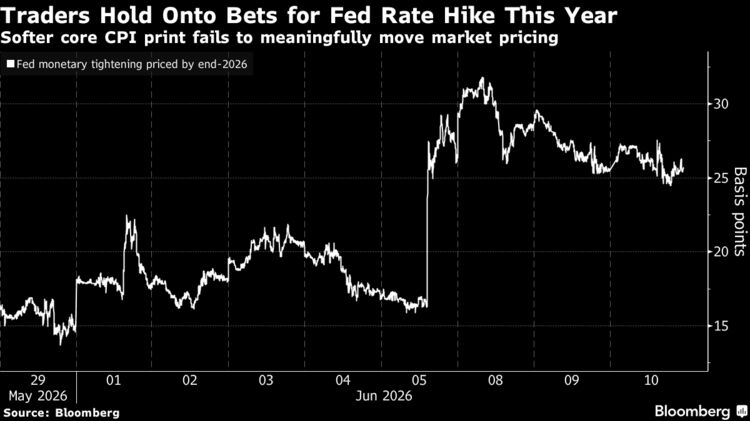
Bond traders maintained bets that the Federal Reserve will raise interest rates by the end of the year, even after a soft US core inflation reading eased pressure on Chairman Kevin Warsh to act sooner.
Interest-rate swaps showed traders continued pricing in a rate hike by December after the report on Wednesday, and Treasury yields resumed climbing with oil prices later in the session, most by two to three basis points, despite good demand for an auction of 10-year notes. The US dollar slipped.
Still, the consumer price index data for May allayed concern that the war-driven surge in oil prices since late February is leading the US economy into an inflationary spiral that will require a series of Fed rate increases. The swaps market fully prices in only one hike by the end of next year, and among major Wall Street banks, several still predict rate cuts in 2027.
“The biggest takeaway is that it gives the Fed a tiny bit of breathing room,” said Dan Carter, senior portfolio manager at Fort Washington Investment Advisors. “Another hot month would have put a lot more pressure on them on rate hikes, but this is just soft enough to allow them to wait and see.”
The core consumer price index, which excludes food and energy to show underlying inflation, increased 0.2% from April, compared to a 0.3% consensus forecast among economists polled by Bloomberg.
Ahead of the report, traders in the options market linked to the Fed-sensitive Secured Overnight Financing Rate had been piling into positions targeting multiple rate hikes in the coming months. Some had even embraced wagers for a move as soon as September following Friday’s surprisingly strong US employment report.
Those moves capped a vast repricing in the bond market since late February, when the US and Israel’s attacks on Iran sparked a surge in oil prices. That upended bets that the central bank under Warsh would be able to lower rates, as President Donald Trump has advocated.
The core inflation gauge helps isolate the impact of short-term spikes in energy costs on other consumer prices. While headline CPI rose 4.2% from a year earlier, the greatest increase in three years, the muted core gains suggest that a broader inflationary impulse from the oil surge has yet to materialize.
“It’s not nice seeing a 4% handle, and certainly there’s no excuse for easing at this point, but I think the Fed can sit pat,” David Kelly, chief global strategist at JPMorgan Asset Management, told Bloomberg Television. Warsh has no intention “of leading the charge to cut interest rates when you’ve got the inflation rate basically at the unemployment rate target.”
To be sure, oil prices maintain a grip on the Treasury market amid uncertainty about how long Middle East supply will be curtailed. US 10- and 30-year reached session highs in US afternoon trading concurrently with benchmark oil prices, which extended their daily climb to more than 3% after Trump’s latest threats to resume strikes on Iran.
Still, the Treasury Department’s monthly auction of 10-year notes drew a slightly lower-than-expected yield of 4.538%, a sign of strong demand. The $39 billion reopening at 1 p.m. New York time was the second of three longer-term Treasury debt auctions this week. A $22 billion sale of 30-year bonds is slated for Thursday.