By Howard Chua-Eoan | Updated on Jun 10, 2026 at 04:00 AM
I hated taking exams. I’d cram and strategize and fret as I imagined trick questions, bizarre equations or scenarios in which obscure sections from my textbooks emerged as soul-wrecking conundrums. But I had it easy. My 1970s middle-school classmates and I in the Philippines had heard all about the “examination hell” that was Japan.
That phrase — juken jigoku (受験地獄) in Japanese — was coined to describe the intense preparation for national qualifying exams that would determine whether you’d get into college. (There is a horror-themed video game with the same name for those who want to revisit the trauma.) The cramming, tutoring and psychological torment (apart from nagging parents) would become a template for the college-prep cultures of South Korea, Taiwan, China, India and other countries. Hugely profitable tutoring industries arose in Japan, and eventually elsewhere, to give children as much of an edge as possible.
In Korea and China especially, the pressure moved beyond merely qualifying for college and instead became qualifying for the right college to ensure the maximum career boost. That worked for a while. However, all that striving has reached an infernal inflection point: There are just too many college graduates and not enough jobs worthy of their efforts.
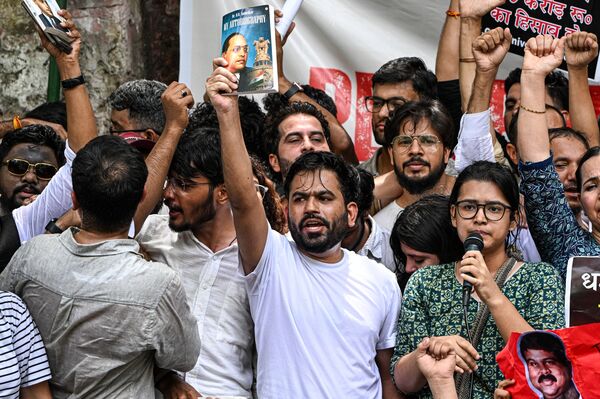
These very smart young people realize that the numbers aren’t aligning and they aren’t standing still for it. (Though, in China the rebellion manifests as a resigned “lying flat.” ) In India, a satirical meme recently became a fledgling political movement after the chief justice of the country’s supreme court apparently called unemployed young people “cockroaches.” The remark — since walked back — was ill-timed: students were stressing over hacked medical school qualifying exams, as my colleague Andy Mukherjee has written . The remark made its way into a viral meme and thus was born the Cockroach Janata Party — a play on the ruling Bharatiya Janata Party of Prime Minister Narendra Modi. On June 6, it staged a protest of several thousand people demanding the resignation of the education minister, barely three weeks since the meme came into the world.
Similar factors contributed to uprisings in Nepal, Bangladesh and Indonesia last year, much of which were waged online before taking to the streets. Anger over corruption was the overarching proscenium for the grievances, and Gen Z dramatized it with generational mythology; for example, unfurling the Straw Hat Jolly Roger flag globalized by One Piece , a manga epic about a youthful pirate crew battling a monomaniacal world government. In Nepal and Bangladesh, the consequences were not comical but regime change.
These young people have become part of a destabilizing socioeconomic phenomenon called “elite overproduction,” a term popularized by the scientist Peter Turchin . It is — in my crude shorthand — a description of how a country’s prosperity and success can sow the seeds of decline. In End Times: Elites, Counter-Elites and the Path of Political Disintegration , Turchin provides a clever metaphor for the process. Imagine a perverse game of musical chairs where the chairs remain constant but the number of players increases, growing more and more desperate to land a seat when the music stops. It’s been used to explain the revolutions that upended the thrones of Russia and France. In both cases, intellectual ferment and a lot of idle minds led to upheaval.
Turchin’s book is mainly focused on the US but one of its most dramatic examples comes from Asia. In 1850, Hong Xiuquan, a failed candidate in China’s imperial civil service examinations, had a nervous breakdown and declared himself the younger brother of Jesus Christ, initiating the devastating Taiping rebellion. It lasted 14 years, took the lives of perhaps 10% of the population and hobbled the Qing dynasty as it contended with avaricious Western powers.
That wasn’t even the first time the phenomenon played out in China — which pioneered a system of national exams 1,300 years ago (the inspiration for Britain to create its own meritocratic tests for the civil service in the 19th century). Some historians say that a surplus of unemployed scholars contributed to the rebellions that enfeebled the Ming dynasty in the 17th century and allowed the Manchu founders of the Qing to conquer the Middle Kingdom. The Taiping cataclysm isn’t the last Chinese example, either. In the 1960s, Maoist politics fueled a youthful cohort of counter-elites smarting over the lack of access to universities. Mao Zedong turned them into the destructive Red Guard of the Great Proletariat Cultural Revolution. That led to the abrogation of the gaokao (高考) — the national exams criticized as bourgeois and elitist — as the country descended into chaos.
The irony is that, without testing as an instrument, political favoritism and personal connections became the chief means of career advancement. Under Mao, the rise of cronyism so disgusted the populace — already tormented by Red Guard furies — that the nation welcomed the reinstatement of the gaokao in 1977, a year after the official end of the Cultural Revolution. The gaokao is now celebrated as a national rite of passage, taken by more than 13 million students last year. South Korea basically does the same when the country comes to a halt for the rigorous Suneung .
But what if there are no jobs out there to make the struggle worthwhile? Can governments contain the resulting restiveness? India and other countries have exported excess talent to the rest of the world. China’s lie-flatters have a hinterland of second- and third-tier cities to absorb those who’ve given up the bigger dreams promised by Shanghai, Beijing, Guangzhou and Shenzhen. But internal and external diasporas may only buy time.
Japan — long held up as a harbinger of the future — provides lessons from its recent past. It too experienced protests through the 1960s and the 70s. Many Japanese young people then became part of the satori generation, from the word for Buddhist enlightenment, giving up ambitions and settling for second- or third-best life options. And then something happened: Examination hell cooled down. By the early 2000s, Japan’s collapsing birth rate had reduced the number of young people struggling for placement and advancement. As the crowds dispelled, so did a lot of the madness.
A declining population alleviates pressure even as it brings its own problems — for example, the increased cost of caring for aging and less productive generations. And regardless, it does not give Beijing, Seoul and New Delhi a here-and-now solution. Young people will always be impatient. And that will be a test their governments will have to work hard to pass.
More from Bloomberg Opinion:
Want more from Bloomberg Opinion? OPIN <GO> . Or subscribe to our daily newsletter .