The rapid expansion of complex credit structures is reminiscent of the buildup ahead of the global financial crisis, Pacific Investment Management Co.’s Dan Ivascyn warned.
It’s the first time since the crisis that Pimco views the trend as worth monitoring, after years not being particularly concerned, Ivascyn, the firm’s chief investment officer, said at a press briefing Thursday.
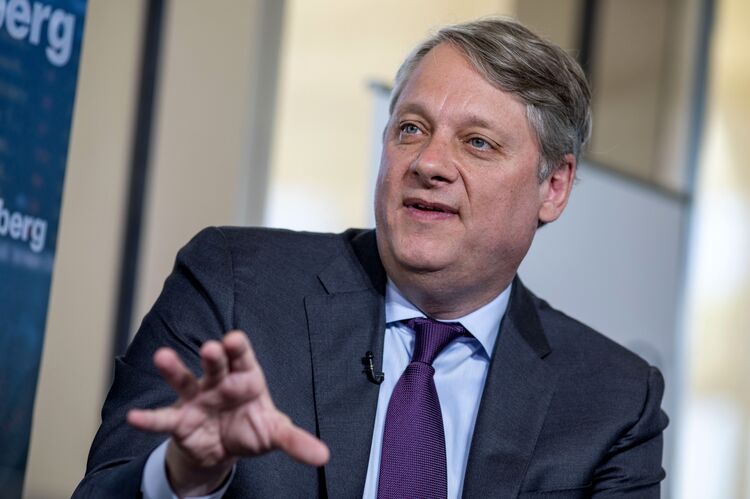
“Although we don’t see systemic risks today, we’re beginning to see the pace of financial engineering accelerate to a point where it bears watching the next few years,” he said.
Read More: Pimco Sees Warsh Changing Fed Signals Without Silencing Them ·
One particular concern for Ivascyn is that rating companies may be assigning overly generous credit grades to structured securities by placing too much weight on protections such as guarantees and contingent guarantees. It’s a dynamic, he said, that was all too familiar in the run up to the crisis.
“People are dusting off the old playbooks.”
The surge in capital needs to finance artificial intelligence and energy infrastructure will intensify efforts to transform inherently risky debt into investment-grade securities, Ivascyn said.
“There’s a powerful top down desire to create as much investment-grade risk as you can, and these deals are complicated.”
Pimco, of course, is no stranger to AI and data center financing itself. Over the past year, the asset-management giant has played a central role in some of the largest deals ever assembled. It helped back Meta Platforms Inc.’s roughly $29 billion Hyperion data-center project in Louisiana and, more recently, agreed to provide much of the $16 billion financing package for an Oracle Corp. data center in Michigan.
Ivascyn on Thursday also flagged the rise of leverage in the exchange-traded fund industry, where everyday investors can get exposure to sometimes double or triple the daily return of some assets.
“These things are coming out at a very, very aggressive rate with more esoteric collateral,” he warned. “The aggregate size is not concerning just yet, but it definitely feels like there’s been a turn towards much more aggression and an attempt to normalize some of these structures.”