By Chris Hughes | Updated on Jun 11, 2026 at 08:31 AM
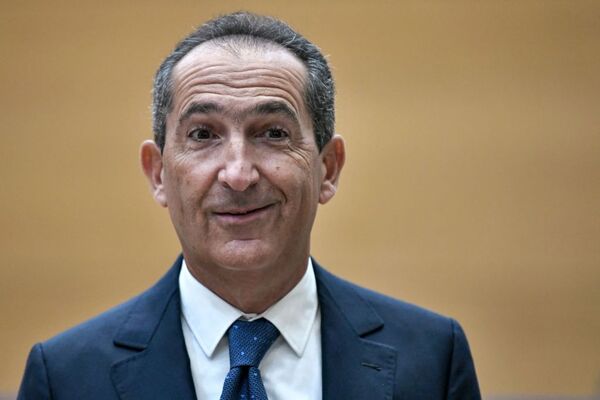
If Patrick Drahi’s recent restructuring of his French telecoms business showed how far certain borrowers can squeeze their lenders, just look at what he is doing on the other side of the pond. The tycoon has pushed holders of $22 billion of debt in another of his companies into an extremely tight corner and once again the fine print may be on his side.
New York-listed Optimum Communications Inc., formerly known as Altice USA, is in the viciously competitive businesses of cable-TV and broadband. It is laboring under unsustainable borrowings and some hefty debts are maturing from next April. The market capitalization has fallen from $16 billion to about $600 million over the past five years.
The company could muddle through by raising cash through issuing yet more debt against some of its assets to settle what’s falling due. But that would just kick the can down the road. The overall borrowings are too big. Hence Optimum has said it is pursuing a “consensual repositioning of its capital structure.”
In plain English: Creditors should agree to be paid back less than they’re owed.
As with Drahi’s Altice France business, the drama essentially turns on the freedom he appears to have to shift assets from one subsidiary to another, while leaving behind the debt that is subsequently backed by less security.
Optimum is now made up of two principle silos, East and West. East has assumed the higher quality assets including Optimum’s business in New York. It has a likely enterprise value of $11 billion, according to CreditSights research, and carries only $3.1 billion of debt. West by contrast may be worth only $5 billion, again per CreditSights, and that has to support some $22 billion in bonds and of loans.
Sometimes in situations like this, debtholders will be sanguine about a company defaulting and going bust, allowing them to try to recover as much value as they can from what’s left. And if Optimum went bankrupt, West’s creditors may still have a claim on East’s residual equity value.
But letting Optimum collapse and seizing the assets is not an easy option. For starters, East has issued about $200 million of so-called preference shares to Drahi and $300 million to certain other investors. The terms of these securities include getting settled at 2.5 times face value if there’s a “non-consensual” bankruptcy. That’s a potential $1.3 billion handout to Drahi and his fellow preferred holders at the expense of the equity value left for creditors.
Compounding the pressure on debtholders to strike an agreed deal with Drahi, Optimum says there’s a potential $4 billion tax liability that would come due in the same circumstances. The message is clear: Come to the table, you’ll lose less by agreeing to haircuts today than in a messy bankruptcy tomorrow.
The contours of a negotiated restructuring aren’t so hard to imagine. Senior creditors could swap their claims for new debt well below the original face value, and take newly issued shares in the business as compensation. Optimum would stay listed on the stock market, but its shareholder base would become dominated by its current lenders.
Finance convention says creditors shouldn’t suffer losses unless equity holders are wiped out first. But Drahi has a knack of showing how shareholders can sometimes extract value you might otherwise assume belonged to debtholders.
Here, those creditors include funds run by private-capital heavyweights Apollo Global Management Inc., Ares Management Corp. and BlackRock Inc., according to Bloomberg News. They’ve banded together into a formal cooperative that’s sitting on most of West’s debt. That has closed off the option of Drahi striking bespoke “divide and conquer” deals with individual Optimum backers. So what negotiating leverage might this co-op have now?
They could try suing, say for breach of fiduciary duty, or to show the division of assets between East and West wasn’t permissible, or to challenge the legitimacy of the preference shares. Each of these looks like a stretch. Or they could still call Drahi’s bluff and wait for the company to default and take their chances in a court-supervised bankruptcy.
As with what’s gone before, Drahi is merely testing his rights under legal terms that were agreed when debt markets were kinder to borrowers than they are today. In France, creditors swallowed losses, reinflating the value of Drahi’s shareholding. His equity gain will soon be crystalized, assuming the recently agreed sale of SFR, the cornerstone of his European empire, goes through.
If individual Optimum creditors end up with a deal they reckon is worse than one they could have cut directly with the company, that could be a deterrent against future attempts to form creditor cooperatives in restructurings. Otherwise the main lesson is all too familiar. Read the debt’s small print like you’re Drahi and his lawyers.