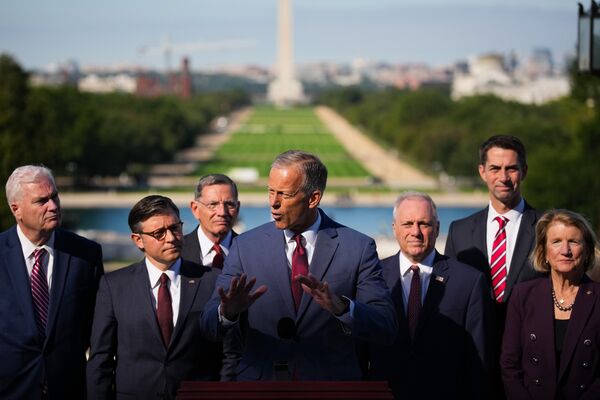
After two years in charge of a unified federal government, what has the Republican Party accomplished? If current polling is any indication , not enough.
Last week, the Senate advanced a $70 billion budget reconciliation bill, passed Tuesday by the House of Representatives, that will mostly add to a glut of immigration funding. It was progress of a kind: Lawmakers nixed a proposed $1 billion for a new ballroom at the White House and extracted a promise from the administration to do away with a $1.8 billion “anti-weaponization fund” that many worried would be used to reward the president’s allies. Beyond that? Not much.
One reason for this lackluster effort is Republicans’ reliance on the reconciliation process. Thanks to Senate rules, such bills only need a simple majority to pass. Crucially, though, they must pertain to budgetary matters and generally can’t include substantive policy changes. Working within these confines has allowed Republicans to pass bills on a strictly partisan basis — but not to make consequential or lasting reforms.
As a result, they’ve dropped much of their agenda in favor of writing big checks. They’ve fattened the budgets of immigration authorities while doing little to fix the broken incentives that lure unauthorized migrants in the first place (let alone to rationalize the legal immigration system). Although they pledged to fight inflation, they’ve stood aside as the president has imposed a costly global tariff regime. After coming into office promising “massive reform” to the health-care system, they’ve mostly cut coverage in ham-handed ways.
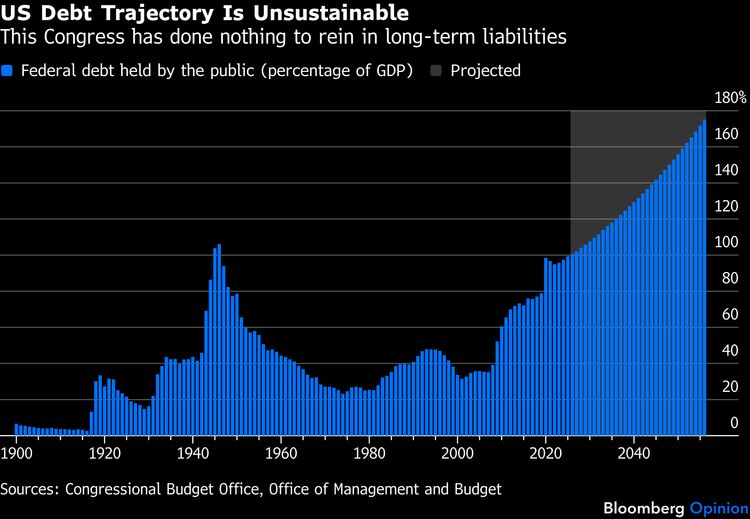
More egregiously, the party that flatters itself as fiscally responsible hasn’t lifted a finger to rein in budget deficits. Last year’s tax cuts alone increased projected deficits by $4.7 trillion over the next decade. For all the turmoil engendered by the Department of Government Efficiency, the country’s spending problem has worsened decisively: Debt held by the public is now projected to exceed 120% of gross domestic product by 2036, a record.
Some ideas have been floated for a third reconciliation bill later this year, focused on the perennial Washington cryptids of waste, fraud and abuse. Such efforts are fine as far as they go, but in budgetary terms they don’t go anywhere at all: Improper federal payments , for example, totaled about $186 billion last year, or roughly nine days’ worth of spending. A serious deficit-reduction effort is nowhere in view.
As midterms approach in November , voters have been all too clear about their priorities: prices, prices and prices. If Republicans want to avoid the worst in these elections, there’s still time to make a substantive push to respond to such concerns.
To start, they could commit to respecting the Federal Reserve’s independence under new Chairman Kevin Warsh. They could embrace permitting reform to slash red tape, reduce costs, and accelerate energy and infrastructure projects. They could enact a housing bill that expands supply, or advance efforts to improve price transparency in health care. They might remind the president that his tariffs are harming workers and inflating consumer prices. With federal spending threatening to slow income growth and drive up interest rates — or indeed prompt a fiscal crisis — they could take the minimum step of empaneling a commission to ponder the problem.
What they shouldn’t do is congratulate themselves prematurely. All told, this Congress has been a bitter disappointment. Voters have noticed.
More From Bloomberg Opinion:
- Johnson and Republicans’ Grip Is Slipping : David M. Drucker
- X Is Turbocharging the Polarization of Our Politics: Clive Crook
- Has Trump Given Up on the Midterms Already?: Abby McCloskey
Want more Bloomberg Opinion? OPIN <GO>. Web readers, click here . Or you can subscribe to our daily newsletter .