By David Fickling | Updated on Jun 11, 2026 at 08:00 PM
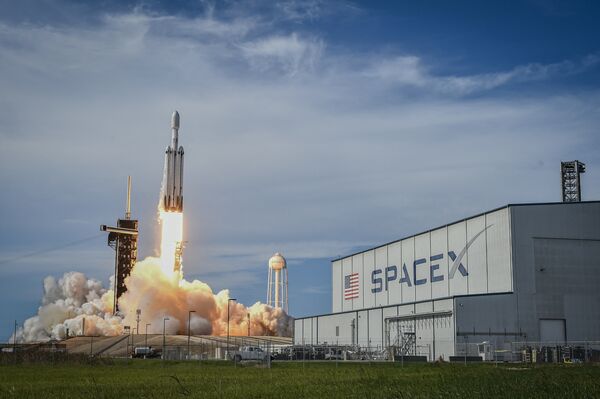
SpaceX’s ambition, to quote the ludicrously woo-woo language of its listing prospectus, is “to extend the light of consciousness to the stars.” To get to that ethereal end-state, however, it’s going to need to consume colossal quantities of hard physical stuff.
That will pitch an initial public offering valuing the company at $1.8 trillion into a difficult relationship with one of the world’s prime purveyors of advanced raw materials: China Inc.
Consider the numbers. Founder Elon Musk reckons that from the start of 2030 , Space Exploration Technologies Corp. could be deploying 100 gigawatts of solar-powered artificial-intelligence data centers into orbit every 12 months. The effort “will require thousands of launches per year and the transport of approximately one million metric tons to orbit annually,” the prospectus says.
Those figures are preposterous. All the panels installed in the US in the past 50 years amount to about 210 gigawatts. Even efforts that are orders of magnitude smaller are going to strain terrestrial supply chains, where tariffs have largely cut off the US solar market from the rest of the world.
There’s a bigger problem, though. China dominates the large-scale manufacture of key technologies. Given SpaceX’s contracts with the US military and the clear strategic logic driving the rise of satellite mega-constellations like its Starlink network, that looks like a gaping vulnerability.
Until recently, the space industry was so small and bespoke that these concerns barely applied. There are now nearly seven times more satellites in orbit than there were at the start of 2020, but all their solar panels generate about 100 megawatts — “smaller than a single mid-size solar farm in West Texas” — according to tech site Per Aspera .
Such a cottage industry didn’t really need to worry too much about a 21st century Great Game for control of the galaxy. With Musk’s ambitions stretching to infinity and beyond, however, the critical minerals involved become a crucial consideration.
SpaceX doesn’t disclose what type of technology it uses for its photovoltaic arrays, but all roads lead through China. The traditional default material for space panels is gallium arsenide — but almost every gram of gallium globally is made in China, which has largely blocked exports to the US since 2024.
What alternatives are there? Starlink’s communications satellites appear to have used more conventional solar panels based on polysilicon, and job postings for SpaceX’s under-construction solar factory suggest the sort of production processes you’d find in a conventional cell plant. But there, again, China dominates the critical raw material. About 93% of the world’s solar polysilicon capacity is in Chinese factories, and the remainder can’t produce more than about 120 gigawatts a year.
That’s a serious problem. US ambitions around AI are inseparable from the country’s determination to maintain a technological lead over China. SpaceX is one of the main vehicles of those ambitions. With about two-thirds of the world’s active satellites and the only viable reusable rocket, the company aspires to turn its current domination of launches into control of a new orbital infrastructure that will span the globe. In promising to reverse the long decline of American solar manufacturing via his planned satellite factory near Austin, Texas, Musk at least recognizes that renewable power is essential to those plans.
He shouldn’t be surprised, however, if he’s stymied by the tense trading and diplomatic relationship. A few months ago, shares in Chinese solar manufacturers surged on reports that Musk had sent a team to tour local companies, with an eye to buying $2.9 billion of solar manufacturing equipment. Those exports have so far been blocked by Beijing , the New York Times reported last month. This week, two of the country’s four biggest solar companies were added to a US list of entities considered as military-linked companies .
That’s the contradiction at the heart of SpaceX’s exospheric valuation. In the real world, the US increasingly seems hemmed in by bottlenecks: critical minerals, ocean straits, lackluster manufacturing, crumbling infrastructure, and dependency on far-flung supply chains. SpaceX promises to escape such concerns, while establishing a new chokepoint in space that will give America a decisive role in the strategic battles of the 21st century.
Realizing those ambitions, though, will depend on working within the existing global economy, rather than Musk’s imagined one of mined asteroids and moon factories. SpaceX can pitch itself to investors as a beneficiary of civil-military fusion, enriched by its contracts from the US defense and intelligence establishment. If it’s depending on Washington’s key geopolitical rival for much of the hardware, however, it’s going to find the route to orbit is a lot harder than in the past.
More From Bloomberg Opinion:
Want more Bloomberg Opinion? OPIN <GO> . Or you can subscribe to our daily newsletter .