By Lionel Laurent | Updated on Jun 12, 2026 at 05:00 AM
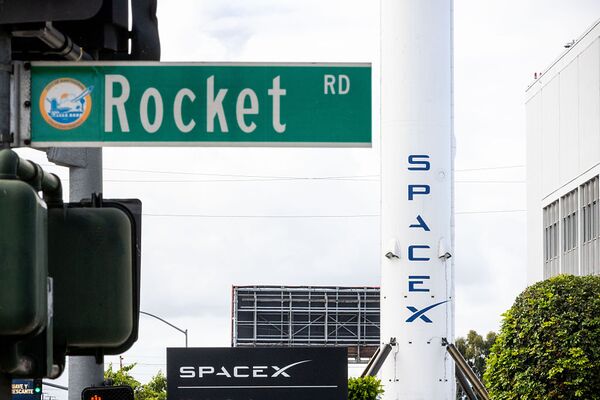
SpaceX is finally joining the stock market on Friday and the hype machine has been in overdrive. Banks and brokers around the world have been plastering spaceships on their websites. More than $100 billion in orders have come in from retail investors. There are naysayers and critics balking at the valuation and governance risks, but index providers allowing early inclusion (with the exception of S&P ) means about 30% of the free float is set to be owned by passive investors, regardless of their opinion.
Whatever your view on the genuinely remarkable success of SpaceX’s reusable rockets and Starlink satellite division (the company’s only profitable unit), the real revolution here seems to be the ability of charismatic leaders with a loyal fanbase — of whom Musk might be the ultimate example — to turn hype into capital . Investors’ fear of missing out is set to trump worries about huge losses, artificial-intelligence expenditure and Musk’s outsized control over the company, described by one Danish fund as “catastrophic governance.”
SpaceX is a “hope and dreams IPO,” Jim Chanos, founder of Chanos & Co. , said this week, citing a market captured by flashy narratives like data centers in space rather than tangible profits.
If the veteran short seller’s views carry weight, it’s because he’s seen this kind of thing before. He recently bet against Michael Saylor’s Bitcoin-buying vehicle Strategy Inc., the world’s largest corporate owner of the cryptocurrency, which over the past year has suffered a 70% drop in its share price. Saylor’s bold (or perhaps deranged) views of Bitcoin as “digital energy” worth selling a kidney for managed to glamorize what is essentially a leveraged bet: Tap debt and equity markets to raise cash, spend it on Bitcoin and watch Strategy shares ride the token’s price higher — rinse and repeat.
Retail investors enamored by Saylor’s perma-bull persona have fed the machine; they hold 80% of Strategy’s preferred stock — currently paying a 11.5% dividend — an investment sold on Robinhood and promoted on X via glamorous AI-generated women. The upward momentum of Strategy led it to be included in Nasdaq and MSCI indexes, tapping a pool of passive capital that, as it will with SpaceX, found itself backing Saylor’s laser-eyed HODLing whether it wanted to or not. Only S&P — again, as with SpaceX — held firm against including a crypto-buying vehicle in its flagship index.
The result: a hype capital model that’s fallen to earth. Bitcoin’s plummeting price means Strategy is underwater on its crypto stash. The pressure has led the company to sell some tokens for the first time, and that in turn has damaged Saylor’s image as a HODLer for all seasons.
But the worst may be yet to come. Saylor recently admitted that the Bitcoin world is competing with the new crop of AI darlings for speculative retail dollars, with the SpaceX summer essentially prolonging the crypto winter. That means hype capitalists are now pitted against one another — investors are selling existing tech positions to fund their AI adventures — and for the time being Saylor admits Musk has the upper hand. One presumes that when Anthropic PBC and OpenAI go public, with more trillion-dollar valuations, it may be a less oxygen-rich atmosphere even for SpaceX.
Another unknown is whether the patience of index providers will be tested beyond repair. Last year, JPMorgan Chase & Co. analysts warned that Saylor’s Strategy faced billions in outflows if the stock was kicked out of certain indexes, including MSCI, because of how its Bitcoin-buying model works. That threat hasn’t entirely vanished. SpaceX may turn out to be a more straightforward inclusion for indexes given time, but the need to tap passive flows remains a test for its valuation and those of other new tech mega-caps going public.
“It’s ironic that SpaceX and Anthropic are sucking the liquidity out of the market (for Strategy),” says Co-Pierre Georg of the Frankfurt School of Finance. “SpaceX benefits from the same messed-up index and passive fun mechanic that Strategy benefits from.”
The similarities don’t mean Musk’s and Saylor’s companies are equivalent. The latter is clearly much more exposed to the vaporous fumes of crypto, which is its own breed of nonsense. But a lot of institutional investors who either missed the AI rally or got bruised by betting on the wrong AI stock will feel pressure to clamber aboard SpaceX. And as checks and balances wither in the face of FOMO and sturdy boards of directors are replaced with mantras like “Don’t bet against Musk,” Chanos’ skepticism may prove prophetic once again.
More from Bloomberg Opinion:
Want more from Bloomberg Opinion? OPIN <GO> . Or subscribe to our daily newsletter .