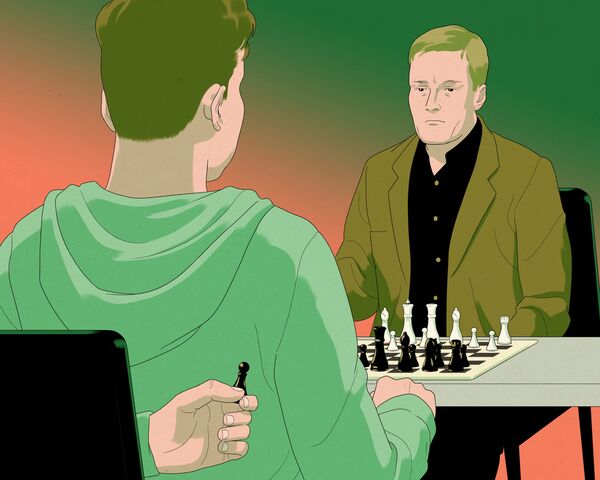
In September 2022, Norwegian chess grandmaster Magnus Carlsen abruptly dropped out of a big tournament after losing to the young American grandmaster Hans Niemann. When they met next, in an online tournament two weeks later, Carlsen resigned after just one move. Carlsen accused Niemann of cheating, at first obliquely , and then expressly in statements on X.
The avalanche of drama that unfolded in the following months looked less like anything that had ever happened in chess and more like a messy divorce saga splashed across the tabloids. Niemann filed a lawsuit alleging defamation and collusion, and sought $100 million in damages (the lawsuit was later settled ). Chess.com, the game’s biggest online platform, revealed that it had previously banned Niemann for repeated online cheating. The story became a fixture of late-night shows and the news cycle, particularly after an internet troll successfully spread the rumor — with amplification from Elon Musk — that Niemann had used anal beads to cheat.
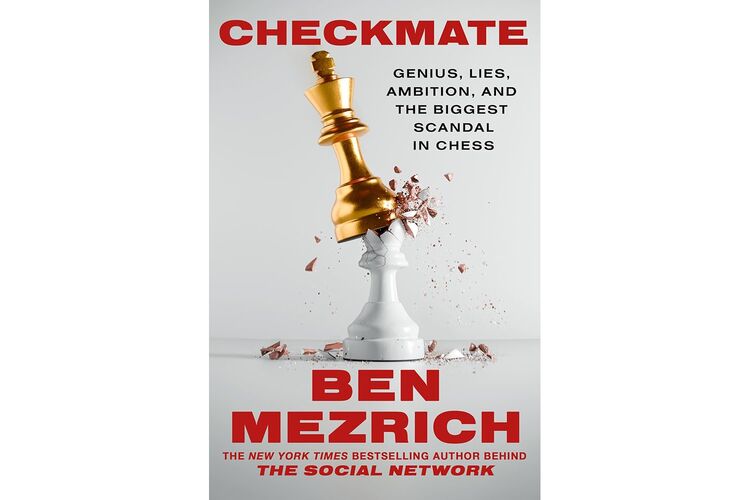
Now chess’s biggest scandal has received the full Hollywood treatment. In April, Netflix released the documentary Untold: Chess Mates , and on June 2, Ben Mezrich published Checkmate: Genius, Lies, Ambition, and the Biggest Scandal in Chess (Grand Central Publishing). Mezrich is the wizard of IP who previously wrote the books that inspired the movies 21 , The Social Network , and Dumb Money. Checkmate was near-instantly optioned by A24, with Nathan Fielder set to direct and Emma Stone producing.
Both Chess Mates and Checkmate are slick and absorbing, and while they cover more or less the same ground, they offer some independent value for completists. The documentary provides the constant spectacle of Niemann’s swagger, which looks like confidence from one angle and arrogance from another, as well as a broader glimpse of the online chess ecosystem. Checkmate , meanwhile, dives deeper into Carlsen’s background and charts the full scope of Chess.com’s unlikely emergence as a billion-dollar company.
The book is filled with Mezrich’s signature frenzy of detail, and it reads more like a gripping novel than a nonfiction account. This approach does have its downsides: One confrontation between Niemann and another American grandmaster in a parking lot, the details of which Mezrich admits are hypothetical, is so stilted and confusing that it risks knocking the entire narrative off its axis. But for the most part, Mezrich takes a seemingly stuffy and academic sequence of events, full of algorithms and chess esoterica, and turns it into a sweaty thrill ride in which every character becomes tangled in his or her own beliefs and biases.
The two titles arrive at the same fundamental takeaway: In less than a decade, chess has morphed from a stuffy obsession for nerds to a hugely popular esport with audiences in the millions and bona fide celebrities among its streamers. This is all because of the internet, which both made chess a worldwide phenomenon and compromised one of its most essential qualities.
Chess is beloved because it involves no luck and no chance; both players have full control of their moves, and the winner is indisputable. But thanks to the availability of virtual chess computers, known as engines, online play also makes it simple to cheat.
Part of the reason this has created such a good narrative is that it’s playing out, rather theatrically, across generational lines, with each side serving as the poster child for the old and new guard of chess. Carlsen, 35, is a millennial who ascended to chess stardom in a conventional manner: dominating over the board in thousands of games played over more than two decades. At 22, Niemann is squarely Gen Z. True to his cohort, he rose to notoriety as a streamer first and an in-person chess player second, and even as he ferociously denied Carlsen’s accusations of cheating at in-person events, he has admitted to cheating online, blaming it on youthful mistakes.
Read more: AI Perfected Chess. Humans Made It Unpredictable Again
For Carlsen, Niemann became a stand-in for larger fears. Mezrich uses the phrase “existential threat” three times in the book, in addition to the one time it appears in a quoted statement from Carlsen. In each instance, the term applies to the specter of cheating, which has become as simple as having your phone or an iPad open to a chess computer while you play on your laptop. But concerns about cheating go well beyond the two grandmasters’ feud: Chess.com has closed millions of accounts for cheating, including those of multiple grandmasters. Though that figure represents less than 1% of the players on the site, such a massive number demonstrates that cheating is rampant.
Cheating is hard to detect in online play: The tells require a deep understanding of the game, but they are also often indistinguishable from the experience of just getting outplayed. Chess.com has dealt with this by investing in sophisticated algorithms that police the site’s activity, as well as a “Fair Play” team of human moderators. Cheating over the board is more complicated, but in theory, it isn’t impossible; you’d mainly need a hidden form of communication and a willing associate. However, Chess.com’s investigation revealed no evidence that Niemann cheated during his in-person games. His continued success since the scandal — he ranked 12th in the world in the most recent ratings list released by the game’s governing body, FIDE — reinforces the idea that he probably didn’t do anything wrong; he’s just an idiosyncratic player , with immense talent and an unusual demeanor.
This might suggest that by skipping the online world, you could avoid most of the cheating burden. The problem is that the economics of chess don’t allow it. Unlike other individual sports such as tennis and golf, where being ranked in the top 100 is enough to make a good living, even top-25 chess players have discussed struggling to earn money solely by playing over-the-board tournaments. Sponsorships are hard to come by, and while certain countries support their best players, including Uzbekistan and India, many others do not.
On the other hand, online events like the Esports World Cup and Chess.com’s various tournaments boast prize pools well into the hundreds of thousands of dollars — and that doesn’t take into account the money to be made from streaming on Twitch or posting content on YouTube, where a player’s income isn’t tied to performance. If you want to be a professional chess player, you probably need to be online, which means you need to deal with the problem of cheating. You could lose to a cheater. Or you could be accused, without evidence, of being one.
This atmosphere of suspicion reached its terrible apotheosis when former world champion GM Vladimir Kramnik, who has waged a one-man campaign against cheating, publicly accused American GM Daniel Naroditsky, a top speed-chess player and one of the most beloved streamers. Naroditsky was open about how much Kramnik’s accusations affected him, but nobody was prepared for the horror of his death at just 29 last October. (An autopsy revealed that Naroditsky had a number of different drugs in his system at the time. FIDE announced in November that it is investigating Kramnik’s history of “repeated public allegations.”)
As a result of these controversies, a dark cloud hovers over the game of chess even as it thrives in a way that it hasn’t since the era of Bobby Fischer. Both Chess Mates and Checkmate engage with a conspiracy theory (which Niemann pushed) that Carlsen was colluding with Chess.com to ruin Niemann’s career after the younger player embarrassed him — the website acquired Carlsen’s company for $80 million right around the time of the disputed game. But the idea never quite sticks beyond Niemann’s imagination. Despite Niemann’s allegations, Chess.com Chief Executive Officer Erik Allebest and Chief Chess Officer Danny Rensch come across as mature, intelligent and well-meaning characters who have suddenly found themselves piloting a billion-dollar company.
But there doesn’t need to be a Chess Mafia kneecapping Carlsen’s competitors for the game to be under threat. Cheating is enough. As long as online play remains popular, the boogeyman of cheating isn’t going anywhere. If and when it truly compromises a major tournament, whether online or over the board, we might find ourselves feeling nostalgic for the headlines about anal beads.
Kevin Lincoln is a journalist and filmmaker who lives in Los Angeles. He writes a newsletter about chess called Good Moves .