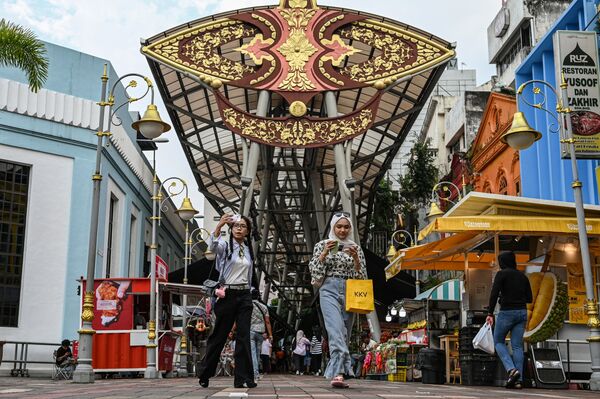
Malaysia is enjoying a comeback that’s enhanced by the hard times visited upon neighbors. The economy, which once epitomized Southeast Asia’s breakneck growth and towering ambitions, is skipping the flashy patter. Prosperity now comes in the form of something more modest — and in short supply today. The contemporary pitch is all about steadfastness.
The currency is holding up, growth is solid and inflation is still low. The central bank has barely touched interest rates in the past few years. And closer ties with Singapore, less than a mile from Malaysia’s southern tip, are boosting investment in data centers and factories. These attributes stand the country in good stead; although times may get tougher from here.
The resilience is striking because Malaysia’s performance hasn’t always been great. Several years ago, it appeared the nation’s best days were behind it. The ringgit was
weak
, growth was subpar, and a series of fragile coalition governments
came and went
. That was in sharp contrast to the long rule of the formerly dominant ethnic Malay nationalist party, UMNO, which under then-Prime Minister Mahathir Mohamad was synonymous with rapid development and for a while, the world’s tallest buildings. In a region that, prior to the Asian financial crisis of the late 1990s, enjoyed a meteoric rise in living standards,
Mahathir didn’t mind talking bluntly and with a touch of condescension to visiting Western officials and business executives. Just be more like Malaysia, he intoned. Those days ultimately passed. Malaysia is now back — in modified form — and once high-flying peers are in trouble.
Indonesia is suffering capital flight: The rupiah has recorded the biggest slide against the dollar this year among emerging markets and demand for bonds has cratered. That’s forced its central bank to not only intervene daily in markets but announce an
unscheduled rate hike
last week. President Prabowo Subianto will strain to keep spending within legally prescribed limits. “
Sell Indonesia
” has been the catch cry in trading rooms.
The Philippines, one of the strongest economies coming out of the pandemic, has also fallen on hard times. A graft scandal over public-works contracting has slowed state spending to a trickle, while inflation has tripled since the Iran war began. Borrowing costs have already climbed and a jumbo rate hike is on the cards this month. Inflation is surging in Vietnam, which adopted the approach of a previous generation of Asian Tigers in throwing its doors open to foreign manufacturers and supply chains.
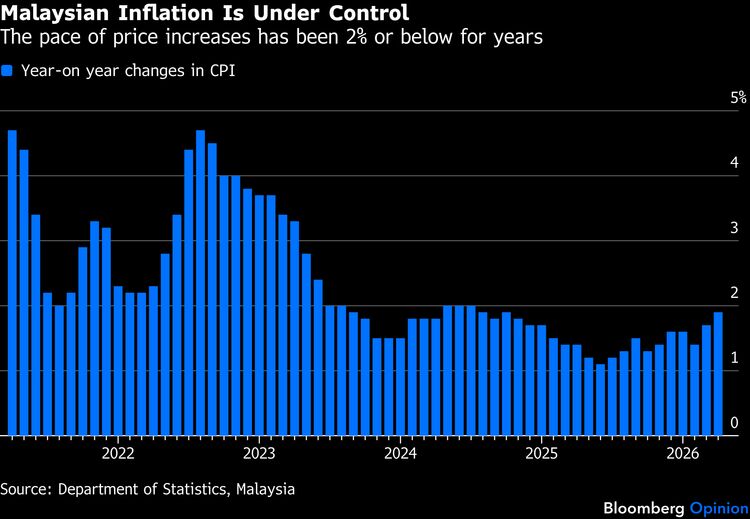
Malaysia isn’t immune from these forces. Inflation is projected to pick up, but from the low level of 1.9% recorded in April — comfortably below the average of the past five years. Interest rates will probably be nudged higher from 2.75%. Again, context is important. Bank Negara Malaysia has been remarkably steady in its settings.
Stability has been the guiding principle in the political realm, too. Prime Minister Anwar Ibrahim has shown finesse in keeping his alliance of liberal, ethnic Malay and Chinese and provincial parties together. Few thought his team would run its full five-year term after he became premier in 2022. Yet it’s still in place, despite periodic threats that one or more coalition members will bolt. One partner is contesting local elections in the states of Johor and Negeri Sembilan under its own banner in the next two months. Anwar might be tempted to call a snap national ballot to get ahead of a poor result.
Kuala Lumpur’s relative sweet spot can’t be taken for granted. The coming months will bring their challenges. As a key exporter, the global slowdown induced by the energy shock will cool growth from the 5.4% pace notched in the first quarter. But I would rather be in Malaysia’s shoes than enduring the travails of Indonesia or the Philippines. Or the deflation that’s likely to return in Thailand after the oil spike recedes.
Anwar likes to quip that it only took him a quarter-century to secure the job that was almost his in the 1990s — before a schism with Mahathir saw him ejected as deputy premier and finance minister and twice imprisoned. It was worth the wait. The economy stands out, in no small part due to the tribulations of others. A small deficit of ambition is fine, as long as you exceed expectations.
More From Bloomberg Opinion:
- Indonesia Hits the Panic Button Over the Rupiah: Moss & Vaswani
- Let’s Count the Ways Warsh Will Disappoint Trump : Clive Crook
- Brace for a Flood of Oil as Soon as Hormuz Reopens: Javier Blas
Want more Bloomberg Opinion? OPIN <GO>. Or you can subscribe to our daily newsletter .