Keir Starmer’s trip to the Group of Seven summit has looked for weeks like it would at best be one last hurrah on the world stage for a leading advocate for European security dogged by political troubles at home.
But the explosive departure of Starmer’s defense chief just days before the summit in France looks to have scuttled even that chance at a geopolitical swan song. Outgoing Defense Secretary John Healey accused the British prime minister of being “unable” to deliver the resources needed to defend the country, let alone Europe.
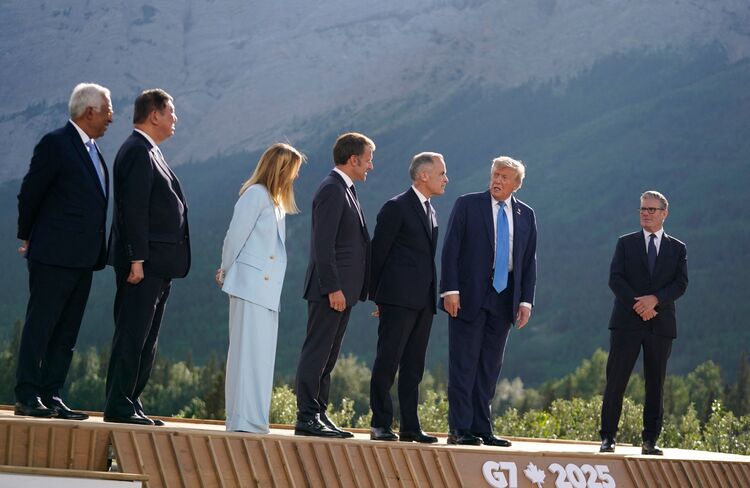
Starmer’s administration is gripped by an ever-deepening sense of crisis as he heads to the alpine resort town of Évian. The spat between his top ministers over a long-awaited Defense Investment Plan has spilled into view. Meanwhile, rival Andy Burnham is waiting to challenge him for the leadership of the Labour Party, if the Greater Manchester mayor wins an election for a vacant House of Commons seat on June 19.
The domestic chaos provides a horrid backdrop for Starmer as he meets world leaders on the shores of Lake Geneva. Some leaders, such as Japanese Prime Minister Sanae Takaichi, will reasonably wonder whether this is the last time they’ll see the British premier in his current role, and whether anything he agrees to will outlast his increasingly numbered days in office.
“Everyone will be thinking, ‘There, but for the grace of God...’” said Anand Menon, director of the UK in a Changing Europe think tank, of how Starmer will be received. “Getting away with some good photos unscathed is about as high a bar as I would place on it for him.”
Starmer will want to avoid the fate of his Conservative predecessor Rishi Sunak, who struggled to secure meetings with other G7 leaders in Italy in 2024, when his government faced an imminent wipeout at the polls. Starmer is prioritizing getting face-to-face talks with US President Donald Trump, Indian Prime Minister Narendra Modi, European Commission President Ursula von der Leyen and German Chancellor Friedrich Merz, according to planning documents seen by Bloomberg.
Each has unfinished business with Starmer, such as the UK’s fraying trade deals with India and the US and arranging the EU summit that Starmer had promised to hold this year. Despite the difficulties on such items, Starmer is hoping to make some smaller announcements in France, including:
- Energy security deals with India and France
- More sanctions on Russia and support for Ukraine
- Migration deals with France and Kenya
- Details of an upcoming UK-US fusion summit
But even if Starmer gets the meetings he wants during the trip, the diplomatic dangers are fraught.
Starmer, along with French President Emmanuel Macron, is hoping to secure US backing for a Europe led-plan to clear mines from the Strait of Hormuz after a peace with Iran. While the prospects of such a settlement with Iran being signed at the G7 are growing , the departure of Healey, who had been leading Britain’s work on the demining plan, is unlikely to reassure American officials who have openly mocked the UK’s capabilities.
“We are a country that makes a huge contribution to NATO — not least our nuclear deterrent, which, of course, is totally committed to NATO for the benefit of all,” Starmer told the BBC on Friday. “But also we’re seen as a leading member of NATO, particularly when it comes to this ability to put together coalitions for particular issues arising in those particular conflicts.”
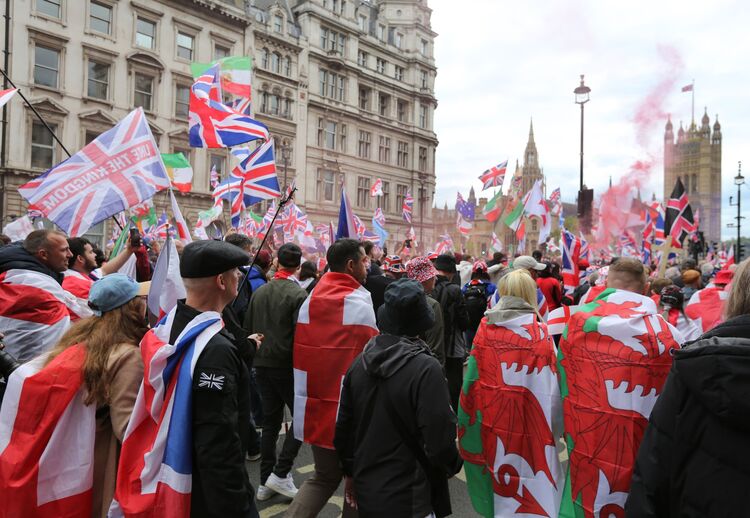
Starmer must also navigate potential tensions with Trump over British regulation of American tech platforms, such as Elon Musk’s X in the wake of violent protests in the UK. The pair’s relationship has soured over Starmer’s refusal to join the US initial strikes against Iran and Trump’s opposition to the UK plan to hand sovereignty of a joint Indian Ocean military base to Mauritius.
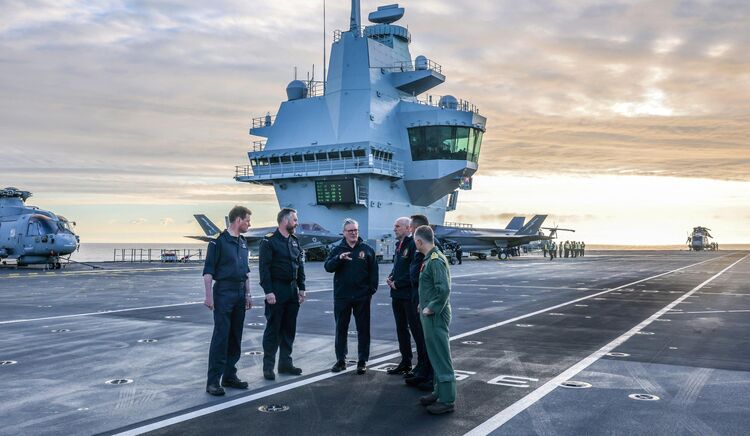
Most damaging of all, Healey’s resignation letter explicitly criticized Starmer for not accelerating defense spending to 3% of economic output by 2030 — the kind of ramp-up Trump has long called for.
“There is a danger President Trump says something about it,” Menon said. “Our failure to come up with a Defense Investment Plan is already starting to corrode our relationships. Our allies are thinking ‘Where the hell is the money?’”
Starmer, along with other allies, is also hoping to encourage Trump to push for new peace talks between Russia and Ukraine, as European leaders believe momentum in the war has shifted toward the Ukrainians, according to people familiar with the matter. But Trump’s interest in the Russia-Ukraine conflict has waned since the outbreak of the Iran war.
The crisis facing Starmer is also causing alarm among his European allies. European diplomats have contacted British counterparts in recent days complaining about the uncertainty over the UK’s defense spending plans, the slow pace of the uplift and Healey’s departure, according to people familiar with the matter. They have also asked for information about Burnham’s plans for foreign policy and defense, but British officials were unable to provide answers, the people said.
Another awkward agenda item for Starmer if he meets von der Leyen is the timing of a fresh UK-EU summit, after he has talked up closer ties with Europe as one of the key aims of his premiership. Penciled in for this month, the summit is facing delays due to Britain’s leadership crisis. Planning has proved difficult to negotiate because Brussels doesn’t believe Starmer’s government will be in place in the coming months, British officials have previously told Bloomberg.
Tom Tugendhat, a Conservative former security minister and an ex-soldier, told BBC Radio on Friday that Healey’s criticism of Starmer represented a “damning” indictment of the prime minister’s record on securing Britain and Europe from Russia.
“The reality is now the enemy is at the gate, and we’re still not taking this seriously,” Tugendhat said.