By Gearoid Reidy | Updated on Jun 14, 2026 at 07:00 PM
Would you pay 99 cents to make Super Mario jump higher?
In an infamous 2014 letter to Nintendo Co., activist fund Oasis Management Co. proposed that the company should make mobile games with just such a mechanic — something that might sound good to investors, but lands with a thud for players.
The idea has resurfaced recently as Oasis ratchets up a new campaign against Kadokawa Corp., another Japanese firm beloved by geeks. With a nearly 14% stake, the activist has become the biggest shareholder of a conglomerate that produces anime, manga and video games. And at next week’s annual meeting, it is urging shareholders to get rid of Chief Executive Officer Takeshi Natsuno.
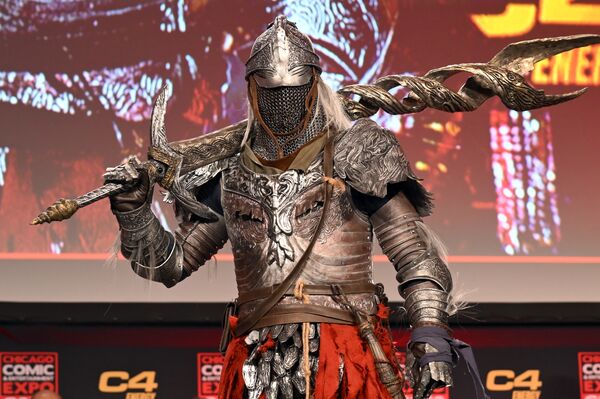
In arguing that Natsuno has underperformed, Oasis certainly has a point. With Japanese soft power booming, few companies are better positioned to exploit that interest than Kadokawa, with its vast IP and production capacities, most famously the Elden Ring maker FromSoftware. Yet business is sluggish, barely eking out a profit last year. It recently withdrew its midterm plan, replacing it with more modest targets.
It’s also been beset with a series of publicity disasters, from a 2024 cyberattack that leaked the details of some 250,000 customers to a recent investigation by Japan’s Fair Trade Commission into its treatment of freelancers. Proxy advisers Glass Lewis & Co. and Institutional Shareholder Services Inc. have both sided with Oasis in recommending Natsuno’s removal. Kadokawa has said Natsuno’s expertise is needed to guide the company through the new plan, and criticized Oasis for not proposing someone else who could do the job.
Manga fans and gamers, however, are wary. Oasis’s plan to replace Natsuno might have merit. But in the rush of foreign cash, they see the likelihood of exploitation: Franchises being run for money first and the audience second, microtransactions in Elden Ring, and 99 cents to “ praise the sun ” in Dark Souls .
Gamers fear that big money, foreign or otherwise, is going to ruin what might be one of the least-touched bastions of nerd entertainment. This is pop culture, but culture nonetheless, where what’s best for returns can often conflict with what’s good for the customer. The community knows that when fan-favorite properties become industrial IP machines, it’s often bad news for quality — think Disney’s mistreatment of Star Wars and Marvel. Creative weirdness practically demands some capital inefficiency — indeed, there may be no better example than FromSoftware, whose punishingly tough games spent years in mainstream obscurity before word of mouth made their difficulty a selling point. A company run purely on efficiency might have cut it free long ago.
Japanese soft power has grown in recent years in part because it largely remains more attuned to fans than investors. But as capital piles into a sector that was once ignored — from Blackstone Inc.’s $1.7 billion purchase of a digital manga platform, to Saudi Arabia’s multibillion-dollar purchase of stakes in multiple video-game firms — the gamers who treasure these assets are on alert. Investors are good at identifying undervalued companies (despite its recent woes, Nintendo stock is worth more than five times what it was when Oasis wrote to it in 2014). They are often less good at finding solutions.
Third Point once called on Sony Group Corp., then also incredibly undervalued, to spin off its entertainment business entirely. Oasis wanted Nintendo to embrace mobile gaming and retreat from consoles. But it also cited the example of Candy Crush , the type of lucrative-but-addictive mobile game that’s designed to compel users to spend more. Nintendo did eventually release some half-hearted smartphone titles, though it has largely given up on the mobile market. Its next machine, however, would go on to be its most successful ever, generating over $100 billion in revenue. The market for dedicated hardware was not as dead as Oasis thought.
The activist may have learned from this experience: There’s a lot to like in its current proposals for Kadokawa. The company probably should be self-publishing its games, and have a more ambitious strategy to sell its IP to the world at a time when Japanese content has never been more in demand.
It’s also not a given that investors and gamers have to be at loggerheads. Look at Capcom Co., the Osaka-based video-game maker that is forecasting a 14th consecutive year of profit growth. Earnings have doubled since 2021, even as its titles enjoy both critical acclaim and record sales. Online, gamers are raving about its consistent release of top-quality titles.
But things weren’t always so successful. Capcom’s lean years in the 2000s came before the era of activist investing. Would it today get the leeway that enabled it to restructure for future growth? Fans love how it has been a responsible steward for beloved franchises — exactly the opposite of what the microtransaction-heavy model some advocate for to boost profits in the short term.
More capital is coming to Japan’s entertainment sector; Nikkei just launched a new “entertainment content” stock index designed to bring more attention to firms making games and anime. But while there may be short-term cash in making Mario jump higher, the smarter money is in knowing when not to charge for it.
More From Bloomberg Opinion:
Want more Bloomberg Opinion? OPIN <GO> . Or you can subscribe to our daily newsletter .