By Gearoid Reidy | Updated on Aug 16, 2026 at 08:00 PM
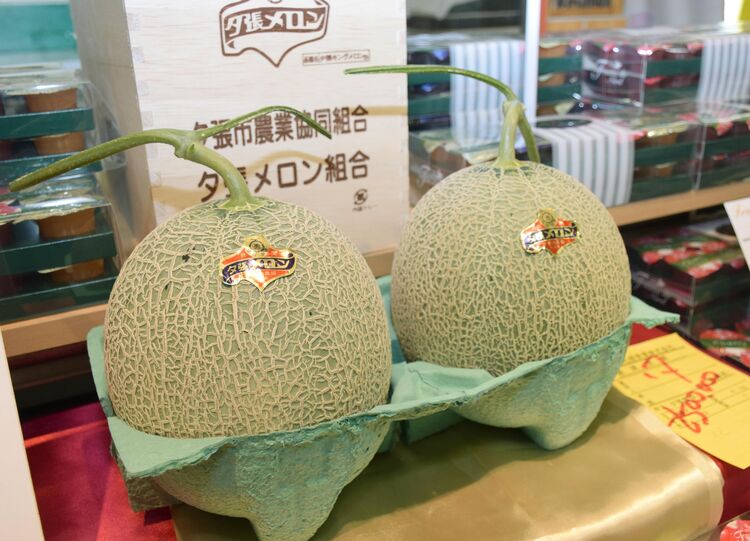
Opposition politicians in Australia are demanding that Prime Minister Anthony Albanese apologize to his Japanese counterpart, Sanae Takaichi, for purportedly sexist remarks he made on a podcast, an episode some have dubbed “Melongate.”
Albanese joked about a pair of the prized fruit Takaichi gave him during her visit in May, going along with the host’s unsubtle sexual innuendo about the gift (frankly, you kind of have to watch it for yourself .)
“Why won’t the prime minister stop treating us like fools, man up and say sorry to the prime minister of Japan?” Liberal leader Angus Taylor has demanded. With language like that you might think it’s a major diplomatic incident in Tokyo, too. You’d be wrong.
People in Australia seem far more concerned about it than those here. The whole issue is performative, with Japan being used once again as a prop for making domestic arguments. Takaichi’s government has sensibly distanced itself from the episode, and its ambassador in Canberra, Kazuhiro Suzuki, said in a statement that he understands Albanese “did not make the comments in the way that has been reported.”
While it’s true that it has been inflamed by an op-ed written by the former ambassador to Australia Shingo Yamagami, it’s worth noting that he has a history with the Labor Party during his time there.
It’s not the first time in recent months that people overseas have been more offended on its behalf than Japan itself. When President Donald Trump attempted a joke about the attack on Pearl Harbor during Takaichi’s visit to the Oval Office, Western audiences were aghast. The incident was perhaps the biggest headline from the visit, referenced by late-night comedians like Jimmy Kimmel. But reaction here was far more subdued, and the government didn’t protest.
Japan often becomes a Rorschach test onto which anyone can project as a way to score points. Few bother to ask what Japanese people themselves might actually think.
Perhaps the best example is how it has become an avatar for attitudes on immigration. When Takaichi was elected last year, engagement accounts on X got tens of millions of views promoting her as an anti-foreigner demagogue in the vein of the UK’s Nigel Farage, who would begin “mass deportations,” particularly of Muslims. While Takaichi has tightened some procedures, these claims were complete fiction .
A few months earlier, others had spread equally made-up stories of the country opening its doors to tens of thousands of foreigners from the Global South, as a supposed warning to their own nations. In Australia, Pauline Hanson, the leader of the resurgent right-wing populist party One Nation, hailed it as a model, declaring that “Japan has a monoculture, so what’s wrong with Australia having a monoculture?”
While it may be more homogeneous than many Western countries, to declare it monocultural is a stretch, at best. The point of these conversations is rarely to understand Japan’s approach to immigration or to learn from it. It’s just used as a projection, and might as well be Lilliput, or Disneyland, for all real-world policies and attitudes matter.
Perhaps the one thing the political left and right can agree on is its low crime rate, but here it also gets conscripted by both sides: Those on the left hail its strict gun control, while on the right, it’s down to supposedly traditional values and education, and lack of immigration. When it comes to the low birthrate, everyone from Elon Musk to Luigi Mangione offers a take, one that curiously lines up with their preferred prescriptions for their own countries.
What causes this? While other places get used in similar ways, Japan is unusually valuable as a blank screen — globally famous enough that everyone is familiar with it, yet foreign enough that few actually know or care to check if it’s being represented correctly.
And for a variety of reasons involving language, culture and history, it’s often quite removed from the global conversation. Politicians and netizens alike don’t tend to get involved in discussions outside their borders. Bad claims don’t usually face immediate calls for a correction — one reason nonsense stories about Japan continue to circulate so widely.
The viral Nobunaga account, embraced by Americans in recent weeks, works on that principle. This supposed Japanese wanderer in the US writes slack-jawed stories of everyday Americana, and was described by the New York Times as supplying “reverential written meditations on X about bottomless baskets of chips and salsa.” The tales, while cute, are fictional and crafted with AI, giving Americans not real outside views, but a stereotypically admiring foreign gaze through which to view themselves .
Similarly, if Australians want to argue about Albanese’s judgment, then by all means they should. Just leave Japan out of it.
More From Bloomberg Opinion:
Want more Bloomberg Opinion? OPIN <GO> . Or you can subscribe to our daily newsletter .