By Nia-Malika Henderson | Updated on Aug 16, 2026 at 01:00 PM
America’s so-called Great Awokening , such as it was, has given way to what might be called the Great Democratic Dewokification.
Eyeing higher office, progressives now want backsies when it comes to “woke,” a strategy that has implications for the midterms and beyond, as the party grapples with its brand and a stratified coalition. But it’s not enough to say, “That was then, this is now,” if you want voters to take you seriously.
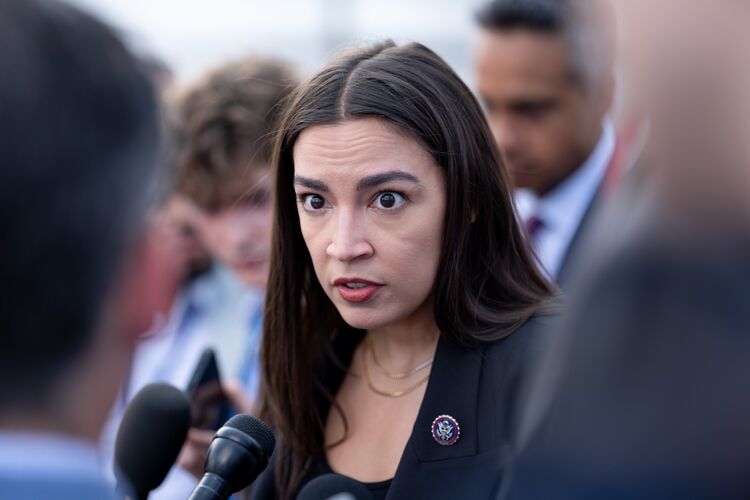
If you missed this ongoing pivot, New York Representative Alexandria Ocasio-Cortez made it quite plain last week, elevating to a national conversation the political shift that has been hotly debated among online lefty-types.
“I have a local city councilman that has this saying: ‘Woke 1 was crazy,’” the New York congresswoman said on ABC’s “This Week,” quoting a tweet from Chi Osse, before letting out a big laugh. “I think that what’s important is that we have to assess what a candidate is saying now.”
In other words, don’t pay any attention to what a candidate said yesterday, just pay attention to what a candidate is saying today. No wonder trust in government is among the lowest it has been in nearly seven decades .
In this telling, “woke 1” is some sort of ill-defined Covid-era fever dream — even though the term “woke” dates back to the early 20th century and amounts to a call for African Americans to recognize and fight against racially oppressive systems.
The May 2020 death of George Floyd at the hands of police officer Derek Chauvin in Minneapolis sparked the largest protest movement in American history and calls for police reform, which is presumably what Ocasio-Cortez means by “woke 1.”
For Democrats, the stakes of this attempted repositioning are quite high. Backlash against “woke” language and policies — particularly around the left’s calls to “defund the police” — has proven politically costly. Such was the case for Wisconsin Democratic gubernatorial candidate Francesca Hong, who lost her primary on Tuesday. Her woke excesses included a 2020 tweet that spelled folks with an x (“folx”) and called for ending Thanksgiving because it “celebrates colonialism.”
In Michigan, Abdul El-Sayed, the Democratic nominee for an open Senate seat, is also grappling with prior statements, among them criticizing the Second Amendment, fireworks celebrations on July 4th and football. He also once called for defunding the police.
His campaign said “[c]herry-picked comments from old podcasts don’t reflect his beliefs today,” in a response to CNN’s story about his previous views, a line he’ll likely have to expand on for Michigan voters to find him credible.
When Maryland Governor Wes Moore was asked whether he agreed with the woke-1-was-crazy framing, he had the best answer.
“I’m going to be honest, I don’t know what Woke 1 is, but I can tell you how I lead in Maryland,” he said, going on to describe his balanced approach to crime to CNN’s Kaitlan Collins. “The focus for any leader is not a slogan or is not an ideology, it’s are you making your communities better, are you making your communities safer.”
Moore has always been a centrist, which makes navigating this moment easier for him than for progressives. But he is also smartly refusing to disparage a serious movement, which, like all movements, had its missteps, but also brought some lasting good.
Ocasio-Cortez, who now sits atop a recent poll of hypothetical 2028 candidates in the Democratic field, might have the most to gain from this slick repositioning. But such a move by her, or others on the left, risks exposing progressive Democrats as more followers than leaders, and rather cynical to boot.
In 2020, chasing clout, relevance and virtue points, segments of the online left veered away from the roots of anti-racist activism into caricature territory. In reversing course now, they have rightfully drawn the ire of activists who originally saw figures like Ocasio-Cortez as sympathetic to the struggle.
“To be dismissive of an entire political struggle that has existed for centuries as ‘Woke 1’ is not only ahistorical but cowardly,” Derecka Purnell, author of Becoming Abolitionists: Police, Protests and the Pursuit of Freedom, posted on Instagram. “If you feel bad that you were emotionally swayed about socialism or abolition via Twitter, say that. Say you didn’t do the work. Say you didn’t understand. Say you’re willing to walk back because you want to keep your job. But don’t dismiss the struggle.”
And dismissing the struggle is what Ocasio-Cortez did, diminishing it all with a laugh. It was a shallow move in an era that calls for seriousness. Ocasio-Cortez has been privately reaching out behind the scenes in an effort to build bridges with the Black political class, with an eye toward a possible 2028 run. It’s that kind of deep work that Ocasio-Cortez and other progressives will have to do more of to get beyond their bubbles and understand what the voters they claim to speak for actually want.
More From Bloomberg Opinion:
Want more Bloomberg Opinion? OPIN <GO>. Or subscribe to our daily newsletter .