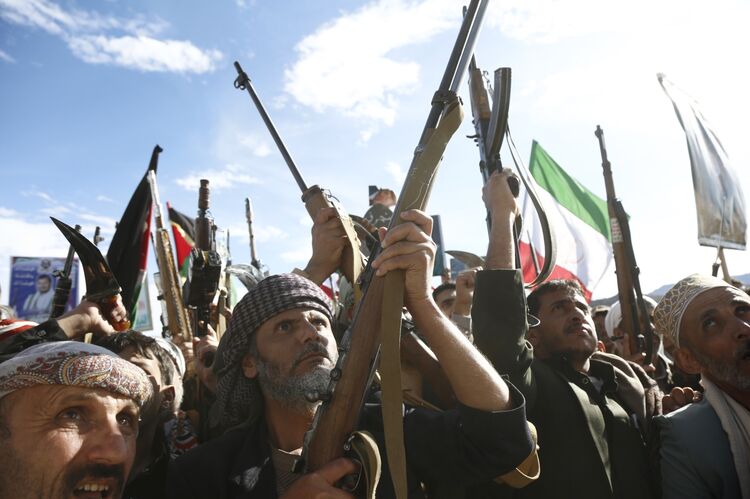
After four years of relative calm, the war pitting Yemen’s Houthi militia against the country’s internationally recognized government and its backer Saudi Arabia is back on . Announcing the start of a full-scale military campaign against the Houthis, the Saudi-led coalition supporting government forces said on social media on Oct. 4 that the goal is to “eliminate” the group.
It’s an ambitious aim. Once dismissed as a ragtag band fighting in sandals from pickup trucks, the Houthis have demonstrated staying power and reach. Having taken over the capital Sanaa in 2014, the Houthis now control land containing most of Yemen’s population. They’ve previously withstood years of Saudi-backed military efforts to dislodge them as well as US, UK and Israeli bombing raids meant to punish the group’s attacks on commercial shipping in the Red Sea and on Israel itself . Though supported by Iran, the Houthis increasingly have other means of arming themselves.
Who are the Houthis?
Officially known as Ansar Allah, or Supporters of God, the Houthis are part of a clan that hails from Yemen’s northwestern Saada province. They’re followers of the Zaidi branch of Shiite Islam, which accounts for roughly a third of the country’s population.
The Houthis emerged in the 1990s after North Yemen and South Yemen were unified, waging a series of rebellions against the government. Their seizure of Sanaa in 2014 triggered a civil war that still divides the country.
The Houthis are anti-West and anti-Israel, and are designated terrorists by the US and the European Union. They’re part of the so-called axis of resistance , which was established by Iran and includes Hezbollah in Lebanon and Hamas in Gaza, both of which are also classified as terrorist organizations by the US and others. These groups receive training, technical expertise and weapons from Iran.
How close are the Houthis and Iran?
The Houthis coordinate closely with Iran and largely share its strategic objectives, but they make their own decisions. Iran is an important source of weapons for the Houthis, but not the only one. They can draw upon tribal smuggling networks inside Yemen and are increasingly sourcing commercially available components and raw materials from further afield, including China. The group has expanded efforts to assemble and manufacture its own arms. By reducing their dependence on shipments of complete Iranian weapons, the Houthis have made it harder for adversaries to disrupt their operations.
Why has the Yemen war restarted?
By 2022, both sides in the Yemen war had reason to step back from the fighting. Saudi Arabia had intervened in the war in 2015 with the goal of restoring the internationally recognized government to power. But the Houthis remained entrenched and were striking back at Saudi Arabia using missiles and drones. For the Houthis, a break in the fighting offered the opportunity to secure concessions including more fuel imports and the right to operate limited commercial flights from Sanaa’s airport. A United Nations-brokered truce largely put a stop to cross-border attacks. Although it formally expired six months later, the uneasy calm held for almost four years.
Then, on July 13 of this year, Saudi jets struck Sanaa’s airport to stop an Iranian aircraft carrying a Houthi delegation from landing. The delegation was returning from the funeral of Iran’s late supreme leader, Ali Khamenei, who was killed at the beginning of the US and Israeli war on Iran. Saudi Arabia has long accused Iran of using commercial passenger planes as an air bridge to move weapons and military experts into Houthi areas of Yemen.
The Houthis responded by launching missiles and drones at Abha International Airport in southern Saudi Arabia. On July 20, they announced what they called a “naval blockade” of Saudi Arabia, warning shipping companies that their vessels risked being attacked if they used the kingdom’s ports.
The militia followed up by attacking Saudi cities, military positions and oil infrastructure, provoking retaliatory Saudi airstrikes. Inside Yemen, the Houthis stepped up their campaign against the Saudi-backed government.
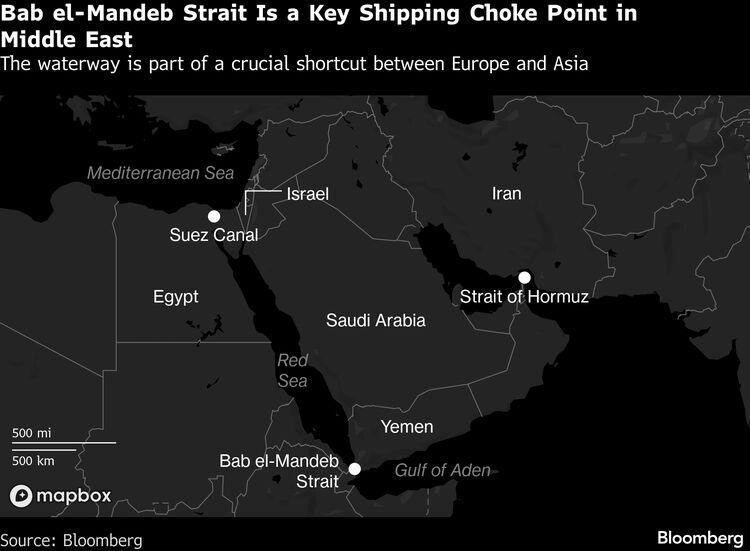
And in September, in their biggest territorial advance in years, they pushed south, strengthening their control over Yemen’s Red Sea coast and the strategic Bab el-Mandeb strait, an important oil export corridor. Undoing those gains · was high among the goals of the campaign launched by the Saudi-backed Yemeni forces.
What’s at stake in this fight?
For Saudi Arabia, defeating the Houthis would eliminate a longstanding enemy of the kingdom. The militia’s attacks risk undermining the economic ambitions of the kingdom’s de facto ruler, Crown Prince Mohammed bin Salman, who wants to attract billions of dollars of foreign investment in projects ranging from data centers to electric vehicle manufacturing.
For other countries, the Houthis’ downfall would remove a threat to shipping that has disrupted traffic in the Red Sea for years. When the Houthis first began to attack vessels there in 2023, they said it was in retaliation for Israel’s military campaign in Gaza that followed the Oct. 7 Hamas attacks. The group originally said it was only focused on vessels with links to Israel. But ships without a direct connection were also hit.
The shipping route via the Suez Canal, Red Sea and Bab el-Mandeb is the most convenient passage for ships traveling between Europe and Asia. But to avoid the Red Sea altogether, many shipping firms now send their vessels around the southern tip of Africa instead — an expensive diversion that’s thousands of miles longer and can add two weeks to journeys.
What help is the Saudi-led coalition getting?
The Saudi government has asked Western powers for more military support to counter the Houthis. The UK is providing an aircraft to help Saudi fighter jets refuel in mid-air, while France said it would send troops and radar systems to protect Yanbu, the kingdom’s oil export hub on the Red Sea.
The US has not said it will provide extra support but continues to give intelligence to the Saudis.