The US economic expansion is in its seventh year, and there is no recession in sight.
Unemployment and layoffs are historically low. Consumer spending data suggest that Americans are splurging on movies and hobbies , clothing and new cars. And the stock market is hovering near record territory.
And by many measures, people are miserable.
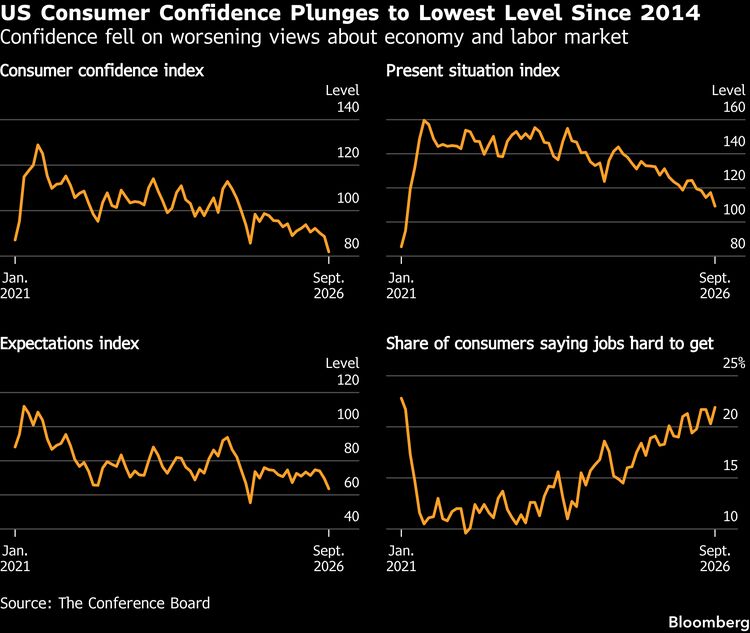
A significant portion of Americans say it feels like the economy is stacked against them. Polls indicate that they are frustrated with high prices, anxious about job security and pessimistic about their economic future. And don’t even get them started on gasoline prices .
Economic issues keep showing up as voters’ top concerns ahead of the US midterm elections in November. But are things as shaky as many say?
How much have prices gone up?
Americans confronted the hottest inflation in more than four decades in the years immediately following the Covid pandemic.
They are still struggling with sticker shock . Prices continue to go up, though at a slower pace than a few years ago. The basket of goods and services measured by the US Bureau of Labor Statistics’ consumer price index was 3.4% higher in August than a year earlier. That’s less than half the 9.1% pace of inflation reached as the US pulled out of the pandemic. But it’s still high enough for people to notice.
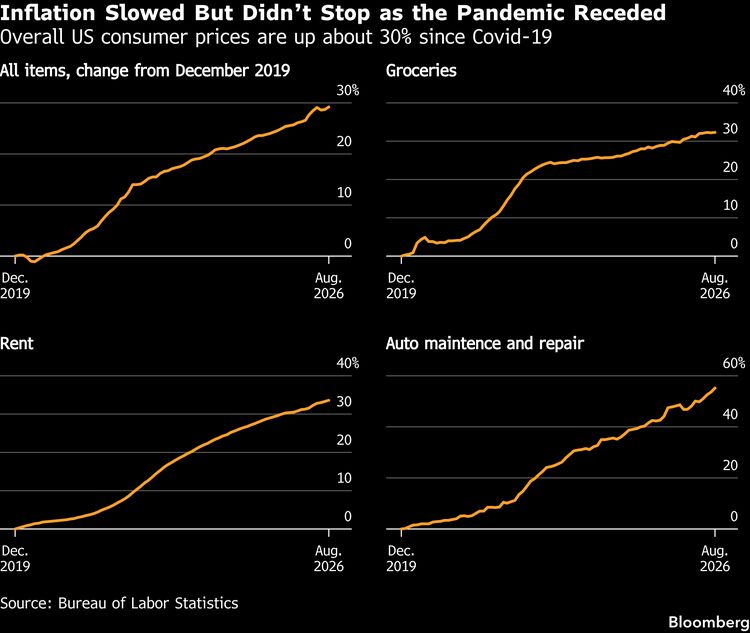
The steady rise in prices comes on top of the post-pandemic spike. Since the end of 2019, overall consumer prices are up by about 30%. Groceries are 32% more expensive. Eating out is close to 40% more. Rents are up by more than a third. Electricity costs are up by 43%. Auto maintenance jumped by more than half and car insurance by about 48%.
How unusual are the price increases?
Prices are almost always rising, but usually not this fast. In the decade before the pandemic, annual inflation averaged around 1.8%. Now it’s close to double that.
That is in part because the economy faced a series of shocks that accelerated price gains.
Supply chains stretched and broke in 2021 after the global economy reopened . Then Russia’s invasion of Ukraine choked off fertilizer, wheat and oil shipments, sending food and fuel prices higher. The Trump administration’s “Liberation Day” tariffs spooked markets and subsequent levies raised prices on many goods. The buildout in artificial intelligence technology fueled business investment and construction hiring, but also sent prices for computer software and components higher . And most recently the Iran war has led to higher energy prices and rising borrowing costs.
“Supply shocks have come more frequently, hit harder and lasted longer,” Federal Reserve Bank of Chicago President Austan Goolsbee said in a speech in London in September.
How are Americans getting by?
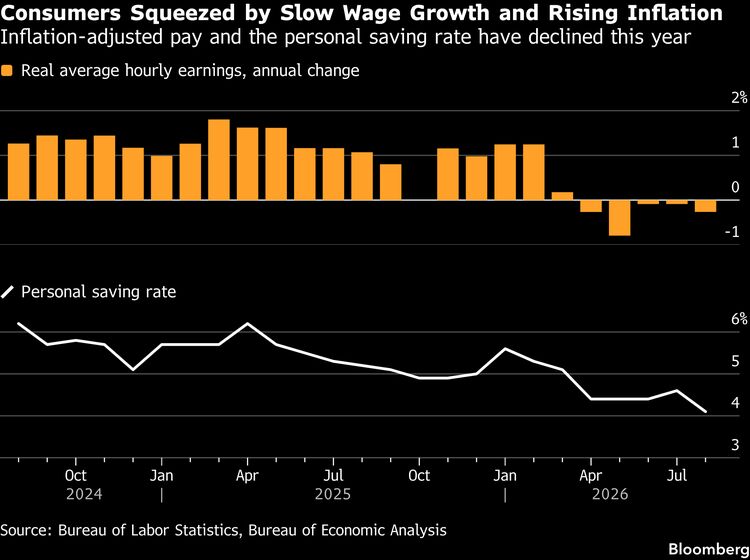
Americans’ hourly earnings are, on average, up about one-third since the end of 2019. But adjusted for inflation, pay has barely kept up with rising prices. And even the marginal gains Americans have made are beginning to evaporate. Inflation-adjusted pay was down from a year earlier for five straight months as of August — and is projected to decline again in September.
Even so, workers continue to spend — tapping a range of resources to do so.
Regular paychecks aren’t the only source of income or wealth. Some people work in the gig economy. The stock market hit a series of records this year, lifting investor portfolios. Home values have grown substantially over the past few years, and big tax refunds in 2026 boosted household budgets.
But wages are the main contributor to income for most Americans up until retirement. Sluggish wage growth alongside rising prices has forced many to save less — or not save at all.
A mixed job market
On the good news front, plenty of people are earning a paycheck. The US economy is by many measures operating at or near full employment. The unemployment rate is historically low, though it edged higher , to 4.2%, in September. Healthcare, construction and manufacturing have all been adding jobs in recent months. And the labor force participation rate also rose in September, typically a positive sign that more people are looking for work.
But sector-specific strength and the low unemployment rate mask a sluggish job market. Employers aren’t laying off many workers, but overall they aren’t hiring many workers, either. That’s left some people feeling stuck in place . Glassdoor’s employee confidence index in September fell to the lowest level in the survey’s 10-year history.
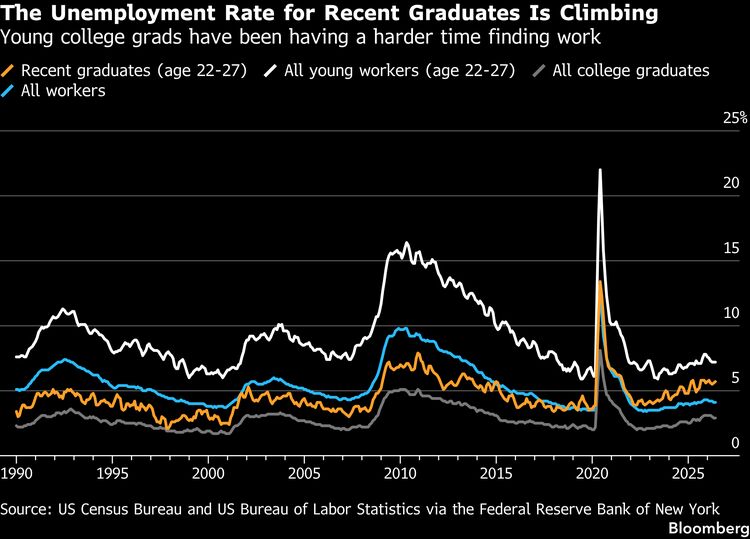
Others are simply locked out. Entry-level college graduates have had an especially tough time cracking the job market, and the ranks of long-term unemployed are growing.
So while there are pockets of strong demand, the overall job market isn’t hot enough to broadly lift real wages or create wide-ranging opportunities.
Stuck in place?
A person who has a job is likely to keep it — layoffs are historically low. US homeowners who bought before the pandemic have watched property values soar. And investors have done well. An index fund tied to the S&P 500 has more than doubled in value since the end of 2019 even without reinvesting the gains.
But when these milestones don’t apply, it might be a sign of falling further behind.
Homeownership is one area of frustration.
The median sales price of an existing home is up by about half since the end of 2019, and rated on 30-year fixed mortgages have climbed to more than 7% from less than 4%. Excluding taxes and insurance, that equates to a payment that is roughly double what it was before the pandemic.
What about AI?
Investment in artificial intelligence is one of the economy’s bright spots. But that has been cold comfort for many Americans who worry that the technology will eliminate their jobs while its data centers swallow up land in their communities.
Capital spending on data centers could total $5.5 trillion cumulatively by 2030, according to JPMorgan Chase & Co.
Some 54% of Democrats and 37% of Republicans said they oppose construction of new data centers in the US, according to a June survey by Reuters/Ipsos .
“People are very concerned, either directly or indirectly, around what this is going to mean for their jobs,” said John Leer, chief economist at Morning Consult. “It’s another way in which the rules and the structure of the economy seem to be changing.”
What actually is shaping consumers’ outlook?
Americans’ views about their economic standing tend to be shaped by more than just their personal finances. Indeed, surveys show that individuals generally feel more optimistic about the economy when the party in power is aligned with their outlook. When their party is out of power, they become more pessimistic, even when their own situation is stable.
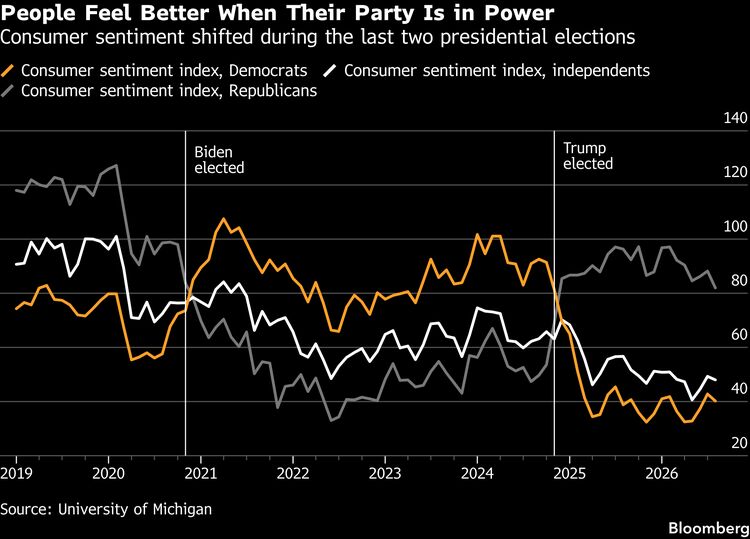
After Donald Trump was reelected president in 2024, for example, consumer sentiment surged among Republicans and dropped among Democrats even before his inauguration.
But since the start of 2026, measures of confidence have been slumping across political affiliation, geography and income, suggesting a wide swath of Americans harbor concerns about the economy.