It looks as if Switzerland no longer wants a national champion in global banking. Within a decade, it very likely won’t have one.
The government, chastened by the collapse of Credit Suisse, is insisting that UBS Group AG carry much more capital to avoid any repeat. And the chance of Swiss politicians watering down these demands is minimal. So what should the country’s biggest bank by some distance do in response to plans that it calls extreme and damaging? Its options range from painful to fanciful, but it’s a good bet that it will emerge from this process radically changed.
Some influential shareholders say the bank has no choice but to leave the country . That’s far easier said than done. Others reckon a nice, valuable takeover bid from a rich, probably American suitor will appear magically. Life is rarely so convenient and UBS stock is too expensive for a start.
My own view is that it will be split up in a way that keeps the core Swiss corporate, retail and private-banking businesses at home, but separates them from some of its international operations, maybe most of them. Switzerland’s politicians, like European governments after the 2008 crisis, are worried about the risks inherent in international investment banks. They’re on track to dismantle the one they have.
The government’s aim is to protect taxpayers from a massive bill should UBS ever collapse. The harsh measures follow Credit Suisse’s 2023 failure and UBS’s own brush with death in 2008. The capital burden being placed on the bank, to support its lending and trading, will be high next to its Wall Street rivals.
The leaders of UBS think, with some justification, that they’re being punished for good deeds. By 2023 the lender had become so much stronger and better run than in the dark days of the global financial crisis that it was able to rescue the chronically lossmaking and mismanaged Credit Suisse. Politicians cheered that intervention, but they have since come to fear its size.

The key change in new rules making their way through parliament is to force UBS to fully capitalize all of its large foreign subsidiaries, such as its US investment bank, rather than funding them with borrowed money. Politicians never want a repeat of what happened to Credit Suisse, which was unable to repair itself by selling overseas units. The lack of equity in those arms meant it would have had to pay a buyer to take them on.
The two main government proposals were to either fully capitalize those foreign units with equity, or to do it half with junior bonds that can convert into equity if the bank faces big losses. In the end, Swiss senators voted for a pointlessly minor compromise: UBS should capitalize the units to 90% of their needs but only with equity and no convertible junior bonds.
Essentially, the cost of this will be an additional $16 billion in extra shares, according to UBS. Other changes as part of the package add $2 billion more — and the $18 billion total is an increase of 25% on top of UBS’s current common equity. That’s less than first expected but still a lot. After US regulators proposed a near 20% increase for America’s biggest banks as part of a rule update in late 2023, the industry ran TV adverts during the Superbowl about the cost to farmers and homeowners of the capital rules. The Federal Reserve’s head of bank supervision ultimately lost his job.
This is why reactions have been so severe. One UBS shareholder, Artisan Partners, wrote to its board last week urging it to quit its homeland, which was “no longer an attractive or desirable location.” Another, Cevian Capital, said much the same last year and its position won’t have changed.
Last month, the bank’s Chairman Colm Kelleher said publicly for the first time that UBS would have to rethink where it was based if the rules demanded too much. Its history, reputation and branding are so tied up with being Swiss that even raising the possibility of leaving had been taboo.
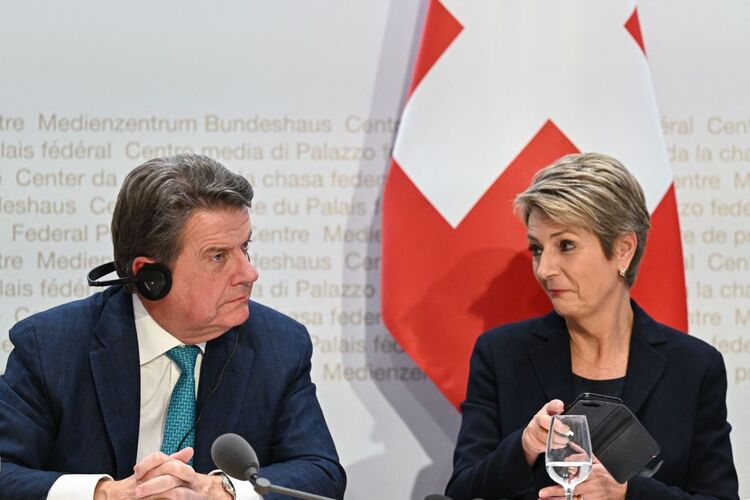
Finance minister Karin Keller-Sutter, the political face of the overhaul, is certain that the bank’s “Swissness” is such a defining trait that it would be almost impossible to let go. She told a local newspaper that leaving Switzerland would be far more complex and costly than simply meeting the capital charges. In truth, she could help make that so. I agree that a wholesale exit by UBS is too hard, but her confidence that its Swiss character is necessary is misplaced.
Switzerland is known for stability and predictability, but that is being undermined by this unexpected and dramatic change in the rules. The country’s financial sector has a reputation for safe, trustworthy money management, but that now lives more in the collective imagination than in reality. Credit Suisse didn’t help, losing client money to the failed Greensill Capital and getting entangled in many other dubious schemes .
Switzerland’s role as the home of international tax avoidance is gone after an American crackdown more than a decade ago. And it gave up its vaunted independence by agreeing to sanction Russian billionaires after the Ukraine invasion. No one is surprised that very rich Chinese or Indians, for example, increasingly prefer to keep money in Singapore, or Hong Kong. “Swissness” doesn’t mean what it used to.
UBS’s transformation will be slow. Switzerland’s lower house still has to debate the capital rules, and the bank won’t have to meet them until about 2034. If the demands stay the same, that will hurt UBS’s profits and eventually its share price. Maybe then a bidder will emerge, but it will have to look a lot cheaper than today’s 1.5 times its forecast book value.
As things stand, it’s going to be too expensive for UBS to run an international investment bank and probably a world-leading Asian wealth manager from Switzerland. Ultimately, therefore, it won’t. Maybe a diminished UBS is just what Keller-Sutter and other politicians want. If not, they need to rethink before it’s too late.