By Noah Feldman | Updated on Oct 05, 2026 at 10:30 AM
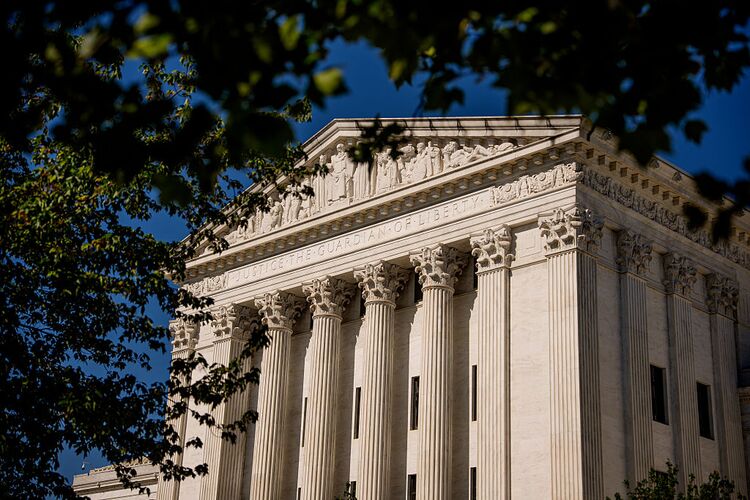
Over the last several years, the Supreme Court has overturned abortion rights , ended affirmative action in higher education, given the president criminal immunity for official acts and killed independent federal agencies , to name just a few paradigm-shifting highlights. Although President Donald Trump could always do something so outrageous that the court feels compelled to weigh in, there are currently no major cases on the court’s docket that would overturn decades of precedent.
So I expect the court’s upcoming term, which begins today, to be marked less by revolution than by consolidation.
For a court this conservative, the usual flow of ordinary cases still presents opportunities for significant victories on hot-button issues. For example, the court will consider whether there is a fundamental right under the Second Amendment to carry AR-15s and other semi-automatic assault rifles. It will decide whether to give religious preschools an exemption from a Colorado law that bars state-funded preschools from discriminating on the basis of parents’ race, religion, sex, sexual orientation and gender identity. On the first day of the term, it will decide whether to interpret federal law to prohibit a state suit against energy companies for contributing to climate change.
In each of these instances, the most likely outcome is the conservative one — even when the legal logic cuts the other way, and even if the victory is more incremental than complete.
The AR-15 case, Viramontes v. Cook County , squarely raises the issue of whether it’s constitutionally permissible to ban semi-automatic rifles. The outcome of the case is not much in doubt. In 2025, when the court declined to hear a similar case, Justice Brett Kavanaugh wrote an opinion dissenting from that decision in which he essentially stated that AR-15s should be constitutionally protected under the court’s precedent. It’s hard to picture a scenario where the court would reach a different conclusion.
In his dissent, Kavanaugh wrote that the correct precedent to apply was District of Columbia v. Heller , a 2008 decision written by Justice Antonin Scalia. In the Heller case, Kavanaugh wrote, the court held that “the Second Amendment protects those weapons that are in ‘common use’ by law-abiding citizens.” According to Kavanaugh, AR-15s and other assault rifles are semi-automatic weapons and are therefore “difficult to distinguish” from the from the semi-automatic handguns at issue in the Heller decision.
That may sound extreme, but it’s actually more moderate than the precedent set by the Supreme Court in the 2023 Bruen case, written by Justice Clarence Thomas. Under Bruen , any restriction on firearms is presumptively unconstitutional unless the government can prove it is consistent with the nation’s historical tradition of firearm regulation. That, according to Thomas, requires the government to identify a historical analogue to the regulation from the founding era — an extremely high bar.
The upshot is that, in the AR-15 case, there is going to be a conservative outcome — and possibly a subtle pulling back from the extremity of Thomas’s Bruen opinion, which has proved extremely difficult to apply. Such a decision wouldn’t make anti-gun advocates happy, but it would be an indication that the justices realized they overreached in Bruen .
In the preschool case, St. Mary Catholic Parish v. Roy , the Supreme Court made clear when it decided to hear the case that it would not take the opportunity formally to overrule the one Scalia decision unpopular with conservatives: Employment Division v. Smith , the 1990 case in which the court said there is no automatic constitutional right to a religious liberty exemption from a neutral, generally applicable law. But instead of directly overturning the precedent, the court has been chipping away at the core of the Smith holding to the point where it will soon be unclear whether the precedent really exists at all.
The easiest way to reach a conservative outcome in the preschool case is for the court to claim that the law isn’t really neutral, but effectively discriminates against schools that choose students and families based on religion or other grounds — the way many religious schools do. The precedential effect of the decision will depend on how the court formulates what is effectively a new exemption rule. The conservatives will get the outcome they want. The only question is to what extent the decision will further undermine Smith .
The climate change case, Suncor Energy , involves the ordinarily arcane topic of federal preemption, the doctrine according to which Congress has the authority to pass laws that occupy the whole field of regulation on a given subject, blocking states from themselves regulating. Preemption is always an important issue because, in the US system, if Congress hasn’t regulated (and even if states themselves have been silent), you can always sue a company that has caused harm after the fact, alleging violations of state tort law. This is how some degree of legal responsibility has been applied to Big Pharma, Big Tobacco and, more recently, Big Social Media.
The issue to watch in the case is whether the conservative justices have enough chutzpah to say that the federal Clean Air Act prohibits states from regulating energy companies to fight climate change. The reason it would take chutzpah is that the same conservative majority has held that the act can’t be used to regulate emissions in order to address climate change.
Don’t be surprised if the conservative majority goes there. In a term with no constitutional revolution, the name of the game is to expand the boundaries of conservative doctrine, slowly but surely.
Elsewhere in Bloomberg Opinion:
For more, subscribe to our newsletter .