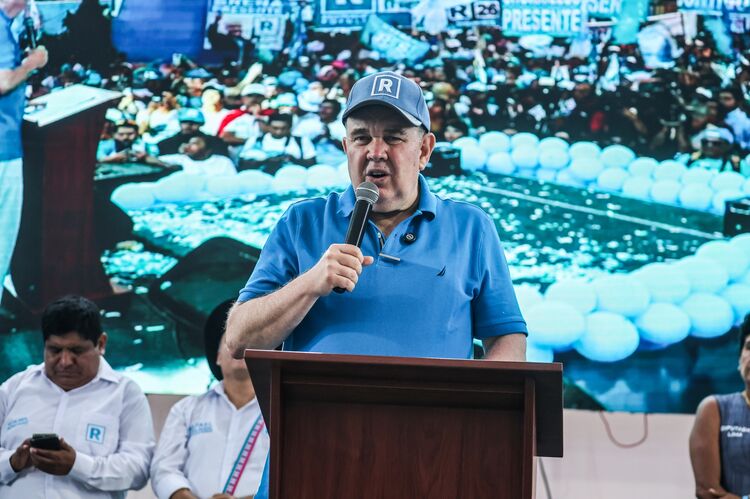
A Peruvian party led by a combative conservative holds a narrow lead in Lima’s mayoral race. There’s just one problem: the law bans immediate reelection for mayors, leaving voters unsure whether he can take the job.
The right-wing Renovación Popular party won nearly 28% of the vote in Sunday’s election in Lima, home to nearly a third of Peru’s population, with almost 93% of ballots counted. Former Lima Mayor Rafael López Aliaga, the leader of the party, had run as a candidate for deputy mayor but ended up at the top of the ticket after its mayoral candidate dropped out during the race.

An exit poll and quick count by pollster Datum both put López Aliaga’s party in first place, but statistically tied with the second-place conservative Avanza País party.
Rivals of López Aliaga, who has embraced the nickname ‘Porky’ due to his round face and prominent rosy cheeks, accuse him of seeking a “backdoor reelection” to get around Peru’s ban on mayors being immediately reelected. They also criticize electoral authorities for not yet ruling on whether he could take office or whether the job would instead go to the ticket’s second deputy mayor candidate.
López Aliaga and his supporters, meanwhile, argue that his potential return to the city’s top job would come through succession, not reelection.
“It’s prohibited to run for office, not to hold office,” López Aliaga told reporters Sunday night, after preliminary results were released. “I’m not running for mayor, and that wasn’t my intention either,” he said, warning that electoral authorities would run afoul of the law if they barred him from taking office.
His situation is not unique. More than 130 incumbent mayors ran as deputy mayor candidates in Sunday’s election, according to local media, out of nearly 1,900 races for mayor across the country.
Datum’s exit poll projects President Keiko Fujimori’s Popular Force party is headed for a weak showing, with no mayoral wins.
Brookfield Foe
A wealthy businessman who made his money operating luxury hotels and trains, López Aliaga became Lima mayor in 2023. But he quit the job early to run for president in last April’s general election, where he finished third and narrowly missed the runoff. In that election, he won a Senate seat but chose not to take office, citing alleged irregularities that electoral authorities and international observers have denied.
His tenure as Lima mayor was marked by a high-profile dispute with Brookfield Asset Management over the operation of a toll road in the capital. López Aliaga argued that the concession was obtained through corruption by its previous owner and has unfairly harmed the poor.
Brookfield denies any wrongdoing under its ownership and has accused López Aliaga’s administration of illegally expropriating its Peruvian subsidiary , Rutas de Lima. The asset manager has taken Peru to arbitration claiming $2.7 billion in damages. Lopez Aliaga has declined to pay an additional $200 million in arbitration penalties and has vowed to file a $3 billion claim against the firm.
Lopez Aliaga is a polarizing figure in Peruvian politics who wields a brash, aggressive style. While running for president, he sought to align himself with similar leaders across the Americas, including Donald Trump. He also made his admiration clear for the anti-crime policies of El Salvador’s Nayib Bukele.
Read More: Ex-Citi Official Who Preaches Celibacy Is Leading Polls in Peru
Along with addressing fallout from the weather phenomenon known as El Niño, tackling rising crime is set to be one of the major challenges for newly elected authorities in Peru. Last month, a candidate for governor was killed, and on Sunday an explosives attack hit a polling station in a small northern town.
The new crop of elected officials are set to take office in January, although the murky rules around reelection need to be cleared up first.
“The rules that were once clear are no longer so,” according to a statement from Fernando Tuesta, former head of Peru’s National Office of Electoral Processes. Politicians and parties can do as they please, he wrote, but institutions must set limits under the rule of law.
“That hasn’t happened,” he added.