To Brazilian President Luiz Inácio Lula da Silva, Sunday’s second-place finish to Flávio Bolsonaro stung all the more because he’d believed he could secure a knockout over his right-wing challenger.
“I was convinced I would win the election in the first round,” the leftist leader known as Lula said in Sao Paulo after the final results showed an unexpected lead for Bolsonaro, who now heads into the Oct. 25 runoff as the overwhelming favorite .
For some allies, the admission was less a statement of strength than a demonstration of how badly the campaign had misread the electorate. The next three weeks will determine whether it proves enough of a jolt to jump-start Lula’s campaign and help the political veteran deliver one more dramatic comeback.
Lula’s weaker-than-anticipated showing prompted his campaign to halt public activities on Monday, as aides gathered to reassess a strategy that failed to foresee the strength of the conservative surge behind Bolsonaro and a tide of sentiment against the president’s Workers’ Party.
The defeat leaves Lula facing one of the greatest challenges of his long political career. He is a politician who has overcome adversity on his long march to the presidency, only to see it all come down with a jail term for corruption charges that were later quashed, enabling him to take on and defeat then-President Jair Bolsonaro four years ago.
With just 20 days to the runoff against Jair Bolsonaro’s eldest son, Flávio, advisers and allies say the 80-year-old president needs to broaden his appeal beyond the left, reconnect with voters who stayed home, and persuade a demoralized coalition that he can still turn the race around.
But there is no consensus over how to do that, nor whether there is enough time to reverse what some allies see as a deeper rejection of Lula and his party, known as the PT.
After more than two decades at the center of Brazilian politics, it’s now staring down the reality that its guiding light is heading toward the exit with no obvious successor, leaving the Brazilian left adrift with no clear path ahead.
“The issue is that the PT is a fragmented party and Lula has historically been the ultimate decision maker keeping it together to the extent possible,” said Mario Braga, a geopolitical analyst at the consultancy RANE.
Lula has built his entire political brand on personal resilience and a willingness to take on difficult fights. Yet the first-round results exposed vulnerabilities that people involved in his campaign say were obscured by a misplaced sense of confidence surrounding both the president and his party. All the people with knowledge of the president’s campaign asked not to be named discussing electoral strategy.
Unlike in his first successful presidential campaign in 2002, when Lula reached out to constituencies that had traditionally been wary of the left, the president entered this election arguing that voters already knew him and his record. He repeatedly dismissed the idea that he needed to prove his political record, for example a commitment to fiscal responsibility.
One senior campaign ally said that had certainty hurt Lula, making him less willing to open new channels to voters beyond his traditional base. The president also resisted requests from campaign officials to put forward a more forward-looking agenda and give less prominence to his personal history and legacy, according to another person familiar with the discussions. Lula explicitly rejected that approach, the person said.
The result was “much more Lula’s loss than a Bolsonaro victory,” said Thomas Traumann, a political analyst and former press secretary for leftist President Dilma Rousseff. “Lula made a campaign that was really about himself, his legacy and not enough talking about other people’s problems or future.”
Campaign officials are now discussing some immediate changes. One is to draw a sharper contrast with Bolsonaro and turn the runoff into a more direct confrontation between the two political camps. Another is to focus heavily on the 21% of eligible voters who didn’t cast ballots in the first round, a potentially decisive pool in a race where Lula finished roughly 2.2 million votes behind Bolsonaro.
Voter fatigue
This was always going to be a tricky election for the three-term president, who needs to overcome voter fatigue with both him and his party while still presenting himself as a force for change.
Two people involved in the campaign said there are now a series of mistakes that need to be addressed and that Lula must be willing to confront them. They also pointed to what they described as the PT’s tendency to dominate discussions with coalition partners, as well as a broader sense that Lula remained politically invincible.
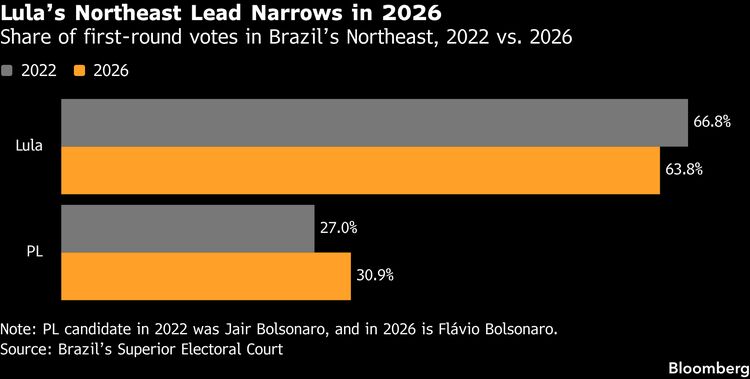
The outcome was “a very strong political message that Brazilians are tired of the left and that they are very angry with the Lula administration, because Lula failed them on Brazil’s on daily problems: inflation, public security and corruption ,” said Maurício Santoro, a fellow at the Center for Political and Strategic Studies of the Brazilian Navy, a think tank in Rio de Janeiro.
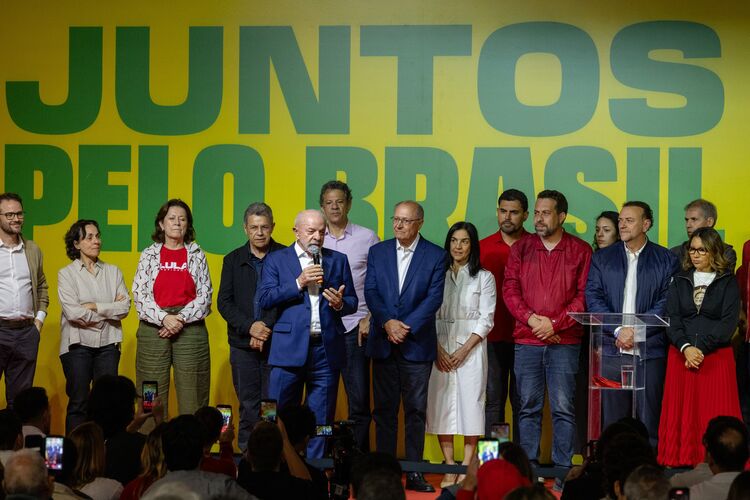
The losses suffered by his allies reinforced the sense of a broader conservative wave, and a leftist movement in trouble. When Lula addressed the country after the results, he was surrounded by political partners who had been defeated, including former Finance Minister Fernando Haddad, who lost his race for governor of São Paulo, and former ministers Simone Tebet and Marina Silva, who lost their Senate bids.
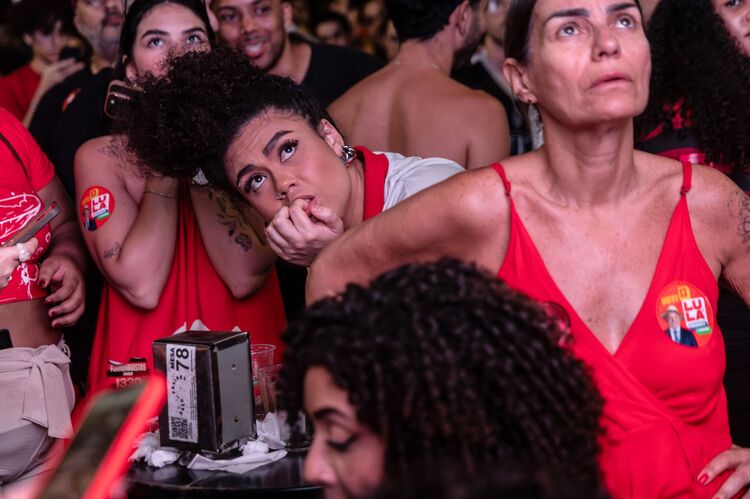
That leaves Lula with little time to reinvigorate not only voters but his own coalition.
Officials on the economic team see limited room for new government measures capable of fundamentally altering the dynamics of the runoff.
Initiatives adopted during the final stretch of the campaign, including a ban on online betting and an increase in Bolsa Família benefits, failed to significantly change a contest that those officials increasingly viewed as a referendum on Lula’s record.
The election result is also expected to complicate his economic agenda in Congress, particularly in the Senate, whose composition will shift significantly after two-thirds of its seats were contested on Sunday. One economic official said the outcome will make it harder for the government to advance some of its priorities, even if Lula were to prevail.
Even Senate President Davi Alcolumbre, who has been an important interlocutor for Lula in Congress, emerged politically weakened from the vote after his allies suffered major defeats in his home state of Amapá.
More broadly, the result exposed weaknesses in the coalition Lula assembled after returning to power four years ago. He won the 2022 election promising a broad front against Brazil’s right and campaigned alongside politicians from outside his traditional left-wing base. But in office, Lula failed to fully translate that electoral alliance into his government, weakening the broader political coalition he had promised to build.
The issue now is how to best make the electoral case against Bolsonaro, an approach that has yet to be settled. Some of the attacks the campaign had hoped would damage him, including those involving the Banco Master SA scandal and questions over a biographic movie about his father, appeared to have limited impact on his support, said two people familiar with the matter.
The larger question is whether Lula’s campaign can absorb the shock of the defeat without turning on itself. One person involved described two possible paths: allies close ranks and push Lula toward one last comeback, or recriminations over the mistakes that produced the first-round result begin to fracture the coalition just as it enters the decisive stretch of the campaign.