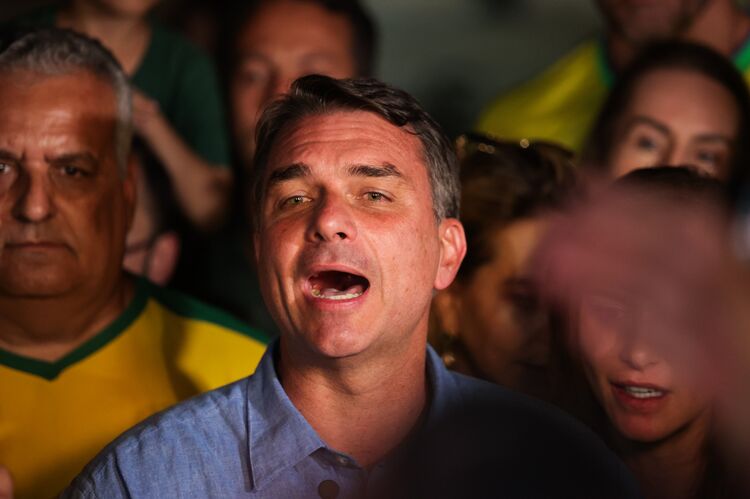
Brazilian assets surged on expectations that Flávio Bolsonaro will address the country’s mounting fiscal problems and pave the way for interest-rate cuts after he became the surprise favorite to win the presidency in an Oct. 25 runoff against Luiz Inácio Lula da Silva.
Bolsonaro had 47% of the vote in the first round of elections on Sunday, compared with the incumbent’s 45%. Investors had widely expected left-wing Lula to come in ahead. Now, the race appears to be Bolsonaro’s to lose, JPMorgan Chase & Co. said in a note.
Traders quickly boosted bets that a more pragmatic economic program would allow the country to lower rates that rank among the highest in the world. Swap rate contracts tumbled more than 130 basis points, and the real soared as much as 5%. The nation’s benchmark Ibovespa stock gauge jumped the most since 2020, closing 7.7% higher.
Investors traded over $8 billion in shares of EWZ — the world’s largest exchange-traded fund tracking Brazilian stocks with about $9 billion in assets — on Monday, the most for any day since the fund’s inception in July 2000.
“Flavio is seen as a better option in the eyes of investors,” said Daniela Da Costa-Bulthuis, a portfolio manager at Robeco Institutional Asset Management. His intention of implementing a fiscal consolidation plan would open space for the central bank to continue reducing rates, abandoning “ultra-restrictive monetary policy,” she added.
Read more: Bolsonaro Pushes Lula to Brink of Defeat Ahead of Brazil Runoff
Following Sunday’s vote, Citigroup Inc. is recommending investors add to bullish wagers across Brazilian assets, touting the nation’s stocks and local government bonds due in 2031, so-called NTN-Fs. JPMorgan upgraded Brazilian stocks, with strategists seeing as much as 20% upside on the prospect of a more fiscally disciplined government.
A Bolsonaro presidency would likely bolster investor confidence, with longer-dated local bonds standing to benefit most as markets price in faster and deeper fiscal adjustments than under Lula, according to Olga Yangol, head of economic research and emerging-markets strategy at Crédit Agricole.
While he has yet to lay out detailed plans for Latin America’s largest economy, investors see Bolsonaro — son of former President Jair Bolsonaro — as more likely to pursue fiscal moves such as spending cuts that they see as key in helping bring down double-digit interest rates that have left companies and families in a chokehold.
Read more: Why Brazil Can’t Hide From Its Debt (Video)
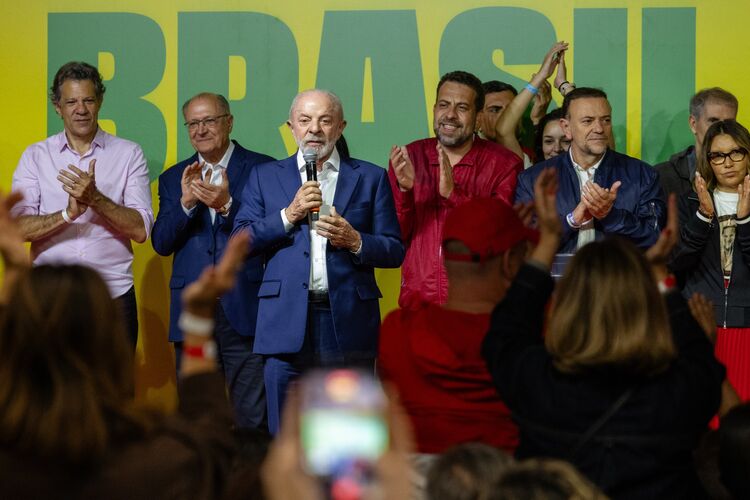
Lula, for his part, has largely avoided committing to reductions, and his boost of social aid programs and some subsidies in the final weeks of the campaign reinforced investor doubts about his willingness to rein in deficits.
Strong Showing
Solange Srour, head of Brazil Macroeconomics at UBS Global Wealth Management, said “credible” signals of fiscal consolidation could lead to a significant rally at the long end of the curve that could see spreads narrow as much as 250 basis points.
Markets were caught off guard on two fronts by Sunday’s results: Bolsonaro’s convincing lead and the strong showing by right-wing candidates in races for state governors, Congress and the Senate. Taken together, the results signal a broader conservative shift that may help Bolsonaro in carrying out his fiscal agenda.
“The conditions have never been this favorable,” said Guilherme Abbud, CEO of Persevera Asset Management, which oversees 4.8 billion reais ($960 million). “There’s potential for the rally to extend over several days.”
Read more: Bolsonaro Allies Gain Senate Strength in Clash With Top Court ·
Bolsonaro’s emergence as Lula’s main challenger in late 2025, handpicked by his father, initially disappointed investors. A constant drip of news around his involvement with disgraced banker Daniel Vorcaro, the man at the center of Brazil’s biggest-ever bank fraud, further soured markets on his bid.
Over the past month, though, Bolsonaro’s improving odds as Lula grappled with his own scandals and a slowing economy have helped lift Brazilian assets. The Ibovespa rallied 5% in dollar terms in September, among the best-performing equity markets in the world in the span.
With the candidates deadlocked in polls, investors largely opted for derivatives and other wagers that capture upside from a market-friendly outcome, while limiting losses if the vote disappoints. Local bonds have also emerged as a popular trade, with investors betting current yields offer cushion through the election.
Read more: Wall Street Loads Up on Options Ahead of Toss-Up Brazil Vote
To be sure, the challenges remain daunting and numerous, from soaring deficits to heavy debt and high interest rates.
What Bloomberg strategists say...
In general, rallies in Brazilian assets should be faded: Brazilian investors tend to overreact to political events and actually reducing spending is going to be a lot harder than talking about it. There will inevitably be disappointment ahead. In the meantime though, the immediate reaction is likely to be close to euphoric. The Lula era appears to be over.
Sebastian Boyd, macro strategist, Markets Live. For the full analysis, click here.
In the lead-up to the 2022 vote, local investors were far more wary of Lula than their foreign counterparts, who generally took a less pessimistic view on the leftist leader. The divide has lingered — local investors tend to be more concerned that the government has limited appetite for the kind of fiscal adjustment they see as key for Brazil to be able to lower rates and unlock growth.
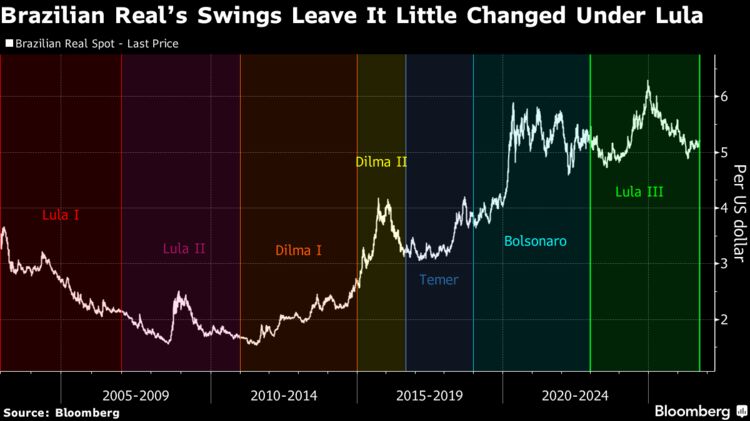
Still, Brazilian markets have followed a rocky but ultimately positive path since Lula returned to office in January 2023. High rates, while restrictive for the economy, make the currency appealing to carry traders amid a weaker dollar and a push away from US markets that has helped lift emerging markets more broadly.
Read more: Emerging-Market Carry Bulls Back Trade as US Yields Top 5%
Alejandro Cuadrado, head of global foreign exchange and Latin America strategy at Banco Bilbao Vizcaya Argentaria SA, said that while some volatility is expected ahead of the runoff, the magnitude of the surprise should already drive a “meaningful reassessment” of Brazil’s outlook.
“The rally should continue if this scenario is increasingly confirmed by the polls, “ said Felipe Guerra, partner and CIO at Legacy Capital, which has about 16 billion reais under management. “People will become more willing to take risk and increase allocation. Both domestic and foreign investors currently have very little exposure to Brazil.”