By Ronald Brownstein | Updated on Oct 07, 2026 at 10:30 AM
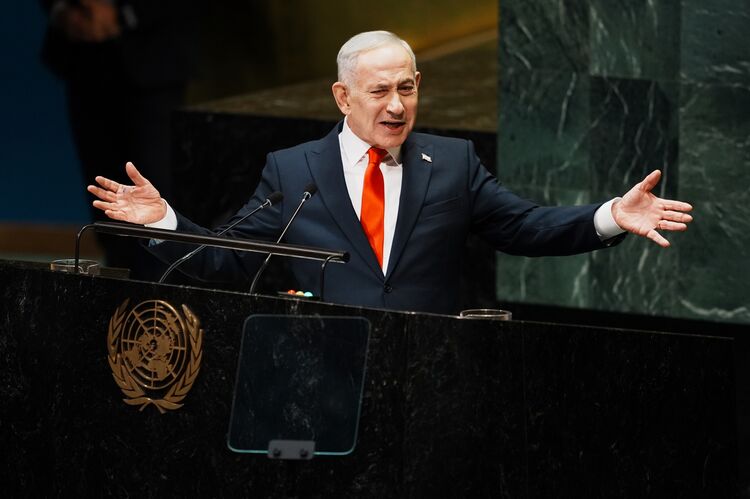
The Hamas terror attack on Israel, three years ago today, horrified the world. But the indiscriminate ferocity of the Israeli response under Prime Minister Benjamin Netanyahu has almost completely eclipsed the initial atrocity in shaping global attitudes toward the Israeli-Palestinian conflict. The mass casualties and systematic leveling of Gaza, followed by reckless escalations in Lebanon and Iran, have left Israel more isolated internationally than at any point in its modern history, especially among center-left parties worldwide.
This broad backlash has left Israeli voters with a stark choice in this month’s election: elect a government committed to regaining international confidence, or further alienate the country’s traditional allies with Netanyahu and his far-right coalition. The consequences of that choice may be felt most immediately in the US, Israel’s most important ally. The Gaza war and its aftermath have prompted the most fundamental reassessment of the US-Israeli relationship among Democrats in decades — maybe ever.
Though Netanyahu has clashed with Democratic presidents since Bill Clinton, the party’s tradition of ironclad support for Israel had shifted only glacially before the Oct. 7 attacks. But three years later, amid widespread revulsion across the party over Netanyahu’s actions — and President Joe Biden’s reluctance to confront them — it’s clear that tradition is now interred beneath the rubble in Gaza. The party’s center of gravity is changing at breathtaking speed.
“It is a massive shift,” says Jeremy Ben-Ami, president of J Street, a group that supports Israel but often criticizes its right-leaning government. “It is almost a full 180.”
The new posture was evident last week, when the Senate considered a resolution to require the State Department to report on Israeli human rights abuses against Palestinians in the West Bank. The resolution failed when nearly every Republican opposed it, but every Senate Democrat apart from Pennsylvania’s John Fetterman voted yes. Recent congressional votes to block the sale of 1,000-pound bombs and armored bulldozers to Israel — or even to terminate all military and civilian aid — also failed amid overwhelming GOP resistance. But each drew support from most Democratic lawmakers.
Another recent sign came when Democrats introduced legislation in both chambers to impose biting economic sanctions on Israel over its actions in the West Bank. Most of the sponsors come from the Democrats’ left flank, but the measure’s principal Senate supporter is Delaware’s Chris Coons — a centrist who functioned as Biden’s lead Senate ally on foreign policy. “This is not about a handful of rogue anti-Israel far-left activists,” says Ben-Ami. “This is the mainstream of the center of the party.”
This flurry of congressional action only hints at the larger reconsideration that will almost certainly unfold during the 2028 Democratic primaries. I expect the emotional flashpoint will be whether candidates use the word “genocide” to describe Israel’s actions in Gaza. But candidates on both sides of that debate will likely coalesce around major policy shifts. “You cannot become the Democratic nominee and not … talk about a different balance in the Mideast,” Doug Sosnik, the chief White House political adviser for Bill Clinton, recently predicted . (Sosnik also predicted that no one can win the nomination without describing Gaza as a genocide, though that conclusion seems premature to me.)
It appears likely that ending the US financial aid that funds Israeli purchases of American weapons will be the baseline position for all Democratic presidential candidates. The debate among Democrats will be whether to go further by entirely banning the sale of offensive and even defensive weapons to Israel.
That position — already embraced by Abdul El-Sayed , the party’s Senate nominee in Michigan — will draw support from candidates on the left. More mainstream presidential candidates will likely resist a complete ban, just as most House and Senate Democrats running in competitive races do today. But Ben-Ami predicts even Democrats who reject a complete embargo will demand tougher enforcement of existing US laws that prohibit arms sales to governments that violate human rights — and new conditions on US support, such as curbing settler violence and blocking further Israeli land grabs in Gaza.
All these changes are rooted in the collapse of support for Israel among Democratic voters since the Gaza war. In polling by the Pew Research Center , the share of Democrats with an unfavorable view of Israel soared from 53% in 2022 to 80% this year. In Gallup polling , Democrats in 2022 were split about evenly on whether they sympathized more with Israelis or Palestinians; now nearly four times as many Democrats side with the Palestinians over the Israelis.
These shifts aren’t unique to the Democratic Party or the US. International polling last summer by Pew found that over 85% of voters who identify with the left, and 70% or more who identify with the center, hold a negative view of Israel in Australia, the United Kingdom, Germany, France, Spain, Canada and South Korea. British Foreign Secretary Ed Miliband’s unsparing speech at last week’s Labour Party conference — in which he accused Israel of supporting “ethnic cleansing by the settler terrorists in the West Bank” and committing “war crimes in Gaza” — crystallized the hardening global consensus, as did the mass walkout from Netanyahu’s address last month at the United Nations.
Even the US Republican Party is not immune. While far fewer Republicans than Democrats express more sympathy for the Palestinians, nearly three-fifths of Republicans under 50 now hold negative views of Israel, Pew found . Trump has managed to suppress this debate in the GOP, but it could emerge in the 2028 Republican primary to succeed him. “This is the first presidential election in history where there is not a consensus within parties and across parties on support of Israel,” says Sosnik.
This spreading political toxicity stands as Netanyahu’s bitter legacy. But many revolted by Israel’s actions since Oct. 7 still recognize that it faces genuine security threats. If Israelis elect a more moderate government later this month , that may provide an opening for a reset in the country’s global relations. If Israeli voters return Netanyahu to power, all signs suggest the nation’s international isolation will deepen further.
More From Bloomberg Opinion:
Want more Bloomberg Opinion? OPIN <GO>. Or subscribe to our daily newsletter .