By Matthew Brooker | Updated on Oct 07, 2026 at 05:00 AM
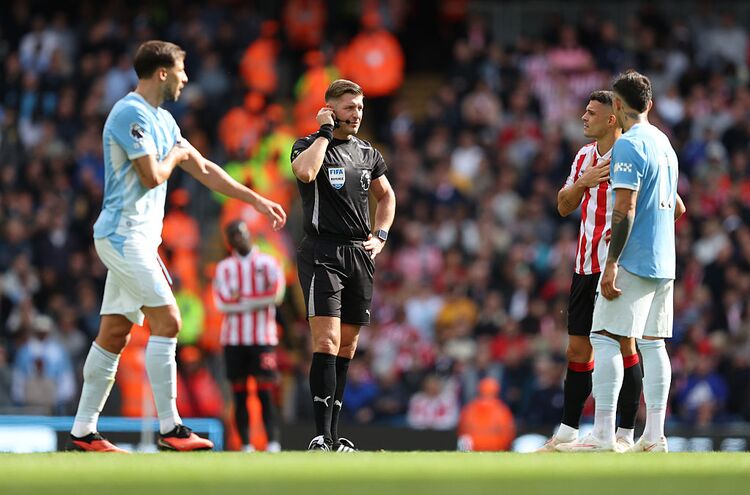
United Arab Emirates officials have warned the UK government that an independent commission’s ruling against Manchester City may dim their appetite for future major investments in the country. That’s too bad. Andy Burnham’s Labour government is hungry for capital to finance its infrastructure plans, and the Gulf state has committed £30 billion ($39.6 billion) in the past five years to sectors spanning offshore wind farms, fiber-optic networks and life sciences. But Britain has a lot more than that to lose.
The amount the UAE has pledged under a sovereign partnership signed in 2021 is equal to about 1.4% of the UK’s £2.1 trillion of foreign direct investment at the end of 2024. The US had invested more than 25 times as much, Japan more than five times and France four times this amount as of 2021, according to the Office for National Statistics. A total of 15 countries had positions exceeding £30 billion.
Britain’s appeal as an investment destination rests to a large degree on the stability and credibility of its legal and regulatory environment. Any government attempt to influence the findings or punishment in the Premier League’s case against Manchester City — found guilty last week of breaking financial fair play rules over a nine-year period — would risk sending a message to investors that their expectation of equal treatment, legal certainty and freedom from political interference is not as assured as it was. Preserving this institutional advantage is far more important than preventing the exit of one important (albeit ultimately replaceable) source of capital.
Manchester City, owned since 2008 by Abu Dhabi royal and UAE Deputy Prime Minister Sheikh Mansour bin Zayed Al Nahyan, was determined to have used “sham” contracts to overstate revenue and understate expenses by a combined £949.9 million, in the biggest financial scandal in Premier League history. The club has asserted its innocence and is appealing. Emirati officials who issued the investment warning said they consider the Premier League’s actions to have an influence on the bilateral relationship, Bloomberg News reported , citing people familiar with the matter.
This looks a lot like the “adverse economic pressure” that the UK government identified as a problem earlier this year and is considering new powers to protect itself against. It describes such actions as economic measures by another state to “obtain or prevent a change in law, policy, or action.” Let’s not pretend that this pressure can’t work. Burnham’s comment that he would be “ really concerned ” if Manchester City’s owners sold can already be viewed as an attempt to soften the case’s impact. The newly established Independent Football Regulator has the power to force an owner deemed not “fit and proper” to sell; the prime minister has signaled that this would be unwelcome.
The clearest historical example of the UK yielding to such pressure is the Al-Yamamah arms deal with Saudi Arabia. In 2006, the Serious Fraud Office dropped an investigation into alleged corruption surrounding BAE Systems Plc’s Saudi contracts after the kingdom threatened to withdraw security and intelligence cooperation and the British government invoked national security. The House of Lords upheld the decision as lawful but one of the judges who heard the appeal, Brenda Hale, described it as “extremely distasteful” that an independent official had been obliged to give way to threats.
The parallels are close. Britain and the UAE similarly share an important strategic defense relationship. They signed a cooperation accord in 1996 and the UK has a permanent military facility in the UAE. The US-Iran war has heightened the need for cooperation: The Royal Air Force conducted defensive patrols over the UAE and other Gulf states in March, and Britain subsequently committed drones, jets and a warship to the multinational operation in the Strait of Hormuz. The UAE has also invested in the UK defense industry under their financial partnership, which is the subject of talks scheduled for later this month.
There are also key differences, though. The Premier League isn’t a matter of national security, but it is economically important — contributing close to £10 billion to the UK economy and supporting more than 100,000 jobs as of the 2023-24 season. More than 33 million people in Britain watched the Premier League on television at some point last season. It also has huge global visibility. If Manchester City were perceived to get off lightly after such a damning verdict, it could cause a public outcry — damaging the competition’s integrity and a source of UK export earnings and soft power. In any case, unlike in the Saudi affair, the British government has no existing power to intervene.
The wider consequences of bowing (or being seen to bow) to pressure from Emirati officials are likely to be even more harmful for the UK. It would send a signal that the rules are negotiable for those with sufficient economic power and political connections. That would be an open invitation to other autocratic states that have a track record of using trade and investment as political levers (think: China).
The pragmatic way forward is for UK officials to explain gently to their UAE counterparts that the government cannot intervene in an independent quasi-judicial proceeding, and that the principles of institutional independence and equal treatment also underpin the security that the Emiratis’ other investments enjoy. To lose billions of dollars of potential investment because of football may be painful, but Britain has to keep its eye on a longer game.
More from Bloomberg Opinion:
Want more from Bloomberg Opinion? OPIN <GO> . Web readers, click here . Or subscribe to our daily newsletter .