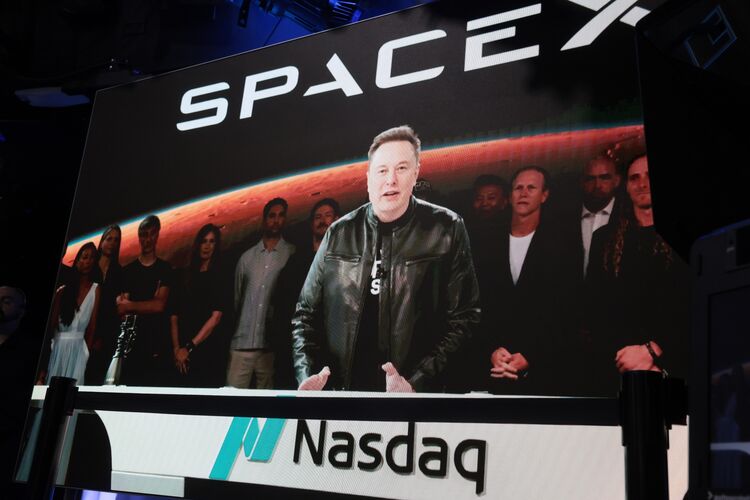
Elon Musk has been a mixed blessing for Wall Street. His mega-financing deals have generated lucrative investment-banking fees while reshaping global market dynamics.
There are plenty of examples. SpaceX’s $75 billion listing in June soaked up so much liquidity that it may have delayed the initial public offerings of Anthropic PBC and OpenAI. Now, the window for blockbuster IPOs appears to be closing .
Then there was Musk’s 2022 acquisition of social media platform Twitter. Banks were stuck for years with $13 billion of debt used to finance the deal, weighing on their balance sheets and souring the mood for leveraged-finance transactions. The timing was brutal. Borrowing costs jumped soon after Musk finalized his financing package, as the Federal Reserve delivered 525 basis points of hikes in just 16 months.
Which raises the question: What happens now that SpaceX is embarking on another borrowing spree? The company is seeking to raise $40 billion to fund purchases of Nvidia Corp. chips, just months after tapping the US corporate bond market for $25 billion.
It’s too early, however, to say the AI-fueled credit cycle is turning.
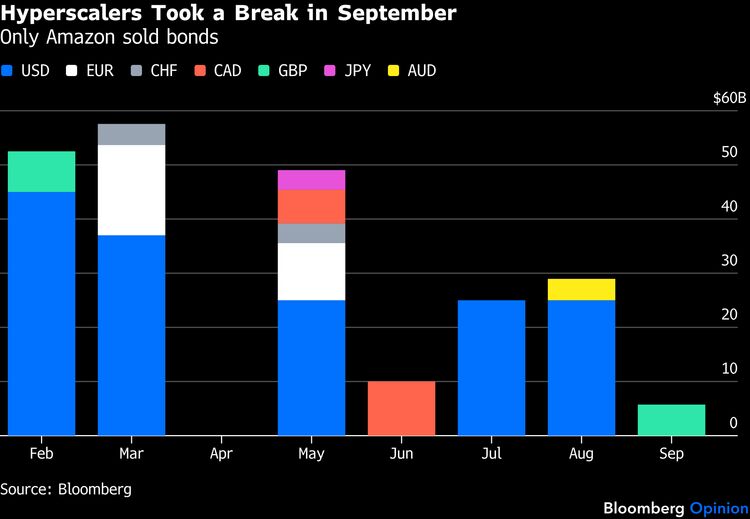
The bond market still has capacity. SpaceX’s capital raise comes on the heels of an unusually quiet September, when hyperscalers issued no high-grade dollar debt. And technology firms can have more room to grow. Banks still account for 18% of the $2.3 trillion US corporate bond market, compared with just 10.5% for the tech industry, according to data compiled by Bloomberg.
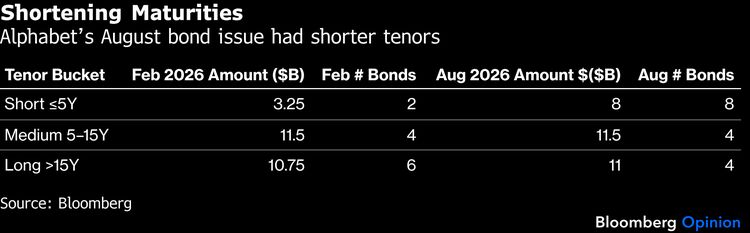
AI firms are pushing through deals even as borrowing costs rise and investors get cautious. As the Treasury yield curve steepens, tech giants are shortening the maturities of their bond offerings. In August, Alphabet Inc. sold eight notes totaling $8 billion, all due within five years, a marked shift from six months earlier, when the search giant concentrated its issuance at the longer end. According to Goldman Sachs Group Inc., the share of hyperscaler bonds sold at shorter maturities has risen to 46% since midyear, from 30% in the first half.
The companies are also venturing beyond the dollar, by selling securities in Japanese yen and Australian dollars, in search of a broader pool of investors. Amazon.com Inc., for instance, raised $5.7 billion from its first-ever pound bond sale last month, following in the footsteps of Alphabet.
Meanwhile, smaller and riskier companies are sweetening their financing structures to lure investors. For instance, Volta Infrastructure Holdings, an AI cloud services provider, is offering a $5 billion leveraged loan yielding about 11%. That’s one of the highest rates in the market. More unusually, the loan fully amortizes , which means the principal is paid down over its life rather than coming due in a lump sum at maturity, as is typical with corporate debt.
In other words, rising global bond yields have not dampened AI companies’ risk appetite. Their bankers will tailor coupon payments and deal structure to keep investors on board. The AI race, after all, has expanded from the technological frontier to the battle for capital, where the ability to raise money and scale quickly may ultimately determine the winners. China Inc. has
accelerated
its fundraising in recent months. Why should American companies hit the pause button now?
To be sure, given the size of the offering, SpaceX’s underwriters will need to structure the deal carefully if they want to keep the AI debt boom going. Offering a wide range of maturities would help the market absorb such a large offering. Pricing will matter, too: Cut premiums too aggressively and orders can evaporate overnight,
wreaking havoc
, as Paramount Skydance Corp.’s $52 billion transaction demonstrated. At this scale, execution is everything.
But for now, the AI party rolls on. Musk may be testing the limits of the debt boom, but he’s unlikely to break it.
More From Bloomberg Opinion:
- DeepSeek and Huawei Target Nvidia’s Moat : Catherine Thorbecke
- A $23 Billion Franco-US AI Bet Is Mega Aggressive: Chris Hughes
- India’s Gen Z Faces Down the AI Future: Andy Mukherjee
Want more Bloomberg Opinion? OPIN <GO> . Or you can subscribe to our daily newsletter .