Philippine bonds, the worst-performing in emerging markets since the Iran war began, are set for further losses as faster inflation, a sliding peso and softer auction demand weigh on sentiment, strategists say.
Inflation in the archipelago accelerated to 7.2% last month from a year earlier, boosting the odds of another interest-rate increase by the central bank and weighing on the nation’s sovereign debt. The peso has tumbled 6.3% this year, while its correlation to bond yields has also climbed to a record.
“Philippine peso government bonds are seeing a litany of risks in the final quarter,” said Michael Ricafort, an economist at Rizal Commercial Banking Corp. in Manila. These include “elevated oil prices due to the ongoing Iran war, rising food prices due to the super El Niño drought and the impact from higher dollar-peso,” he said.
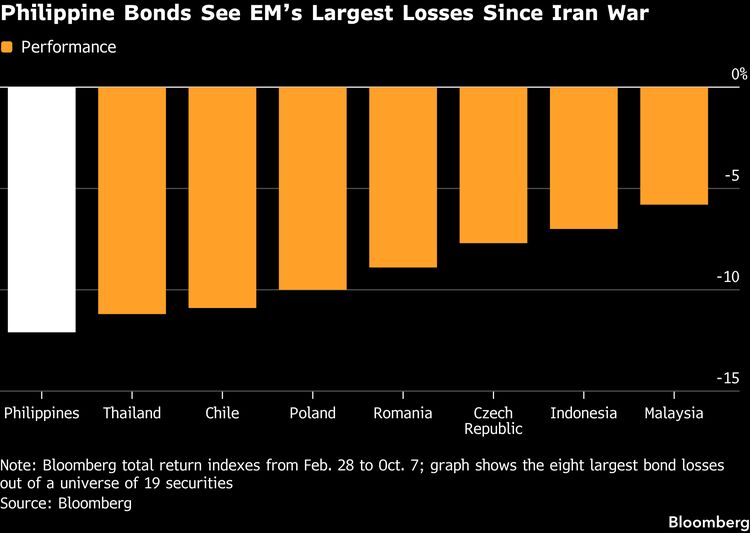
Philippine bonds have handed investors a loss of 13% in dollar terms since the beginning of the Iran war at the end of February, according to a Bloomberg index. That’s the biggest decline among 19 emerging markets tracked by the gauges.
The nation’s 10-year bond yield jumped to 7.99% on Wednesday, up from just 5.92% on Feb. 27 and was at its highest level since late 2018.
Rising food prices have contributed to inflation. A strong El Niño may further threaten production and push food costs even higher, though the extent of any impact remains uncertain. Food has one of the highest weightings in consumer price index baskets in emerging Asia.
Philippine bonds also came under pressure when El Niño last peaked in 2023 and 2024, according to a Bloomberg analysis.
Sliding Peso
Expectations of a weaker peso is also a threat to the nation’s government bonds. The 90-day correlation between the dollar-peso exchange rate and the nation’s 10-year bond yield climbed to a record 0.63 in September, based on data compiled by Bloomberg starting in 2011. A reading of 1 would mean the two move in lockstep.
Demand has worsened at recent government bond sales as investors demanded higher yields to compensate them for the various risks.
An auction of five-year debt on Sept. 2 drew a bid-to-cover ratio of just 1.22 times, the lowest for the tenor since 2013, data compiled by Bloomberg show. The government then canceled a sale of the same maturity scheduled for Sept. 22.
“There are still lingering issues such as the overall fiscal stance and elevated inflation that prevent me from turning bullish” on Philippine bonds, even as yields are starting to look interesting, said Philip McNicholas, Asia sovereign strategist at Robeco in Singapore.